Posts Tagged ‘arts’

i am back from north country in the wacky world of new york, hows this for fun?

September 13, 2012

Fashion week who cares? we got tat’s.

Designers, by definition, are all about creativity, visual communication, and self-expression. One of the most common ways designers express themselves is by indelibly declaring their status as Homo Creativus in the medium of ink in skin. Like anyone else, designers’ tattoos are often butterflies, skulls, koi, Tardises, or names, but sometimes the ink is a little more graphic, speaking directly to the art, science, and people of design. Here is some of that designer ink; join me again in one week for the second half of this two-part series.

Click each image to view the image at its original resolution, on its original website. see creative pro for links.

Warning: Many Websites that display tattoos also often display images and slogans that are Not Safe For Work!

Please note: This article links to resources hosted on external Web sites outside of the control of CreativePro.com and  fuzzypictures. At any time those Web sites may close down, change their site or permalink structures, remove content, or take other actions that may render one or more of the above links invalid. As such neither Pariah S. Burke nor CreativePro.com can guarantee the availability of the third-party resources linked to in this article.

Pariah S. Burke is a design, publishing, and digital & epublishing workflow expert and consultant bringing creative efficiency into studios, agencies, and publications around the world. He is the author of ePublishing with InDesign CS6, Mastering InDesign for Print Design and Production, and other books for professionals with jobs to do on InDesign, Creative Suite, Adobe Illustrator, QuarkXPress, and digital publishing; author of more than 450 published tutorials and articles; co-author of the InDesign and Illustrator Adobe Certified Expert exams; an Adobe Community Professional; the former trainer and technical lead for InDesign, InCopy, Illustrator, Photoshop, and Acrobat to Adobe’s own technical support team; the host of a series of digital publishing, epub, and the business of design Webinars; a freelance graphic designer and publisher with more than 20 years’ experience; a WordPress and social media evangelist; and the publisher of a network of Websites, communities, and tools for creative professionals, the Workflow: Network.

video intern opportunity at Howard Schatz studio or how to work for free.

July 19, 2012

here’s a post on craigslist that some young video head would just love to do. but it’s working for free and i never had the opportunity even when jobs were plentiful in the 60’s. i had picked up the habit of eating and sleeping in a bed and had no one in the world to support me but me. i had to do some pretty disgusting things just to survive and it was still hard.

not to say people didn’t help me because they did and for that i’d like to say Thank you, where ever you are.

below howard is asking someone to ‘intern’ in his studio for no pay. yes howard is a wonderful commercial photographer, sometimes noted as a photographer of the year, 20 books printed, covers on time mag, etc. i’ve seen howard’s work amazing stuff. he justifies free internships by saying the people who do these learn a lot. i am sure they do, that is if someone else is footing the food bill.

howard’s not alone in asking people to work for free as this is the new trial period in this day and age. steve mc curry uses interns.

i am sure who ever takes this opportunity will learn a lot and have very good contacts from howard’s studio. but one would think, i do that an accomplished photography studio could pay their workers something even the pages at CBS get paid.  oh well i guess i am way old school [ atlas shrugged ] in thinking people are worth something. in the old days when you apprenticed for someone at least you could sleep on a pile of straw over in the corner on the floor. but no mention of straw in the adv.

times have changed or have they. my understanding of a apprenticeship was a contract between two parties where you came away with a learned trade, here video production. well tell that to all the ny one correspondents who lug cameras around town getting news stories for low pay thinking someone in the major networks see them and offer a decent paying job. what the network executives saw were people willing to work cheap. now the ideal tv network news person should be 24 years old , start at $24,000 a year salary and be available to work 24 hours a day. so much for breaking onto the national scene.
with this logic i am the one out of step here it takes a lot of money to run a photography studio or tv network so why spend the money on salaries when you can offer a person a learning experience. but asking someone to work for free doesn’t sit well with me.

_____________________________________________________________________________

Schatz Ornstein Studio is looking for a full time intern to work in the production department.
Internship starts Monday July 30th. This is an unpaid internship.

You will work hand and hand with the studio’s Producer and Executive Producer assisting on the production end of all projects.
Our work ranges from advertising jobs, to editorial and artistic (personal projects). We are also in the process of printing our
19th and 20th book, so you will have the opportunity to be part of the process.

This is a great opportunity for someone very eager to be a professional photography and TV commercials producer.
You will be immersed 100% into the world of production. This is a very hands-on internship.

Some of the tasks you will be performing:

– Assist producer on shoots
– Pre-production: Assist producer with call-sheets, pre-pro books/ meetings, quotes, vendors, crew.
– Administrative Support
– Research (for new or existing project).
– Handle/ develop projects as assigned
– Set-up/ run Castings
– Since we are a small group, duties will also include studio cleanup, recycling, etc.

We are looking for someone who has/ is:

– Eager to be a producer
– Smart, quick and resourceful
– Good writing skills
– Detail oriented
– Committed to the job/ team
– Capable to take directions from supervisors
– Eager to learn all aspects of production
– Quick learner
– Can take larger projects as assigned, and follow through
– Professional demeanor

For more information on our work, please visit our website
http://www.howardschatz.com

Please send a short cover letter and your resume to Ivana Stolkiner, Producer to the email address above.
No phone calls, please.

The Clock, Christian Marclay @ The Lincoln Festival thru aug 1, 2012

July 13, 2012

are you looking for something to do in this sweltering summer heat here in the city that never sleeps. well this might be right up your alley at the Lincoln Center festival. see link here for line updates. for some reason new yorkers don’t mind standing in line because there are so many of us wanting to go somewhere from buying our groceries or being entertained.

Artwork That Runs Like Clockwork

Christian Marclay/Paula Cooper Gallery

Christian Marclay’s 24-hour film montage, “The Clock,” is coming to the David Rubenstein Atrium in Lincoln Center.

By
Published: June 21, 2012

This summer the city that never sleeps will have another glimpse of an artwork that doesn’t relent much either: “The Clock,” a spellbinding, time-telling 24-hour wonder of film and sound montage by Christian Marclay, the polymath composer, collagist, video artist and pioneer turntablist.

An assemblage of time-related movie moments that had its debut in London in autumn 2010, Mr. Marclay’s “Clock” is already a popular classic. It is also a functioning timepiece; a highly compressed, peripatetic history of film and film styles; an elaborate, rhythmic musical composition; and a relentlessly enthralling meditation on time as an inescapable fact of both cinematic artifice and everyday life. Perhaps the ultimate validation of appropriation art, it thoroughly demonstrates how existing works of art — in this case films — become raw material for new ones.

“The Clock” counts off the minutes of a 24-hour day using tiny segments from thousands of films. Bits of “High Noon,” “Gone With the Wind,” “Laura,” “On the Waterfront,” “The Godfather” and “A Clockwork Orange” speed past, mixed with early silent films and less familiar foreign ones.

As the action, music, sound effects and dialogue of one film bleed into those of another, each segment specifies a time, sometimes through spoken words, but mostly through shots of wristwatches, clocks, time clocks and the like. All are synced to real time. When it is 11:30 a.m. in “The Clock,” it will be 11:30 a.m. in the world outside. Exactly.

The first New York showing of “The Clock,” at the Paula Cooper Gallery in January 2011, had people lining up around the block in a relatively deserted west Chelsea in the dead of winter. Now, for 20 days starting on July 13, Lincoln Center will present the piece in a specially built theater in the David Rubenstein Atrium on Broadway between 62nd and 63rd Streets. Admission will be first come first served in a setting — lined with movie-palace velvet curtains and outfitted with enormous couches that blur boundaries between living room and screening room — that accommodates only about 90 people at a time.

It may be a challenge to get in, even in the wee hours, which is when I want to go, but I intend to make every effort, and recommend that you do too. The piece will run Tuesday through Thursday from 8 a.m. to 10 p.m. and then settle in for three 38-hour weekend marathons beginning at 8 a.m. Fridays and running to 10 p.m. Sundays. It will be closed Mondays and ends on Aug. 1.

more information on the artist Christian Marclay can be found at the New Yorker here

enjoy, but i won’t be standing in line myself they give me the willies.

jene

Sex sells @ Emmanuel Fremin gallery opening

June 29, 2012

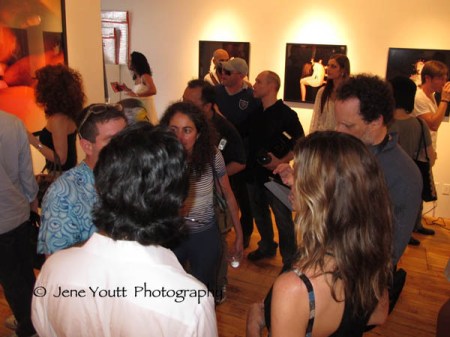
may have been one of the hottest openings with around 500 people crowding to get in a small space. when i say hot i mean the temperature of the room.

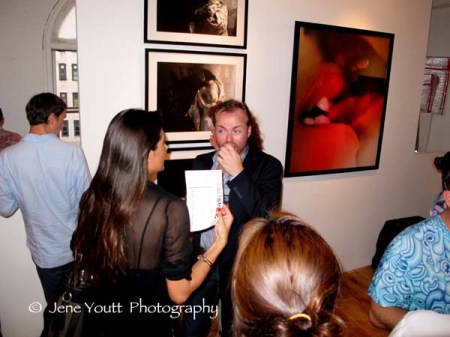
after the crowd cleared out a bit and we weren’t pressed up against each other there was room to see the art hanging around the room

or just have a chance to converse with your fellow gallery goer.

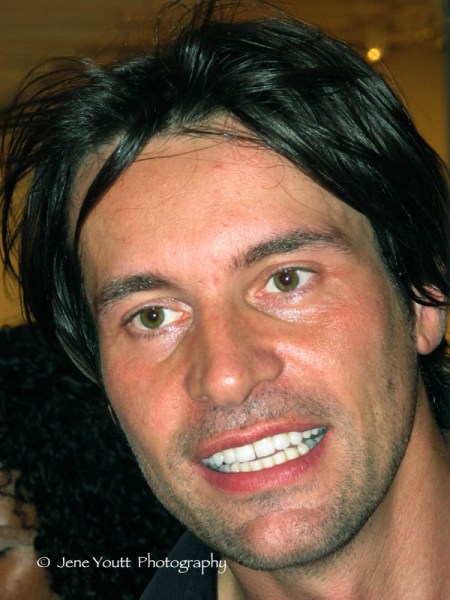
all under the watchful eyes and smiling face of emmanuel who’s always wandering around introducing people to art and artist.

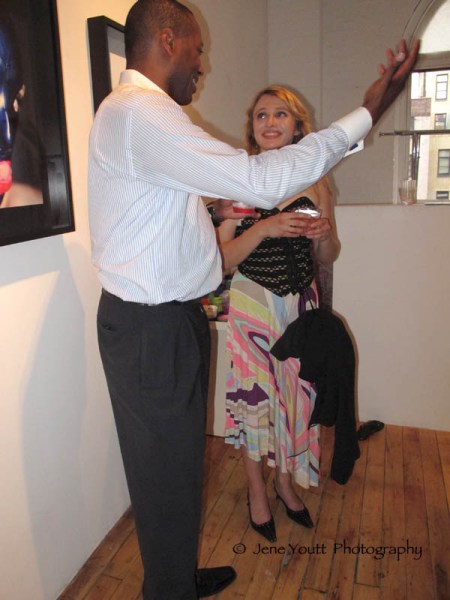
while the lovely lady Mary Nguyen has her own way of attracting people

an enjoyable evening of art and friendship had by all

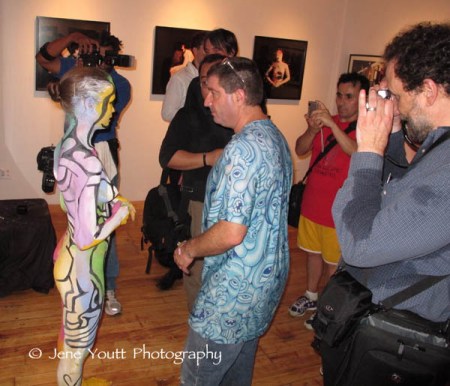
well some people just want to start out cooler than others as this young lady with her bodypainter friend surrounded by sweaty togs.

exhibit B

or this fellow contemplating his LCD screen, did he get it?

to see more pictures of the opening check out the farcebook page here

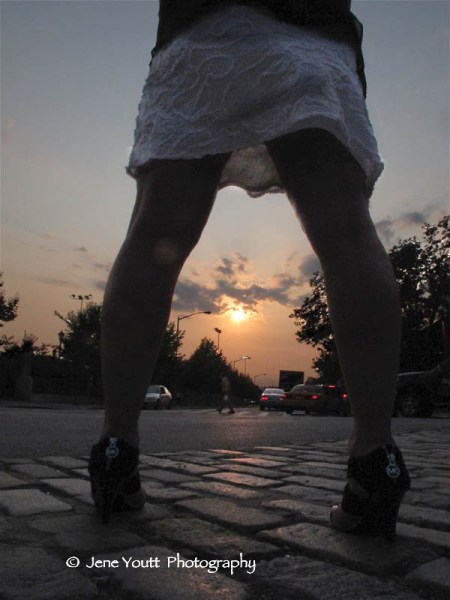
my favorite pic of the night happened when we were walking from the bus to gallery on 11th avenue.  my wife against the sunset

in her sexy shoes and summer skirt woohoo

jene

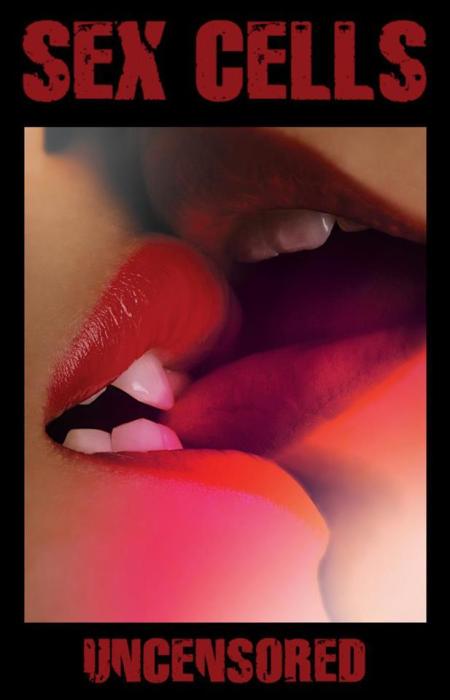
Sex cells and here at Emmanuel Fremin gallery it’s on or off the walls

June 14, 2012

“Sex Cells” at Emmanuel Fremin Gallery
Curated by Asli Unal

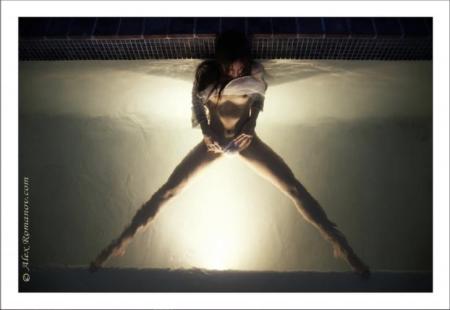
The most universal subject of art through the ages, the human nude has been a vehicle for commercialization, a symbol of freedom, and a topic of heated debate. In “Sex Cells,” eig…ht contemporary photographers explore how we direct sex appeal, both consciously and unconsciously, as a means of empowerment and manipulation. From the provocative to the grotesque, the featured artists combine familiar props and subjects in an original manner as they tackle themes of seduction, bondage, religion and bestiality. A reception on Thursday night, June 28th, kicks off the month long exhibition at the Emmanuel Fremin Gallery.


Reka Nyari’s jarring compositions juxtapose lust and disgust by pairing a beautiful model with animal carcasses. Her stark compositions present the objectified body as a target for consumption and challenge the viewer’s ability to hold two opposing emotions simultaneously. Using herself as the model, Brooklyn artist Erica Simone poses nude in public while unabashedly going about her daily routines. Simone wittily challenges the nature of the nude in art, examining the line between the mundane and the sexualized. The context tells us to interpret her as the subject of the photographs rather than the object of a sexual fantasy.

“Sex Cells” is on display from June 28th-July 28th, 2012 at the Emmanuel Fremin Gallery, 547 West 27th Street, Suite 508, New York, NY 10001.
Vernissage: June 28th, 6-8 p.m.

Scanning Around With Gene Gable on creative pro com, 1939 graphic illustrations

May 17, 2012

A garage-sale find of three small children’s books highlights some great 1937 illustrations from a little-known artist by the name a Th. D. Luykx.

Kids grow up these days taking a lot of things for granted. The electricity that comes out of the wall, the gasoline in our cars and the steel in our skyscrapers are all just there and have been for so long it doesn’t seem like any big deal. I don’t even know if we teach kids about the history of these and other industries — much of it would seem like ancient history I suspect, and does it really matter how electricity is made or what goes on in a steel mill? Kids these days are probably a lot more interested in how iPhones are made.

But in 1939 when the illustrations in this installment were published, there was still a lot of fascination with big industry, and we were proud as a nation at the infrastructure we had built for these things. Today’s images come from a series of three books published by the George Duplaix Company in New York: “Oil Comes to Us,” “Electricity Comes to Us,” and “Steel.” The authors are different for the three books, but the illustrator, one Th. D. Luykx, is the same, and each book follows the same format.

I tried to find out more about Luykx, but a rudimentary Google search only brought up references to these books and nothing else that I could find. Could be these were a one-off effort, at least of books where credit is given to the illustrator.

And I can’t really tell in which medium Luykx worked in — the illustrations are brightly colored and, in many cases, limited to two colors, red and black. The high contrast and stark lines indicate a mechanical rather than illustrative process; there are halftones in the printing, and some colors seem slightly out of registration on close inspection, so I suspect each color was produced as a separate layer in whatever process Luykx used.

The books are pretty straight forward, telling in pictures and limited text the stories of how we make steel, how we drill for and refine oil, and how electricity is produced and brought to the home.

Like so many printed products of the time, full color is limited to certain spreads, and the artists was limited to two colors for many illustrations. These make for the more interesting work as far as I’m concerned.

Illustrating kids’ books is always a challenge, especially when dealing with technical topics. Luykx did a good job of being technically accurate and fairly detailed, but general enough to appeal to kids with limited knowledge of the subject matter.

I’m not sure why I was so taken by these three books — together they make a wonderful set and I have to wonder why the publisher did not do more (at least no others show up on Google). Perhaps it was a series that just didn’t take off.

But I’m glad I found them and will keep my eyes open for any additional work by Luykx. It would be interesting to see if he did fine art as well. His technique seems very unique to me.

i’ve read creative pro emails for years having learned some pretty cool stuff along the way. this is just a small part of what they post, if you find it interesting i’d drop by and give it a glance. creative pro

jene

Hands on article of the Lytro camera

March 29, 2012

There’s been a lot of buzz about the Lytro digital camera that promises you can shoot an image and focus it afterward. But how does it work? What are the images like? And can you really focus after the fact? Here’s a hands-on look at the Lytro.

A new camera has been in the news recently: the Lytro, a $399 camera that allows you to take a photo now, and focus — or refocus — later. Sounds provocative. But does it work? Is this something you should add to your camera bag? I’ve had the opportunity to use one for several weeks now, and I’m pretty gung-ho. Here’s why.

The Lytro uses a technique that is called plenoptic — or light field — photography. The camera captures all the light coming through the lens from all angles, striking an array of microlenses on its sensor. The camera’s inventor, Ren Ng, says that the Lytro captures 11 million “light rays” in every photo.

Here’s one thing to get out of the way: the “focus later” aspect of the Lytro happens in special software after the shoot. The 11 million pieces of data the camera captures are written to a proprietary file that you download to your computer. Once the photo is on your computer screen, you click on any part of the image to bring that point into focus. Click on another part of the same image, and that point comes into focus. Lytro calls these images “Living Pictures.” The first time you see one, and experiment with focus, you will be impressed by how unusual these photos are. Living Picture photos are perfect for viewing live on a Web site, blog post, Facebook page, or other online entity.

here’s the link at creative pro com.

jene