Posts Tagged ‘art’

ok…. lets get this out of our system, more tattoos

September 14, 2012

11 Amazing Librarian Tattoos

by

Jim Harness

originally posted on Mental_Floos

There are plenty of literary tattoos out there, and plenty of tattooed librarians. A bit less common are librarians with tattoos celebrating their career choice.

1. Card Catalog Sleeve

Elizabeth Skene has what might be the most awesomely complete librarian sleeve around, featuring a skull sitting on top of a book, with a graduation cap next to a card catalog with a banner reading “Peace and Knowledge.” There is also an open book with pages coming out and turning into birds. Let there be no doubt here: Elizabeth loves libraries. Tattoo by Frank William of the Chicago Tattoo Company.

2. Shhh

The folks behind 8 Bit Library, a librarian blog, wanted to encourage librarians to show their pride in their work, and thus they started Project Brand Yourself A Librarian. A lot of people joined in, including Lauren Comito, who got this lovely silhouette of a woman shushing noisy patrons.

While it seems like the icon merely represents the stereotypical librarian, it actually has far more meaning to Ms. Comito. After discovering that big budget cuts in her library system would mean she would be laid off, she created the image as a protest that library supporters won’t be silenced in the fight to keep their local branches open. She made hundreds of tees and organized a protest that resulted in most of the branch’s funding being restored. After that, it seemed only fitting to get the icon tattooed on her body. If you like the image, you can buy one of the shirts bearing the icon, which will also help support the fight to keep NYC public libraries open for years to come.

3. Super Librarian

Tattooed Librarians and Archivists reader Michelle is a high school librarian who wanted to get something to represent her career. She chose a superhero librarian and based the design on the old-school DC character Mary Marvel and had it inked by Chris Cockrill of Avalon II Tattoo. I think the world could use a few more super librarians, don’t you?

4. Library Icon

Flickr user infowidget also participated in Project Brand Yourself a Librarian by getting the classic library symbol tattooed on her inner wrist.

5. The Book Tree

Here’s another “Brand Yourself” participant, this time tattooed by Anne Marsh of Nemesis Tattoo. Flickr user bookishJulia got the library icon underneath the roots of a tree that has sprung from the pages of a book.

6. Dewey Decimal Number

Flickr user Cardamom is so proud of her role as a children’s librarian that she got the Dewey Decimal number for books on operating libraries for children. Of course, only those well-versed in the decimal system numbers will actually get that reference without having to look it up.

7. Harry Potter Dewey Decimal Number

Great White Snark reader Becca is a full-time librarian who loves Harry Potter. How much does she love the series? Enough to get its Dewey Decimal number tattooed across her back in the iconic font, colored Slytherin green.

8. Egyptian Goddess

Just looking at this piece you’ll recognize it as a librarian tattoo, but what makes LiveJournal user Oh Chris’ tattoo by Kristen at Artisanal Tattoo really great are how many details he has hidden inside the design. For example, the hieroglyphics are phonetic transliterations for the names of his family members and the two open books have images symbolizing his favorite childhood books – The BFG and Jabberwock.

9. Librarian Skull

Prefer your ink a little more hardcore than most of these librarian tattoos? Then, you’ll probably approve of Jason Puckett’s tattoo by Ron Hendon of Midnight Iguana Tattooing that features a bespectacled skull with “crossbooks” and a “librarian” banner.

10. Voodoo Reader

Jim McClusky is a librarian in Washington, so obviously he thinks reading is pretty darn important, even if you’re only a poor little voodoo doll. Artwork by Mary J. Hoffman, tattoo by Curtis James of Anchor Tattoo.

11. Tarot Card

Flickr user whatnot’s friend Diane got this great librarian tarot card featuring a bee-keeping skeleton. I don’t know what makes this skeleton a librarian, but I definitely love the artwork.

Scanning Around With Gene Gable on creative pro com, 1939 graphic illustrations

May 17, 2012

A garage-sale find of three small children’s books highlights some great 1937 illustrations from a little-known artist by the name a Th. D. Luykx.

Kids grow up these days taking a lot of things for granted. The electricity that comes out of the wall, the gasoline in our cars and the steel in our skyscrapers are all just there and have been for so long it doesn’t seem like any big deal. I don’t even know if we teach kids about the history of these and other industries — much of it would seem like ancient history I suspect, and does it really matter how electricity is made or what goes on in a steel mill? Kids these days are probably a lot more interested in how iPhones are made.

But in 1939 when the illustrations in this installment were published, there was still a lot of fascination with big industry, and we were proud as a nation at the infrastructure we had built for these things. Today’s images come from a series of three books published by the George Duplaix Company in New York: “Oil Comes to Us,” “Electricity Comes to Us,” and “Steel.” The authors are different for the three books, but the illustrator, one Th. D. Luykx, is the same, and each book follows the same format.

I tried to find out more about Luykx, but a rudimentary Google search only brought up references to these books and nothing else that I could find. Could be these were a one-off effort, at least of books where credit is given to the illustrator.

And I can’t really tell in which medium Luykx worked in — the illustrations are brightly colored and, in many cases, limited to two colors, red and black. The high contrast and stark lines indicate a mechanical rather than illustrative process; there are halftones in the printing, and some colors seem slightly out of registration on close inspection, so I suspect each color was produced as a separate layer in whatever process Luykx used.

The books are pretty straight forward, telling in pictures and limited text the stories of how we make steel, how we drill for and refine oil, and how electricity is produced and brought to the home.

Like so many printed products of the time, full color is limited to certain spreads, and the artists was limited to two colors for many illustrations. These make for the more interesting work as far as I’m concerned.

Illustrating kids’ books is always a challenge, especially when dealing with technical topics. Luykx did a good job of being technically accurate and fairly detailed, but general enough to appeal to kids with limited knowledge of the subject matter.

I’m not sure why I was so taken by these three books — together they make a wonderful set and I have to wonder why the publisher did not do more (at least no others show up on Google). Perhaps it was a series that just didn’t take off.

But I’m glad I found them and will keep my eyes open for any additional work by Luykx. It would be interesting to see if he did fine art as well. His technique seems very unique to me.

i’ve read creative pro emails for years having learned some pretty cool stuff along the way. this is just a small part of what they post, if you find it interesting i’d drop by and give it a glance. creative pro

jene

Rembrandt self-portrait from Kenwood House now on view in NYC at The MET

April 13, 2012

NEW YORK, NY.- Kenwood House, the London museum that holds the art collection known as the Iveagh Bequest, is closed for renovations until fall 2013. By special arrangement, Rembrandt’s Portrait of the Artist (ca. 1665), which has never before traveled outside Europe, is on loan to The Metropolitan Museum of Art through May 20, 2012. This great canvas now hangs next to the Metropolitan Museum’s own Self-Portrait by Rembrandt of 1660, providing a rare opportunity to compare the two works which, although close in date, are utterly different in scale, format, and expression. Both were painted during a period of economic difficulties for the artist. The loan is also an occasion for the Museum to bring together in one gallery the late Rembrandts from the collection, including Aristotle with a Bust of Homer (1653), Hendricke Stoffels (mid-1650s), The Standard Bearer (1654), and Woman with a Pink (ca. 1660-64).

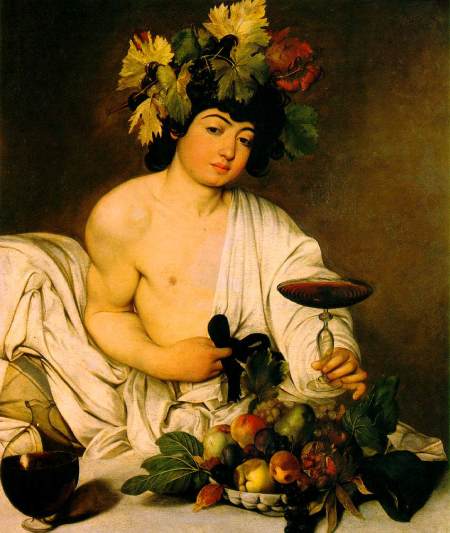
as some of you know i am a big fan of Rembrandt along with Caravaggio whom cindy sherman parodied his painting of Bacchus whom he parodied a number of times

caravaggio-sick-bacchus, self portrait

then again with

caravaggio bacchas, young italian boy

i do love painting which inspires my photography, well off to the met to see naked before the camera and Rembrandt, not a bad days plan. maybe we can go to the opening of Lillian Bassmans exhibit tonight at Stanley Wise Gallery.

About Lillian Bassman

Lillian Bassman was born in 1917 into an immigrant family of free-thinking intellectuals, and was brought up with a mindset that allowed her to live as an independent and unconventional woman.She worked as a textile designer and fashion illustrator before working at Harper’s Bazaar with Alexey Brodovitch, and ultimately becoming a photographer. Bassman’s fashion images are unique, and acheieve their effect through manipulation in the dark room. Appearing in Harper’s Bazaar from the 1940’s to the 1960’s, her work was categorized by their elegance and grace.Bassman had transformed these photographs into original works of art through her darkroom techniques in which she blurs and bleaches the images, investing them with poetry, mystery, and glamour.
take care: jene