Martha Graham Company at the Joyce theater

February 22, 2013

we are going to see this company this sunday, program A to meet one of the dancers whom i’ve never met. the last dance program we saw was Juan Michael Porter’s II program of Tales of Kojiki; Redux and after the show he and i talked about working together again. i’ve got a dance project i’d like to do so that is the purpose for the sunday meeting.

i never thought of myself as a dance creator but why not i’ve been involved with dance for twenty years. one of my models Masha is very interested in doing this piece, i’ll do some testing with her next week and a costume fitting to see if my ideas work.

here is  a link to the nytimes about recreating ‘Imperial Gestures’ something i’ve been involved with during my tenure at the Jose Limon Company  but for me to create a new dance ( new dance) is there such a thing? maybe a different look to an old story. more on this later.

my earliest exposures to the Phaedra story came from the movie version with Melina Mercouri, Anthony Perkins, Raf Vallone in the classic tear jerker Phaedra movie. what a tour de force and the ending whew, i bought the soundtrack record and listened to it over and over. lovely. talk about crying this does it.

here is a review in this weeks financial times Limited of the graham season

Graham’s ‘Phaedra’ was impressive for its storytelling, but it was another choreographer’s work that stole the show
Martha Graham Company in ‘Phaedra’

According to Euripides, ill-fated Phaedra’s helpless, forbidden passion “is what the god has chosen [her] to become” – which makes Martha Graham the perfect artist to depict her. In fact, unlike the characters in the choreographer’s earlier and better Greek tragedies, Night Journey and Cave of the Heart, the players in Phaedra are more stiff instrument than person. They do not win our sympathy when they suffer enormously for attempting to heed the dictates of their cruel gods.

After a decade in storage, the briefly controversial ballet – at its 1962 premiere a couple of congressmen deemed it too sexy for government funding – returns as part of the company’s Myth and Transformation season, whose abundant works either riff on Graham or are by her. What does impress in Phaedra – besides the excellent actor-dancers, including the newcomers on which the troupe’s bright future depends – is the storytelling. Typical of Graham, the drama moves as dexterously as film can do between reality and dream, dread or the past that has cursed the present.

Deft shifts in register also distinguish Richard Move’s hour-long tour de force The Show (Achilles Heels), crafted in 2002 for Baryshnikov and Blondie lead singer Deborah Harry and only now set on the Graham company, where it deserves a long life. With The Iliad as his source, Move stitches together a host of unlikely elements: a hilarious game show rigged like Achilles’ fate, a chorus that lip-syncs wooden dialogue from a 1950s movie epic, and dreamlike tone-poems that feature Helen as desperate, voluptuous captive, vain Achilles and his devoted lover Patroclus dancing arm in arm, and war widows clasping mechanical doves that beat their wings. Arto Lindsay’s finely textured industrial score conjures a recycled, subterranean world, with Harry’s songs adding notes of elegy and romance.

Move may replace Graham’s temporal and psychological excavations with postmodern pastiche, but the end is the same: outsized feeling. Even without Baryshnikov and Harry to prod us, The Show excites euphoria over bigger-than-life people like this Achilles (the Brit and Graham newbie Lloyd Mayor), who, beyond anything else, is beautiful and knows it. The dance lets us yearn for image and person to unite. It not only accepts our shallow pleasures, it discovers their dignity and their depth.

Until March 3, www.joyce.org

here is some fun for valentines day, a dutch treat & planning ahead

February 14, 2013

a bit of a bummer for us as we are planning to visit The Netherlands and other european countries this summer or maybe San Francisco but wait the show is coming to New York City this fall at the Frick Collection October 22, 2013 thru January 19,2014 says the NYTimes.

but never fear art travels well, so do we.

Girl with a Hoop Earring: Fun with Vermeer

By Posted 02/14/13

Two beloved Vermeers have left Holland for a stint in the U.S. They’ll find their descendants stripped by Dalí, bedecked in toilet-paper rolls, and reincarnated by Cindy Sherman

The Girl with a Pearl Earring winked at me the other day.
San Francisco must be treating her well.

Vermeer’s enigmatic masterpiece has taken up residence at the de Young Museum, along with the 34 other Dutch Golden Age paintings on the road while their normal home, the Mauritshuis in the Hague, undergoes renovation.

The “Dutch Mona Lisa,” whose beauty and inscrutability have famously inspired art, fiction, product design, a Barbie, a Jonathan Richman song, and a whole lot of Flickr photos, doesn’t get out of Holland much, so for fans her U.S. tour—continuing at the High in Atlanta, and then the Frick—is like “the World Series, Super Bowl and Masters rolled into one magic moment,” as USA Today put it. At each venue, she will have a gallery all to herself.

Jan Vermeer, Girl with a Pearl Earring, ca. 1665, oil on canvas. To see her wink (sometimes), click here.COURTESY ROYAL PICTURE GALLERY MAURITSHUIS, THE HAGUE, BEQUEST ARNOLDUS DES TOMBE, 1903.

While The Girl With a Pearl Earring was hardly a wallflower at the Mauritshuis, she wasn’t quite the type to headline a show–until 2003, when she got her Hollywood break. Being played by Scarlett Johansson in Peter Webber’s film version of Tracy Chevalier’s novel brought the painting new fame; to the dismay of art historians, though, the audience sometimes concluded that the book’s main character, a maid who posed for Vermeer, was real.

Scholars don’t know who sat for the picture, which was not intended to be a specific portrait of anyone. That in itself wasn’t unusual in those days. What was unusual, says de Young curator Melissa Buron, was the three-quarter view, which highlights the sense that the woman is about to speak.

Adding to the Girl’s allure is her distinctive ultramarine turban—not exactly Dutch fashion at the time, either, but relatively easy to recreate in ours. Girl with a Bamboo Earring is from Awol Erizku’s photo series diversifying and updating art-history classics.

Awol Erizku, Girl with a Bamboo Earring, 2009, digital chromogenic print.COURTESY OF THE ARTIST AND HASTED KRAEUTLER GALLERY, NYC.

Dutch Old Masters get a different twist in Hendrik Kerstens’s color photographs, up through Saturday at James Danziger. Each one depicts the artist’s daughter Paula in get-ups that evoke 17th-century portraits, but with their lovingly rendered hoods and bonnets replaced by bubble wrap, tin foil, and other humble materials. These in turn inspired high fashion when Alexander McQueen used them as fodder for his fall 2009 collection.

Hendrik Kerstens, Paper Roll, 2008, pigment print.COURTESY DANZIGER GALLERY.

Meanwhile, further south, another iconic Vermeer is also in California for a spell: this Saturday the Getty opens a special installation of Woman in Blue Reading a Letter, on loan for six weeks while Amsterdam’s Rijksmuseum prepares for its reopening. She’ll be surrounded by other views of intimate interiors by Vermeer contemporaries including Jan Steen, Gerard ter Borch, and Pieter de Hooch.

This enigmatic beauty (who also has pearls, in a necklace on the table) has inspired speculation for centuries: Is the message from a lover? Does the map have a meaning? Is the woman pregnant, or just fashionably dressed?

Jan Vermeer, Woman in Blue Reading a Letter, about 1662-1663, oil on canvas.COURTESY RIJKSMUSEUM, AMSTERDAM. ON LOAN FROM CITY OF AMSTERDAM (A. VAN DER HOOP BEQUEST).

These open-ended stories were a lifetime provocation for Dalí, who admired Vermeer’s precision and  reproduced the Dutch master’s content through the filter of his own unconscious. (Also, he set up an encounter between a rhino and a copy of The Lacemaker at the zoo, as you can see on YouTube).

In addition to recapitulating the The Lacemaker repeatedly, Dalí painted the mysterious Apparition of the Figure of Vermeer in the Face of Abraham Lincoln (what was he thinking about Lincoln?) and The Ghost of Vermeer of Delft Which Can Be Used as a Table (Phenomenologic Theory of Furniture-Nutrition), to name a few. Then there’s The Image Disappears (1938), an illusion that turns Vermeer’s Girl Reading a Letter at an Open Window into the profile of a bearded male—and back again. (Her head is his eye and her elbow his nose).

A study for the painting, now in “Drawing Surrealism” at the Morgan, tells us more about what was on Dalí’s mind. This one, clearly showing the optical illusion in the works, has two versions of the letter reader: one dressed, the other naked.

Salvador Dalí, Study for “The Image Disappears,” 1938, pencil on paper.©SALVADOR DALI, FUNDACIO GALA- SALVADOR DALI, ARTISTS RIGHTS SOCIETY (ARS), NEW YORK 2012 PHOTO ©2012 MUSEUM ASSOCIATES/LACMA, BY MICHAEL TROPEA PRIVATE COLLECTION.

It was Vermeer’s ability to confer nobility on the ordinary that attracted British photographer Tom Hunter. Hunter, who was living amidst squatters in Hackney, wanted to produce art that would help them in their struggle against authorities—not with “the usual stock of black and white images of the victims of society,” as he put it, but with serenity, beauty, dignity, light, and space. The girl in this photograph is reading an eviction order.

Tom Hunter, Woman Reading Possession Order, from the series “Persons Unknown,” 1997, cibachrome print.©TOM HUNTER, COURTESY THE ARTIST AND YANCEY RICHARDSON GALLERY.

Cindy Sherman captures Vermeer’s mood in black and white. Of course there is a letter-reader in the “Untitled Film Stills.”

Cindy Sherman, Untitled Film Still #5, 1977, gelatin silver print.COLLECTION MUSEUM OF MODERN ART, NEW YORK. HORACE W. GOLDSMITH FUND THROUGH ROBERT B. MENSCHEL. ©2013 CINDY SHERMAN.

If you can’t make it to the West Coast, remember that the East has plenty of Vermeers on public view, with five at the Met, three at the Frick, and three at the National Gallery of Art in Washington, D.C.–not bad considering that there are 36 extant works by the artist (including the one still missing from the Gardner theft).

Vermeer left relatively few documents about his sitters, or his symbols, but radiographs of one of the Met’s paintings yield tantalizing clues about his process. Originally, the figure in A Maid Asleep was accompanied by a man in the background and a dog in the doorway. Later, Vermeer replaced them with a mirror and a chair. With the love interest gone, we have to create the narrative ourselves.

Johannes Vermeer, A Maid Asleep, 1656–57, oil on canvas.THE METROPOLITAN MUSEUM OF ART, BEQUEST OF BENJAMIN ALTMAN, 1913 ACCESSION NUMBER: 14.40.611.

A squatter in Tom Hunter’s version of the scene.

Tom Hunter, A Woman Asleep, from the series “Persons Unknown,” 1997.©TOM HUNTER, COURTESY THE ARTIST AND YANCEY RICHARDSON GALLERY.

For The Music Lesson, Hiroshi Sugimoto photographed a wax tableau of the original painting installed in Madame Tussauds in Amsterdam.

Hiroshi Sugimoto, The Music Lesson, 1999, pigment print.©HIROSHI SUGIMOTO COURTESY PACE GALLERY.

The Pearl Earring girl pixelated in spools and made whole through the lens of an optical device, courtesy the art-history-riffing illusionist Devorah Sperber.

Devorah Sperber, After Vermeer 2, detail view, 2006, 5,024 spools of thread, stainless-steel ball chain and hanging apparatus, clear acrylic viewing sphere, metal stand.COURTESY OF THE ARTIST.

Museums are offering new ways to engage with Vermeer through social media. The Getty blog is asking people to send in a first sentence of the letter. The de Young Tumblr, following the Guardian’s lead, put out a call for imagined versions of the Girl’s story.

The next thing you know, Vermeer’s inscrutable beauties will be telling their own versions on Twitter. @girlwithapearlearring seems to be open.

Film still from Girl with a Pearl Earring.©JAPP BUITENDIJK.

Copyright 2013, ARTnews LLC, 48 West 38th St 9th FL NY NY 10018. All rights reserved.

jene

Limon Company Reviews and Gala News

February 8, 2013
header_1
News, reviews and GALA info
Reviews from Baruch College Performance
Paula Lobo for The New York Times

New York Times Review
Homage to Spirit of Poland’s People
José Limón Company at Baruch Performing Arts Center

“There’s little heavy-handed or overtly heroic about this sweeping piece. “Mazurkas,” seen Wednesday night and featuring the pianist Vanessa Perez, is about dancing, and the unaffected ease with which the current Limón members approach the material shows the movement without the detrimental coating of too much feeling. Still, revivals are tricky; modern dance can look dated with little effort, and at times the presentational style of “Mazurkas,” a 10-section piece staged by Sarah Stackhouse, goes to a time-capsule place. Its technical and unpretentious full-bodied movement is the draw.”
To view the full article click here.

Broadway World Review
BWW Reviews: Jose Limon Dance Company Still Inspires at Baruch Performing Arts After 67 Years

“In 2008, the José Limón Dance Foundation was awarded our country’s highest honor for artistic excellence, the National Medal of Arts. Rightly so, for this historic company is world renowned for adding bricks and mortar to the foundation of American modern dance. Under the guidance of his mentor, Doris Humphrey, Limón founded the José Limón Dance Company in 1946, refining his vision of theatrical modern dance for a post World War II audience that had lived through the great depression and witnessed Europe’s devastation. Long after Limón’s death, with the pioneering idea that a company can continue without its founder, artistic director Carla Maxwell has safe guarded and preserved his works, giving us the opportunity to see and appreciate them in 2013. I’m glad to report that 67 years later the company is still entertaining, inspiring and respected by a wide range of audiences.”
To view the full article click here.

Huffington Post Review
Pole Dancing With the Jose Limón Company

“The Jose Limón Company has always been a class act. Under Carla Maxwell’s capable leadership, it has marshaled its strength end energy long after the passing of its founder, continuing to present his work, as well as new pieces, with integrity and grace. At the Baruch Performing Arts Center on January 19, the company danced a revival of Limon’s 1958 Mazurkas, set to music by Frédéric Chopin. These turned out to be as sweet, lyrical, and perfectly thought-out an adaptation of a traditional dance form as I have seen by any modern choreographer.”
To view the full article click here.

Danceviewtimes Review
Limón Plus One

“‘The Moor’s Pavane’ is much more familiar, and in a way, probably harder to dance, since these dancers must compete with so many other performances…The moment of awed silence as the work ended was a tribute to its power.”
To view more click here.

GALA SAVE THE DATE!

JOSÉ LIMÓN DANCE FOUNDATION 2013 GALA
April 29th

Honoring:
ANGÉLICA FUENTES TÉLLEZ
CEO and Shareholder of Grupo Omnilife-Chivas
ANGEL SANCHEZ
CEO, Angel Sanchez USA Inc and world renowned fashion designer
DANIEL LEWIS
Founding Dean of Dance, New World School of the Arts

Gala Co-Chairs: Juan Pablo del Valle and David Cohen

CAPITALE
130 Bowery, New York City, 7 PM

AFTER PARTY @ CASA MEZCAL

COCKTAILS, DINNER, LIMON DANCE COMPANY PERFORMANCES, DANCING, AUCTION,
AND MORE SUPRISES…

TO PURCHASE YOUR TICKETS CLICK HERE!
FORMAL INVITATIONS WILL BE SENT OUT THE FIRST WEEK OF MARCH.

The José Limón Dance Foundation, Inc. is supported with public funds from the National Endowment for the Arts, New York State Council on the Arts, a state agency, and the New York City Department of Cultural Affairs in partnership with the City Council. Additional support is generously provided by the following institutions: J.P.MORGAN CHASE; Southwest Airlines; New England Foundation for the Arts with lead funding from the Doris Duke Charitable Foundation and additional funding from The Andrew W. Mellon Foundation; The O’Donnell-Green Music and Dance Foundation; Henry and Lucy Moses Fund; Mex-Am Cultural Foundation, Inc.; The Shubert Foundation; The Fan Fox and Leslie R. Samuels Foundation; Jerome Robbins Foundation; Dr. Robert C. and Tina Sohn Foundation; Harkness Foundation for Dance; Daisy Foundation, an advised fund of Silicon Valley Community Foundation; HOMEX; Deutsche Bank; Frances Alexander Family Fund; Coleccion CIAC; d’expósito & Partners; Highresolution Printing and The Gladys Delmas Foundation.


waiting for my genius to appear

February 4, 2013

trying to keep on top of things isn’t as easy as it use to be but this old dog is still trying to learn new tricks before i pass into irrelevance. here i am  passing time waiting for my apple genius who could be my grand childs age waiting for him to fix my apple 4g pinhole camera which has changed settings on me while deep in my pocket.

yes waiting in a very noisy environment called a learning center, an oxymoron if i’ve ever heard one. how can one learn in such an active confusing place? i couldn’t do that i just come here to have a quick fix and i am out the door. but first one waits and watches, at least that’s what i do. something will come along to catch my interest.

IMG_0139

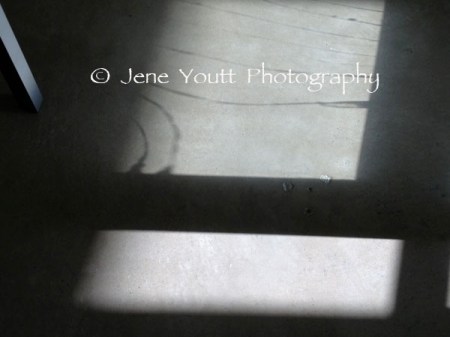
here it is. sunlight coming thru the glass store front creating a shadow on the basement wall behind the spiral staircase. i sit on my stool waiting to be called but am drawn into this shadow world waiting to see if i can capture the precise moment of an interesting composition. some hits a few misses.

IMG_0144

making for an interesting passing of time.  one can see the railing in the left side of frame. i am still waiting. these images remind me the silent Dracula film ‘Nosferatu the Vampire’

IMG_0145

oh i miss a few nice ones but get a few i like. 1, 2, 3  look at me

IMG_0137the game continues

IMG_0139now i’ve moved off my stool but keep a keen ear out for my name to be called

IMG_0148

finally my genius calls. in a brief moment shorter than it takes to describe my problem he moves his thumb and my phone is fixed. i am free to leave as the sun moves among the buildings changing shadows and opportunities.

i hope this posting finds you well  and plenty of opportunities to enjoy your life.

jene
February 2, 2013

Trisha Brown @ BAM this week opening 1/30/13

January 30, 2013

trisha brown announced last december she is quiting dancing or actually making new dances but considering she’s created dances for 30 years that’s a pretty

good run i’d say. i was lucky to get tickets to see the company this wednesday, 1/30/13 not sure where the seats are but at least i won’t have to do any cues.

see BAM web site for more ticket information and a wonderful article in this past sunday Times by here at the Times lesure & arts sectio .

we last saw trisha’s work Astral Converted at the Park Ave Armory last fall. this was mary’s first introduction to the company and trisha’s work. we both enjoyed it and a question and answer session afterwards.

dance is such a lovely art form along with painting and sometimes photography. i think that photography is very hard for people to wrap their heads around as an art because we’ve all been so indatated with pictures, they are everywhere and of everything how can they be so special one asks.

yet how can we, each individual be unique when we are all made out of the same general material of DNA information and yet we humans are so different. trisha’s dances very physical and fluid yet playfully fun.

If one can get tickets I’d suggest taking a trip into Brooklyn and see what her work is all about. Be forewarned BAM has some off the most uncomfortable seats I’ve ever come  across. sitting for more than two hours can be painful.

Reactions from Dancing around the Bride at Philadelphia Museum of Art

January 29, 2013

you may remember i wrote about going down to philadelphia to see this performance of the cunningham dance company performance and exhibit of cage, johns, rauschenberg and duchamp.

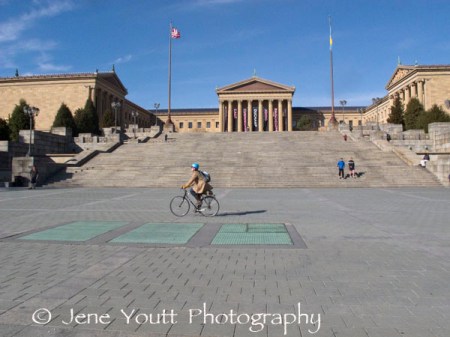
the philadelphia museum of art is one of my favorite museums which i have gone to a few times, lots of space to see and feel everything. phila museum

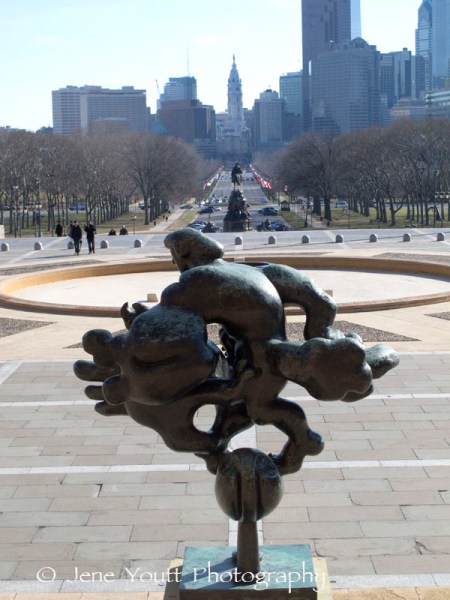
Ben Franklin Pky & downtown Philadelphia

Ben Franklin Pky & downtown Philadelphia

during the weekday it’s not really crowded except for school children on an education outing.

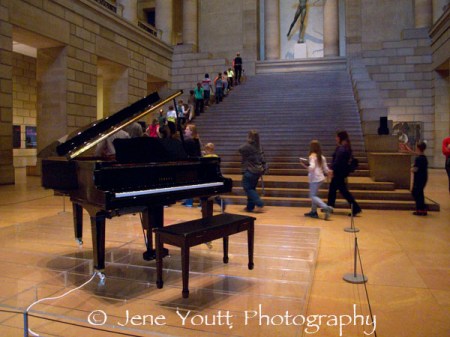
school children on grand staircase with cage piano

school children on grand staircase with cage piano

Aguscus Gaudgns

Augustus Saint-Gaudens Diana a top of the Great staircase

but on to the show, as i said it wasn’t that crowded but a nice crowd that filled the bleachers we sat on

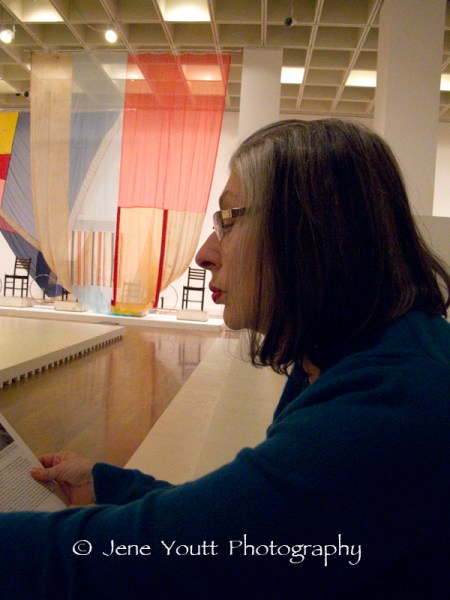
Mary reading program

Mary reading program

Rauschenberg set

Rauschenberg set

Company dancers

Company dancers

Dancers

Dancers

but here is one of my favorite dancers of all, tucked away in a gallery waiting your discovery.

Degas Dancer

Degas Dancer

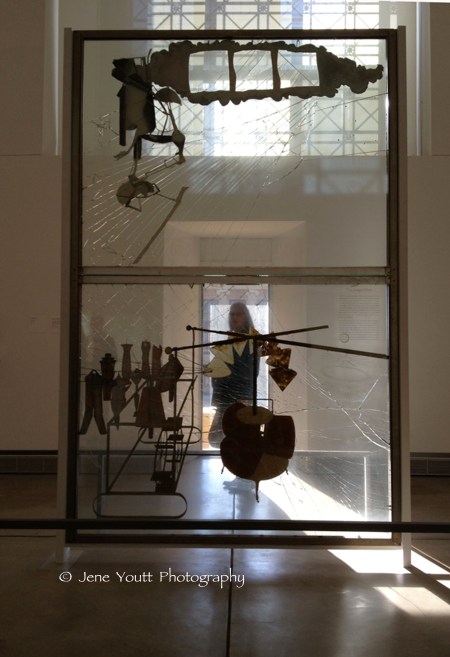
which we discovered on our way to see the Duchamp’s Large Glass in gallery 182.

Large glass w the bride stripped bare by her bachelors

Large glass w the bride stripped bare by her bachelors

oh that’s a passing patron. one of my favorite things to do when i visit this gallery is to capture people in this piece. to get to this gallery one passes so many wonderful things and delights to the eye. i hope you visit this museum it’s really worth the trip to Philadelphia.

Shadows of Large Glass

Shadows of Large Glass on floor

oh and don’t forget to see the west entrance wall painting, A wheatfield on a summer afternoon by Marc Chagall  or the photography galleries on the ground floor. a lovely day of wandering around the place as if it was your own. or visit their web site at http://www.philamuseum.org/

we had a late lunch early dinner at the Good dog bar in downtown philadelphia, the food was ok but nothing to rave about.

jene
dance around town Caravan Project & NYC Ballet Les Ballets de Faile

January 26, 2013

A must see exhibit at MoMa thru Monday 1/21   reposted from nyc metro

Yesterday Jene & I spent nearly an hour watching the slow, dramatic movements of Eiko and Koma’s Caravan Project at MoMa.   The strength and endurance of these performers are amazing.  The performance runs all day (see museum hours) in the Agnes Gund Garden Lobby, first floor.

Picture 26

Eiko and Koma have been performing together since 1972 and Jene happened upon them a number of years ago I think at City Center.  So when he spotted the advertisement in the NY Times for MoMa, we jumped at the chance.  Their choreography is similar to Japanese butoh and Kazuo Ohno was where they drew some of their inspiration from.

————————————————30—————————————–

when i first saw Eiko and Koma i did an internet search and found a very small web presents, but their web site now has an extensive documentation of their work. truly inspiring, do visit it to see this amazing art form.

but now we have another dance work, this time by another new york institution NYC Ballet

INTRODUCING NYCB ART SERIES

An Unexpected Way to Experience a Night at the Ballet.

NYCB Art Series commissions contemporary artists to create original works of art inspired by our unique energy, spectacular dancers, and one-of-a-kind repertory of ballets. New York City Ballet has worked with leading and emerging artists throughout the Company’s history — luminaries like Andy Warhol, Keith Haring, and Julian Schnabel. We are proud to continue this tradition by partnering with Brooklyn-based artists FAILE for the inaugural year of Art Series.

FAILE’s installation, Les Ballets De Faile, was created for the Art Series performances on Friday, February 1, and Wednesday, May 29. On these dates, every seat in the house is available for just $29, and each audience member will receive a limited-edition work made specifically for this event.

FAILE’s installation will also be on view to ticketed patrons at all performances during the Winter season and during special gallery viewing hours that are free and open to the public, February 10-17.

Sunday 10 AM–1 PM
Tuesday–Friday 12–5 PM
Saturday 10 AM–12 PM
Closed Monday

FAILE is a Brooklyn-based artistic collaboration between Patrick McNeil and Patrick Miller.  Since its inception in 1999, FAILE has become recognized as one of the leading artists in the contemporary Urban Art movement and distinguished themselves in the contemporary art world.  Their work explores duality through a fragmented style of appropriation and collage.  Working in a range of media from canvas, prints, and stencils to multimedia installation and sculptures, FAILE’s work is constructed from resampled visual imagery and blurs the line between “high” and “low” culture.

Friday, February 1, 2013* 

  • Polyphonia
  • Herman Schmerman (Pas de Deux)
  • Variations pour une Porte et un Soupir
  • The Waltz Project

Wednesday, May 29, 2013* 

  • Red Angels
  • Sonatas and Interludes
  • In Creases
  • A Fool For You

* Tickets are no longer available for sale online and have limited availability; please visit the Box Office or

One Light Portraits: Simple Elegance from Digital Photography School

January 12, 2013

One Light Portraits: Simple Elegance

by Rick Berk

Update: this post now has a Part 2 with lighting diagrams.

In this case, a reflector was used at camera left, but a neutral colored wall would work just as well. The flash bounces off the reflector, the rear wall picks up some light, and the ceiling picks up some more, illuminating the top of the hair.

Everyone who ever picks up a camera at one point or another finds themselves pointing it at another person.  But unless you walk around with a lighting kit in your back pocket, you have to make do with what you have.  If you’re lucky that means you have a speedlite in your bag.  If not, there are other ways to light your subjects and get a pleasing portrait.

Let’s start with the best case scenario- you have a speedlite on your camera with a swivel head. This gives you the flexibility of TTL exposure, as well as the ability to bounce the flash and avoid the ugliness of direct flash.  Bouncing flash simply means that the flash head is aimed at a surface and the light is reflected back onto your subject.  This softens the light coming from the flash head, and makes it a much more pleasing light source.  The ability to bounce the flash is huge, because a variety of looks can be achieved simply by repositioning the flash head and the surface the light is bouncing off of.  Walls and ceilings are generally pretty easy to bounce off of, but something smaller, such as a reflector, or a piece of white oak tag will work equally well.  The important thing about the surface being used for bouncing is that the color be neutral, such as white or gray.

Positioning the subject in a corner of the room will allow you to use one light to create multiple light sources.  The flash can be aimed at the wall to the side, and angled up to the ceiling to provide a hair light. In addition, the wall being used as the background will provide some back lighting. This will create soft shadows on the unlit side of your subject. It’s important to be sure your subject’s face is turned towards the bouncing surface so they are properly illuminated by the light.

Placing a reflector at waist level and bouncing the flash into the ceiling creates a soft glamor lighting effect. It’s actually a double bounce: once off the ceiling, and then off the reflector.

Another variation on this setup that works well for women and creates a glamor lighting look, is to place a reflector at your subject’s waist.  Bounce the flash directly off the ceiling and have the reflector kick light back up into the subject’s face.

Postioning the softbox to camera left created a soft light that flattered Mary’s facial structure. I positioned her in the shade of a tree, so the flash was sure to be the main light on her, while the background was lit by sunlight.

The next step with a flash is to get it off camera.  All of the major SLR makers offer some sort of wireless flash control. Again, a bare flash tends to not be the best light source. Flash in general is a harsh, unflattering light source.  To soften the light, a modifier is needed.

There are all kinds of modifiers available on the market.  Softboxes are great for portraits because the light is softened, directional, and there is no spill. Umbrellas are great for softening and directing the light, but you get more spill, meaning it’s harder to control what the light does and does not hit.  The basic rule of thumb is, the larger the light source, the softer the light.  So a larger soft box will nicely soften the light and wrap it around your subject, creating soft shadows as well.

The important thing when lighting with a softbox is that the light must hit the mask of the face, either from the softbox or via a reflector. If the face is in shadow, or if features of the face cast unflattering shadows, the portrait is going to be unsuccessful. Generally, positioning the light slightly above and off to the side of the subject will produce the best light.

A softbox positioned behind and to the side of the subject, while a reflector is positioned directly opposite to create a two-light effect.

If you happen to be outdoors, the available daylight works wonders for filling the background as you mix available light with flash.  Position your subject in shade, and light them with a flash and modifier of choice, such as a softbox.  Allow the available light to fill the background, and even create a hairlight.  Indoors, you can create dramatic low-key lighting using one light in a softbox.  Add a reflector, and now you have a two light setup.  The softbox as the main light can be used as a rim light or hair light, and position the reflector so that it bounces light back into your subject’s face.  You’re simply playing angles here, so watch where the light hits and bounce it back to your subject’s face.

This portrait was made using a household lamp with a 75 watt bulb, with a sheer curtain to soften the light. It’s important when using a household lamp to adjust your white balance properly, as the bulbs can range in color from more greenish to yellow.

Now, what if you’re caught without a flash? Simple. Any light source will do.  With today’s DSLRs, higher ISO’s mean greater flexibility in terms of light.  A simple household lamp with a shade can even be a good portrait light.  The important thing again is to watch how the light is falling on your subject.  You may need to manipulate the lamp’s position, or the subject’s position in relation to the lamp.  If the shade dims the light too much, remove the shade, and find another way to modify the light.  It could be as simple as rigging a sheer curtain in front of the lamp to create a scrim.

A single softbox will create more dramatic lighting. In this case, a large, 50 inch softbox was used creating a soft, dramatic light.

The bottom line is, no matter what, as long as you have light, you have the ability to make a great photo.  The key is simply being able to see the light, play the angles, and think outside the box when necessary.

See Part 2 of this post at One Light Portraits: The Diagrams where Rick illustrates how each of the images above was lit with diagrams.

Rick Berk is a photographer based in New York, shooting a variety of subjects including landscapes, sports, weddings, and portraits. Rick’s work can be seen at RickBerk.com and you can follow him on his Facebook page.

Read more: http://digital-photography-school.com/one-light-portraits-simple-elegance#ixzz2EwuByCVP

a new year opportunity, maybe learn something

January 6, 2013

this has been some new year, very traumatic but we have survived probably stronger cleaner yes, having had the opportunity to dump a lot of the old stuff hanging around collecting dust due to a fire at our apt studio.

it happened using and learning a new control system, my White Lightning LG4X controler and me being lost in the pictures i was getting. maybe had i read and understood the instructions in the book on page one this wouldn’t have happened but sometimes it just doesn’t register in my brain.

the fire started from the modeling light which i don’t usually use but was turned on that day. it caught fire to some show card i had placed to flag the strobe off the background. it got pretty scary looking at a wall of noseam paper on fire after the show card fell in the middle of the paper and me with no shoes on.

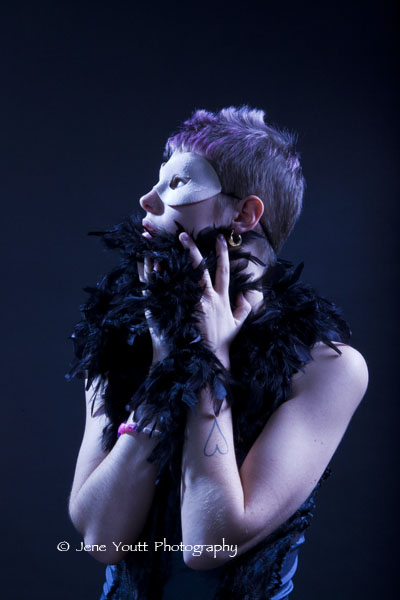
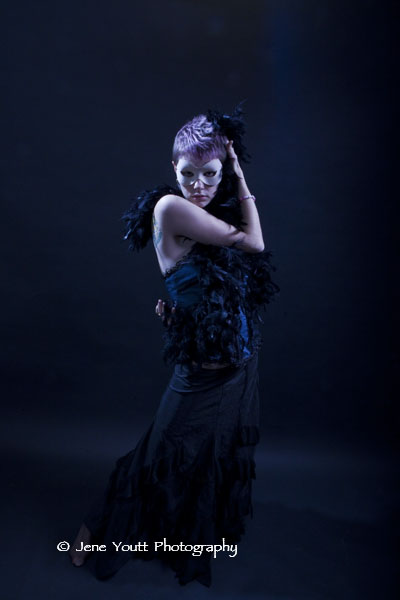
the ‘happy hippy’ as a friend of mine calls the model was someone new whom i’d never worked with but seemed ok. we started working with this costume of hers. it wasn’t until i saw the comps that i realized she was wearing a silly bracelet.i guess i need to check them more closely, strip them nude of everything.

_MG_5518

i never understand why models, someone who rents or sells their bodies get tattoos? yes it’s a cultural thing we all decorate our bodies in some way, but WTF  permanent markings? see the little hippy heart? and to even think i can photoshop something out is absurd. but there is more

_MG_5528 copy

how can i get rid of this, while a nice tat not what i am looking for in a model. i want  a blank file not something some one   wants.

_MG_5557

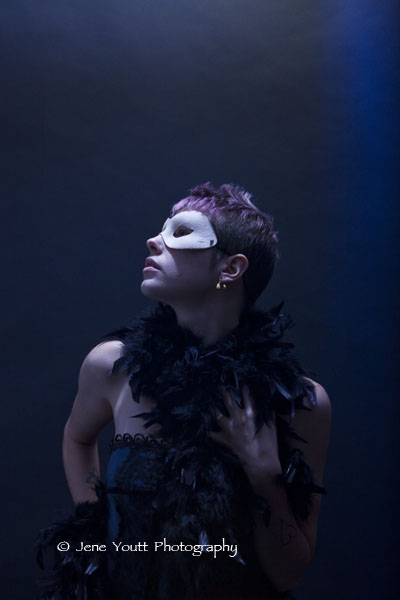
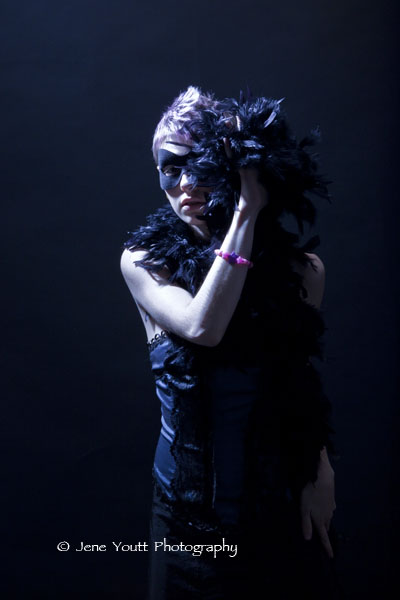
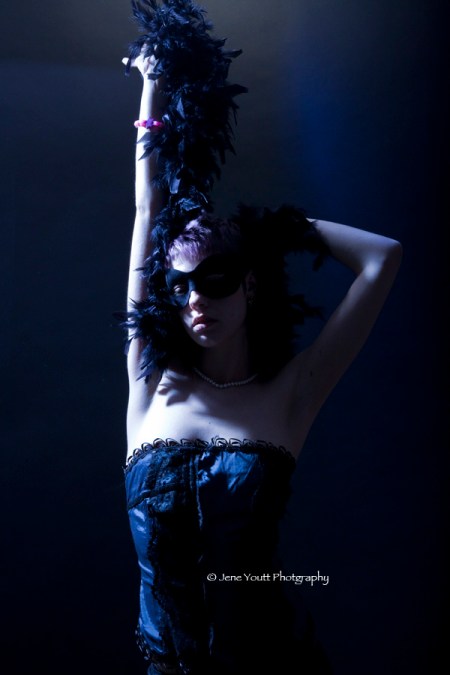
the color and costume along with the mask are a nice combination and pretty cool i think. but our shoot was cut short so who knows what might have been.

_MG_5563

i show this images because this is the first indication of trouble with the blue highlight on the background. i thought it was a cool effect but in retrospect it was a sigh of trouble in the black wrap was coming loose. but i didn’t notice the problem.

_MG_5613

the boa was my addition as were the masks, people react strange under the masks as it frees them a bit. playing with boa a gives the hands something to do. but there is the pink hippy bracelet, ugh

_MG_5609 copy

odd she doesn’t look like a ‘hippy’ but then again probably an apt description of the woman. too bad we don’t have more to share. so far we will never know what her body looks like because that’s all i got before the fire.

oh well

jene