Vogue “ITALIA” Takes On The Gulf Oil Spill

August 12, 2010

With Photographer Steven Meisel
Written by Lisa Orkin Emmanuel, APWriter
Wednesday, 11 August 2010 01:51

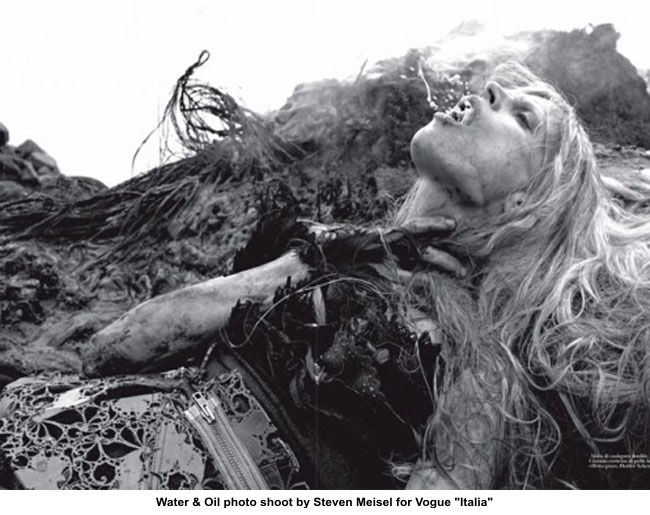
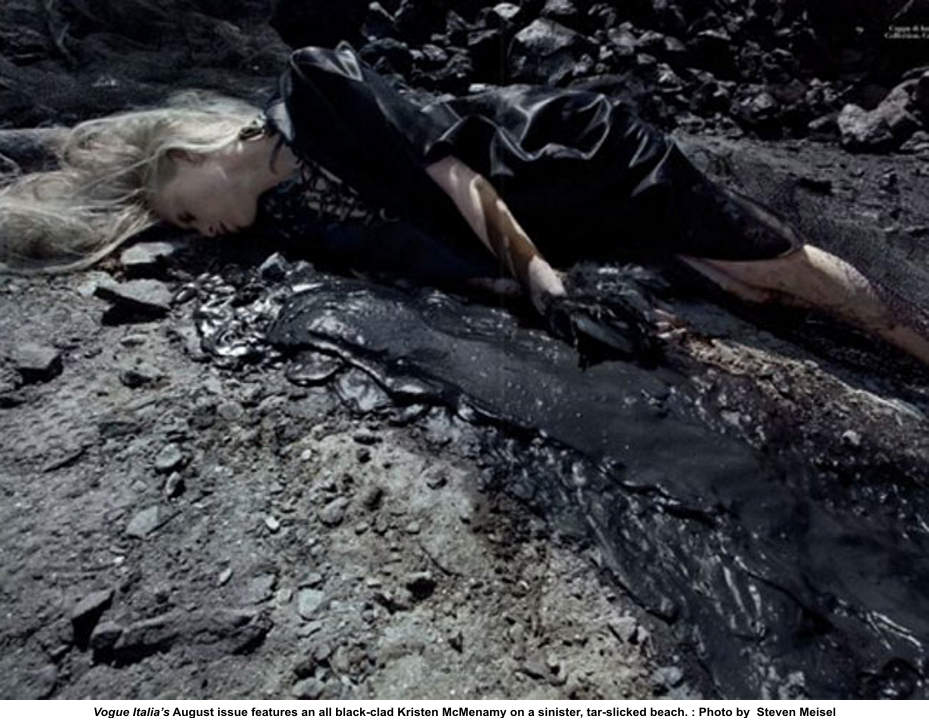
Vogue Italia’s August issue features an all black-clad Kristen McMenamy on a sinister, tar-slicked beach. : Photo by Steven Meisel

Vogue-Italia-August-Cover

Vogue-Italia-August-Cover

MIAMI (AP).- The model is in black, prone and dirty on jagged rocks, netting draped around her legs like a dead sea creature. There she is again, lying on her back in a feathered dress, and in close up, her hair and face sleek with oil. A stirring photo spread in the August issue of Vogue Italia was inspired by the Gulf oil spill, leaving readers wondering if the magazine crossed from evocative to insensitive. Editor-in-Chief Franca Sozzani understands the debate stretching from blogosphere to beaches and said the motivation is straightforward. “The message is to be careful about nature,” she said by telephone from Milan, Italy. “Just to take care more about nature. … I understand that it could be shocking to see and to look in this way these images.”

The spread, featuring Kristen McMenamy, is titled “Water & Oil” and was shot in Los Angeles by a leading fashion photographer, Steven Meisel. In another of the photos, the gray-haired McMenamy is covered in oil, spitting up water while clutching her neck.

Water-and-Oil-Steven-Meisel-Vogue-Italia

Water-and-Oil-Steven-Meisel-Vogue-Italia

Virginia Contreras of Navarre, Fla., said the photos were making light of the disaster. “I think they are making light of the oil spill. Everyone isn’t going to the beaches and people have lost their jobs here because of the oil,” she said.

Sozzani said the shoot reflects the magazine’s effort to “find an idea that comes from real life. … There is nothing political. There is nothing social. It’s only visually. We gave a message but in a visual way.”

Some bloggers weren’t pleased. Dodai Stewart, deputy editor of Jezebel, called the spread inappropriate. “I didn’t feel it made a statement,” she said in an interview. “I felt that they used the oil spill as a backdrop. There was one picture that had feathers. … What makes a stronger statement about oil-slicked birds is an oil-slicked bird.”

Miranda Lash, curator of modern and contemporary art at the New Orleans Museum of Art, said artists should be free to take on any topic. “When I look at it, I feel pain. It evokes pain and a feeling of loss and sadness because this is going to hurt my region for a very long time,” Lash said.

Beth Batton, curator of the permanent collection at the Mississippi Museum of Art in Jackson, Miss., said in an e-mail that the spread humanizes the condition of the Gulf coast animals and environment. “Looking at Steven Meisel’s photographs, you know something is terribly wrong because, as sensual as the images are, the human mind understands the toxicity of the oil that has coated model Kristen McMenamy’s skin, hair, and feathery gloves,” she said.

On Twitter, type in keywords Vogue Italia and you’ll get various opinions.

Brandie Hopstein, who lives in New Orleans, tweeted about the shoot after seeing the photos days ago. “There is this oil spill going on. It’s not going to be slipped under the rug,” she said. “I happen to love the shoot.”

Angelia Levy of Silver Spring, Md., tweeted that the spread was “kind of iffy, but it’s provocative.” She said she wasn’t offended, and questions whether an American magazine would have run it. “There is no way that would go down,” Levy said. “It seems distant for them so they can afford to have models rolling around in oil.”

While we’re not sure, we have to assume Meisel shot this spread as a response to the environmental tragedy that is the 107-day old Gulf oil spill. And while the irony of using clothing worth thousands of dollars that was probably flown halfway around the world for the shoot is not lost on us, we can’t help but think that if this isn’t art, we don’t know what is….said Art Knowledge News

By: Lisa Orkin Emmanuel, Associated Press Writer / Associated Press Writer Melissa Nelson in Pensacola, Fla., also contributed to this report.

courtesy Art Knowledge News

jene

Richard Avedon’s Lively Fashion Images at the Museum of Fine Arts, Boston

August 12, 2010

Richard Avedon’s Lively Fashion Images at the Museum of Fine Arts, Boston

Written by Vincent Baldino
Wednesday, 11 August 2010 01:53
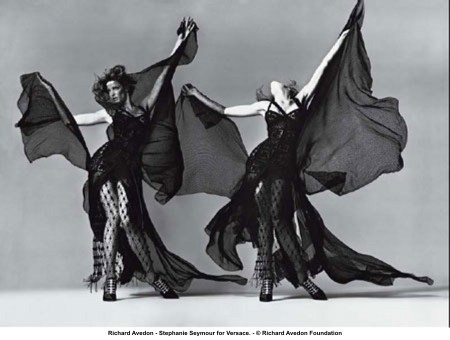
BOSTON, MA.- Richard Avedon (1923–2004) was the man who brought fashion photography to life. Instead of perpetuating static images of human mannequins posing stiffly in magazines, Avedon depicted his models as real women whose energy and exuberance complemented their modern lifestyles. Considered one of the great image-makers of the 20th century, he redefined fashion photography and his lasting contributions are explored in the traveling exhibition Avedon Fashion 1944–2000, a major retrospective devoted exclusively to his work in this medium. On view in the Foster Gallery at the Museum of Fine Arts, Boston (MFA), from August 10, 2010, through January 17, 2011, the exhibition highlights approximately 140 objects, including photographs, magazines, engravers’ prints, and contact sheets that span almost six decades of his successful career.
Richard-Avedon-Seymour-Versace

Richard-Avedon-Seymour-Versace

Avedon Fashion 1944–2000 examines Avedon’s years as a photographer who helped shape the image of the fashionable woman, drawing from thousands of pictures he took as staff photographer for Harper’s Bazaar and Vogue. It unfolds by decade, with the greatest emphasis on the classic work from the 1950s and 1960s, when Avedon’s distinct vision of the ideal American woman revolutionized magazine photography.

“Richard Avedon was one of the greatest photographers of all time, who forever transformed the way we look at fashion. The MFA is delighted to be able to showcase his supremely stylish and important work,” said Malcolm Rogers, Ann and Graham Gund Director of the Museum of Fine Arts, Boston.

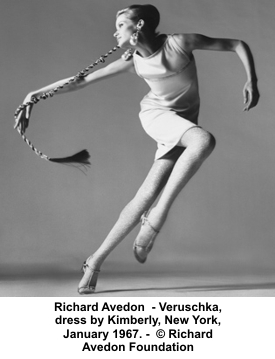
Richard Avedon – Veruschka, dress by Kimberly, New York, January 1967. – © Richard Avedon FoundationThe exhibition begins with elegant, romantic, and lively images taken in Paris, where he visited extensively from 1947 to 1965 on assignment for Harper’s Bazaar.
Richard-Avedon-Veruschka

Richard-Avedon-Veruschka

Despite the bleakness of the post-war years, Paris still represented the height of sophistication, and Avedon infused his photographs with a sense of optimism, helping the City of Light reclaim its position as the capital of the fashion world. The photographer created imaginative narratives—sometimes continued through several issues of the magazine—highlighting couture collections and featuring his favorite models: Dorian Leigh, her sister Suzy Parker, Sunny Harnett, Dovima, Carmen, Elise Daniels, and even his wife, Doe Avedon. He took these smartly outfitted women out of the studio and photographed them in French locales: Daniels, dressed in a Balenciaga suit, watching street performers in the Marais district in 1948; Harnett, in an evening dress by Grès, playing roulette at the Casino in Le Touquet, France, in 1954; and Parker, draped in a Grès gown, sitting near cancan dancers at the Moulin Rouge in 1957. Avedon’s famous night scenes in Paris, which began in 1954, broadened his creative range. Like movie sets, the complex fashion shoots he directed used generators to light up entire city blocks, allowing him to capture stylish bon vivants enjoying Parisian nightlife.

During his early years at Harper’s Bazaar, fashion photographs by Avedon were more than just a vehicle to market luxurious clothing to post-World War II American women—they were the embodiment of a dynamic lifestyle. His expressive images celebrated spirited women laughing, jumping, and dancing—even roller skating in Paris—all while wearing the most beautiful clothes.

“Those candid snapshots were in direct contrast to what was being done. I came in at a time when there weren’t any young photographers working in a free way. Everyone was tired, the war was over, Dior let the skirts down, and suddenly everything was fun. It was historically a marvelous moment for a fashion photographer to begin. I think if I were starting today, it would be much harder,” said Avedon in 1965.

The son of a women’s clothing store owner (Avedon’s Fifth Avenue), Avedon became fascinated with fashion photography as a boy. As a young man, he joined the Merchant Marine (1942–44), where he was assigned to the photography division. After leaving the service, Avedon enrolled in design classes at the New School for Social Research taught by Alexey Brodovitch, the art director of Harper’s Bazaar. In 1944, at age 21, Avedon joined the magazine, primarily as a photographer for Junior Bazaar. Shortly thereafter, he became an official staff photographer, working with the now legendary figures Carmel Snow, Brodovitch, and Diana Vreeland.

During the height of his career, Avedon became fashion photography’s most influential and prolific practitioner. His style was energetic and playful, with a flair for the dramatic, and while Avedon’s location shoots were groundbreaking, his major studio shots were also ingeniously inventive. The photographer illustrated the excitement of the “new look” of Dior—featuring cinched waists and voluminous circle skirts—by showing his model twirling on a Parisian street (Renée, “The New Look of Dior,” Place de la Concorde, Paris, August 1947). He developed the “Avedon blur” using variable focus, a technique creating a subtle background scene while highlighting the model in the foreground, as seen in an image of a well-turned ankle showing off a fur-trimmed bootie in front of the softly visible Eiffel Tower (Shoe by Perugia, Place du Trocadero, Paris, August 1948). Avedon also liked to show models “behind-the-scenes”—sitting at a café, seemingly in tears (Elise Daniels, turban by Paulette, Rue François-Premier, Paris, August 1948); assessing an outfit in the mirror (Dorian Leigh, evening dress by Piguet, Helena Rubenstein’s apartment, Île Saint-Louis, Paris, August 1949); or shown within the backdrop of a studio set (Suzy Parker, evening dress by Dior, Paris, August 1956). In many of his photographs, dogs and other animals share center stage with the models—Dovima in a Balenciaga suit and Sacha, an afghan, sitting next to one another outdoors at the Café des Deux Magots, Paris (1955), or Dovima in a Dior evening dress, shown alongside elephants at the Cirque d’Hiver (1955)—one of the photographer’s many iconic images.

Avedon was one of the most engaging image-makers of the 20th century. He revolutionized fashion photography with his dynamic images that set an ideal of the modern American woman. His enormous success led to great fame, and the status he attracted helped define the role of the high-profile fashion photographer that we are familiar with today,” said Anne Havinga, the MFA’s Estrellita and Yousuf Karsh Senior Curator of Photographs, who is responsible for the show in Boston with Emily Voelker, the MFA’s Estrellita and Yousuf Karsh Assistant Curator of Photographs. The exhibition was curated by Carol Squiers, curator, and Vince Aletti, guest curator, for the International Center of Photography (ICP), in conjunction with The Richard Avedon Foundation, New York.
Richard-Avedon-Stephanie-Seymour

Richard-Avedon-Stephanie-Seymour

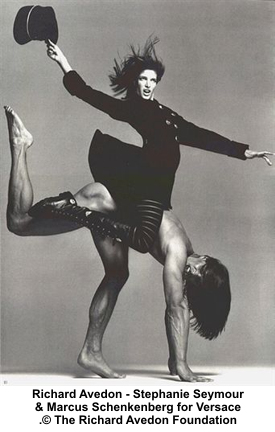
Avedon’s innovative approach enlivened the vocabulary of fashion photography, and even made him famous. The 1957 movie musical Funny Face is loosely based on Avedon, who served as the visual consultant for the production. Starring Fred Astaire as “Dick Avery,” a photographer working in New York and Paris, it co-starred Audrey Hepburn as his muse, a model chosen for her spirit and intelligence. Avedon’s own models were not only beautiful, but also embodied the idealized American woman, who had wit, personality, confidence, and a sense of adventure. They also reflected Avedon’s awareness of social and cultural changes. He was the first major photographer to use models of color, such as China Machado, a Portuguese-Chinese beauty he featured in the 1950s, or Donyale Luna, a sinewy model of African, Mexican, Egyptian, and Irish descent he worked with in the 1960s. His images elevated many of his models to celebrity status, especially in the 1960s and ’70s, when he worked with Jean Shrimpton, Lauren Hutton, Anjelica Huston, Twiggy, Penelope Tree, and Veruschka. In the 1980s and ’90s, his photographs helped bring supermodel fame to Kate Moss, Naomi Campbell, and Stephanie Seymour.

Avedon Fashion 1944–2000 includes a wide range of photographs that document the 1960s era, when advances in technology and demands for social reform became part of the evolving modern American experience. Among them are Avedon’s pictures of models wearing the “mod” fashions of the period at Cape Canaveral near an Atlas missile, or in the spacesuit-inspired fashions of André Courrèges, as seen in the famous April 1965 Harper’s Bazaar, the magazine’s 20th anniversary edition, which Avedon guest edited. The cover featured a Pop Art-inspired photograph by Avedon of Shrimpton in a day-glo pink helmet—the same photograph that appears on the cover of the exhibition’s catalogue, Avedon Fashion 1944–2000 (Abrams, New York, 2009). The photographer also embraced changing social mores with his forays into imagery that included nudity, or were discreetly erotic, as seen in his depiction of a suggested “ménage a trois” (Natty Abascal and Ana-Maria Abascal with model Helio Guerreiro, bathing suit by Brigance, Ibiza, Spain, September 1964).

In 1966, Avedon joined Vogue, where Vreelend had become its editor-in-chief. He captured the youthful brashness of the 1960s and turned Brooke Shields, Isabella Rossellini, and Barbra Streisand into fashion icons. With Vreeland’s approval, he also sought out quirky, unconventionally beautiful models, such as the wide-eyed waifs Penelope Tree and Twiggy, for his compelling photographs featuring Pop Art and “mod”-inspired fashions. Avedon’s work was included in most issues of Vogue until the mid 1970s. Vreeland was dismissed from the magazine in 1971, but Avedon stayed on, taking every cover photograph after 1980 until he quit in 1988. Avedon also photographed many imaginative advertising campaigns during his long career for clients including Versace, Calvin Klein, and Dior. In 1992, he was named the first staff photographer for The New Yorker, where his post-apocalyptic, wild fashion fable “In Memory of the Late Mr. and Mrs. Comfort,” featuring model Nadja Auermann and a skeleton, was published in 1995. In these later years, Avedon continued to contribute to Egoïste, a journal of fashion and the arts, where his photographs appeared from 1984 through 2000. He also pursued his own work as a portraitist, photojournalist, and the author of photography books until his death in 2004. His innovations are still evident in portraiture and fashion photography today.

Visit the Museum of Fine Arts, Boston at : http://www.mfa.org/

posted from Art KnowledgeNews

jene
so many other things on the list, new photoshoot look see

August 5, 2010

but i am dancing as fast as i can, trying to keep up with this lightspeed life of mine as the sun has sent an unusually fast corona mass ejection of a large cloud of charged plasma toward earth creating beautiful auroras over parts of the planet. see nasa link

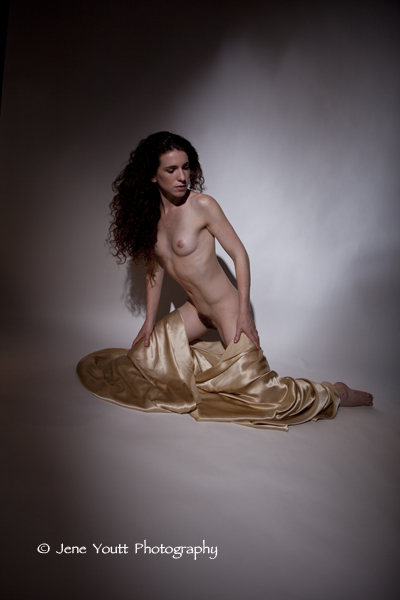
but i am looking through a photoshoot that mary wehrhahn did on fri with a traveling nude figure study model keira grant who’s pictures are posted below.  any photoshoot is an opportunity to learn something about the craft which mary and i did. mary is looking for emotion emitting people for her series inner sanctum and all that glitters.

i am trying to add to or just finish my cave dwelling adam and eve series which really hasn’t been posted on my web site which is under construction. well i thought keira would make a lovely addition. but as you’ll see here, lovely pictures but something doesn’t work which i’ll try and point out. not that keria did anything wrong, she didn’t but it her training and my total lack of  seeing that’s the problem.

part of doing these shoots is to learn how to direct the models or participants in order to get what i am looking for, sometimes the magic works sometimes it doesn’t. so you can be the final arbitrator and i’ll just add my commentary and see what develops.

here are the first ones letting mary work with her gold cloth, i lit the space with tungsten softboxes for her and flash for me. i was trying out my tota umbrella on my white lightning 1200’s. key light here 1200 with 216 on reflector and tota umbrella softbox back.

female nude

keria with gold cloth

notice the placement of her hands and how she uses her feet, more on that later but it seems this is a fine art model style, me not being a fine art model i wasn’t aware of this nuance.

white female nude

keria nude

now after this image i should have just sat down and rested.

after the shoot i asked mary if she got anything and she said not too much but some over and under exposed ones she liked. some days are like that. during this section was mostly me backing away from my take charge personality and letting mary direct the model. but i did fool around while waiting my turn.

female semi nude

keria semi nude

here i took off reflector and added some blackwrap to a front 1200 because i don’t have any barndoors nor did i want to fool around with setting flags. working in movies i’ve learned to work fast never wanting to be the person or department to hold up production. very big no no. below is a more traditional light cropping.

female semi nude

female semi nude

but again notice her hands and feet. the thumbs extended away from the hand forming a V and her feet curled away from her body pointing down or away in this case. this isn’t a problem really more about style or form.

but in this next series it’s not something that i am looking for. maybe i am just picky and seeing something that others don’t notice. here i switched over to tungsten with strip box overhead gelled and 750 zip light fill.

female nude

keria's nude back

here again are the hands, notice the V. while the feet are again pointing away from the body. she does have a lovely back and cute tush which adds to the overall form and line of the figure.

another image this time sitting.

keria sitting

i remember a discussion keria and i had about the style i wanted from her as she showed me her pointed feet saying how this was fine art modeling to which i replied ‘i wanted a more natural look’. we did discuss what this series was about and who i thought she was as a character. during some of the poses i told her exactly what i was looking for, emotion, which was hard for her to do. models aren’t actors as their training is so different, so asking someone to do something they are not use to nor trained for is difficult.

it’s not about a pretty body but the emotional impact the image has, either through the tension in the body’s hands or face. i like to tell a story with my images beginning in the viewers mind, i want them to think. if the work does that then i’ve got them.

female nude

keria kneeling

this is one of the first shots in this series and really works. so any complaints i have about her really come right back to me. she was an all around trooper and really tried to give me a successful session. did i get something i can use and did she give me what i asked for?  who knows

life is just stuff and then more stuff. the problem is to be able to live with just the stuff that’s here now and forget about the stuff from yesterday.

so if you’ve gotten this far maybe you’ve gained an insight to my work, if you have, fine. at least no animals were hurt in the creation of this post.

jene youtt

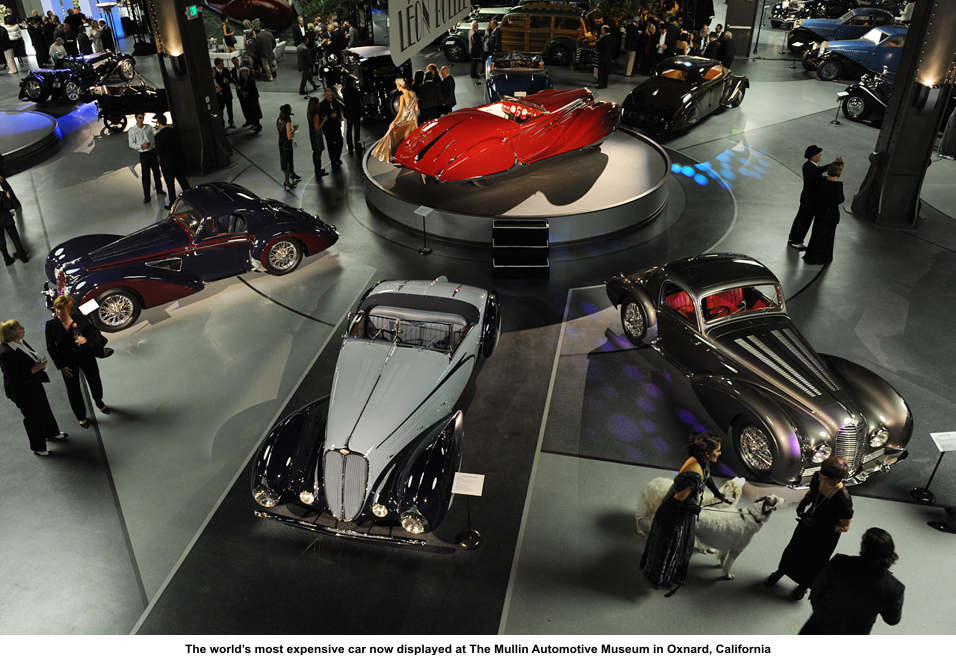
The world’s most expensive car now displayed at

August 5, 2010

The Mullin Automotive Museum in Oxnard, California

The-Mullin-Automotive-Museum

knowing how much cars mean to californian’s, driving around town shielded by a steel bubble, is almost a religion gone public. one is what one drives seems to be the zen mantra of some californian inhabitants affecting both male and females of that race.

in the short time i lived there, ten years,  i got an automotive education about cars i never even heard of. looking for my cougar i saw many new varieties of cars, ever hear of a jensen? an english car. with all the movie people driving leased lamborghini’s and ferrari’s down the freeway one feels a sense of why not me as they pass or more likely as you both inch along in a traffic event.  slowly as times passes one by while waiting to move ahead we can see ourselves behind the wheel of any number of exotic cars, looking cool.

heads turn towards us, we are somebody not just another toxic carbon monoxide generator killing plants and people because we look cool behind the wheel of ………………. name your poison. but if you’d like to see something dreams are made of then go up to oxnard ca.

Oxnard, CA – If you have a desire to see the world’s most expensive car in all its primal glory, the Mullin Automotive Museum in Oxnard, Calif., has put it on display. The 1936 Bugatti Type 57SC Atlantic, the first of three built, sold for more than $30 million and possibly as much as $40 million in a private sale brokered in May by California auction house Gooding and Company. The Bugatti will be on display for just two or three months at the art-deco-inspired Mullin museum, which opened April 15. Watch for museum hours, which are sporadic. The first chance to gaze at the Bugatti Atlantic will be Aug.10th from 10 a.m. to 3 p.m.

last roll of Kodachrome, this is kansas

August 4, 2010

Photographer Steve McCurry Shoots De Niro, Brooklyn, India on Last Kodachrome Roll

Steve-McCurry

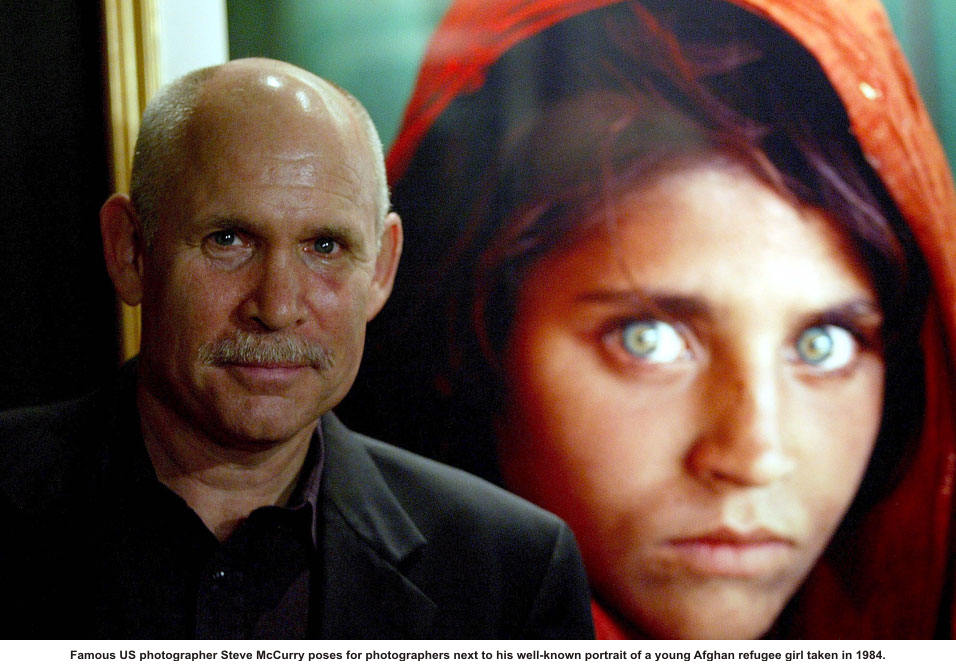
ROCHESTER, NY (AP).- What should a photographer shoot when he’s entrusted with the very last roll of Kodachrome? Steve McCurry took aim at the Brooklyn Bridge, Grand Central Terminal and a few human icons, too. Paul Simon, the crooner synonymous with the fabled film’s richly saturated colors, shied away. But Robert De Niro stood in for the world of filmmaking. Then McCurry headed from his base in New York City to southern Asia, where in 1984 he shot a famous portrait of a green-eyed Afghan refugee girl that made the cover of National Geographic. In India, he snapped a tribe whose nomadic way of life is disappearing — just as Kodachrome is.

see a link to The Wichita Eagle where the last Kodachrome lab exists Dwayne’s Photo Service or listen on NPR’s blog which also has some of McCurry’s India photographic work on a slide show. i’ve seen large prints of McCurry’s India studies at the Friends Without A Border auctions which we, Mary Wehrhahn and i belong to also donating prints of our work towards this wonderful charity which supports a children’s hospital in Cambodia which was first started by photographer Kenro Izu for the children of Cambodia whom he first met at Ankor Wat while photographing this amazing place. it is an infectious place.

Affordable Art Fair NYC Launching First Annual Fall Fair

August 4, 2010

NEW YORK, NY.- Following the record-breaking sales and attendance at the Affordable Art Fair New York City (AAF NYC) this spring, AAF NYC will launch its first annual Fall event in Manhattan from September 30 – October 3, 2010 at 7W New York ( 7 West 34th Street ). With AAF NYC now occurring twice a year, the fair will provide even more opportunities for emerging art collectors to view and purchase affordable art. AAF NYC Fall 2010 will appeal to both established collectors and first time buyers by presenting contemporary art priced from $100 – $10,000 by over 60 international and local galleries offering original paintings, sculptures, photographs, and works on paper. Offering all new works of art this fall, there will be something for everyone!

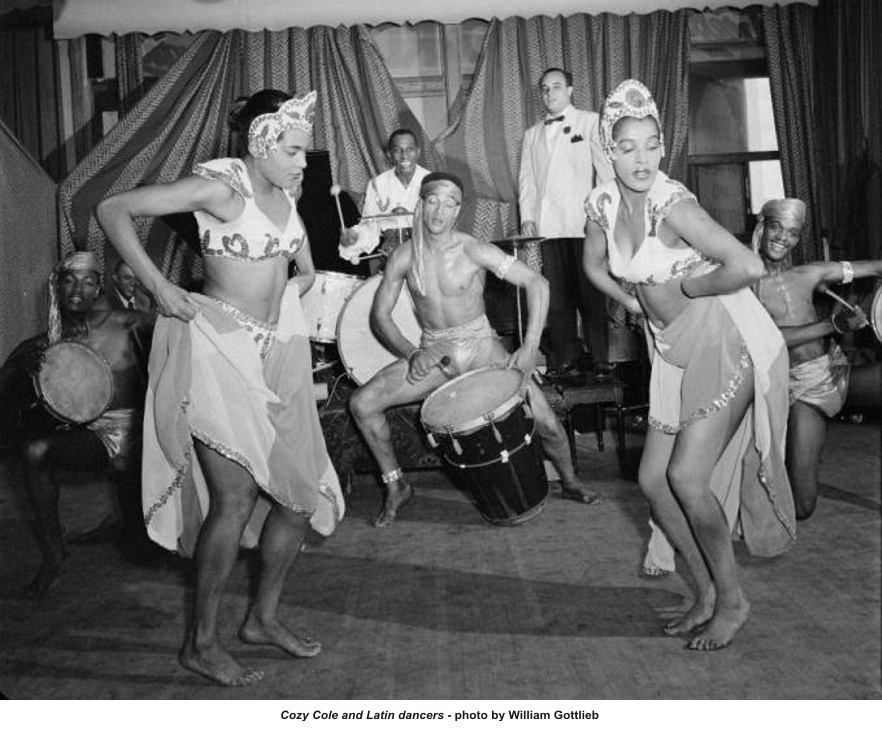
Library of Congress Places William P. Gottlieb’s Iconic Jazz Images on Flickr

August 4, 2010

Washington, DC – In the late 1930s, a Golden Age of Jazz started to emerge, as hard economic times began to fade

Cozy-Cole-Latin-Dancers

Airwaves were pulsating with jazz and record sales were rising.  Legends like Billie Holliday, Louis Armstrong, Duke Ellington, Charlie Parker, Dizzy Gillespie, Ella Fitzgerald, Frank Sinatra, and many more were on the scene – and so was William P.Gottlieb.Equipped with a bulky Speed Graphic camera, Gottlieb, a young columnist for the Washington Post and later a writer for Down Beat magazine, photographed jazz musicians and performers, capturing classic images that are well-known today.  Gottlieb photographed the jazz greats from 1938 to 1948.

the end or an era, where in manhattan do artist fit in?

August 4, 2010

Last Carnegie Hall Resident, Elizabeth Sargent, Forced Out of Carnegie Towers

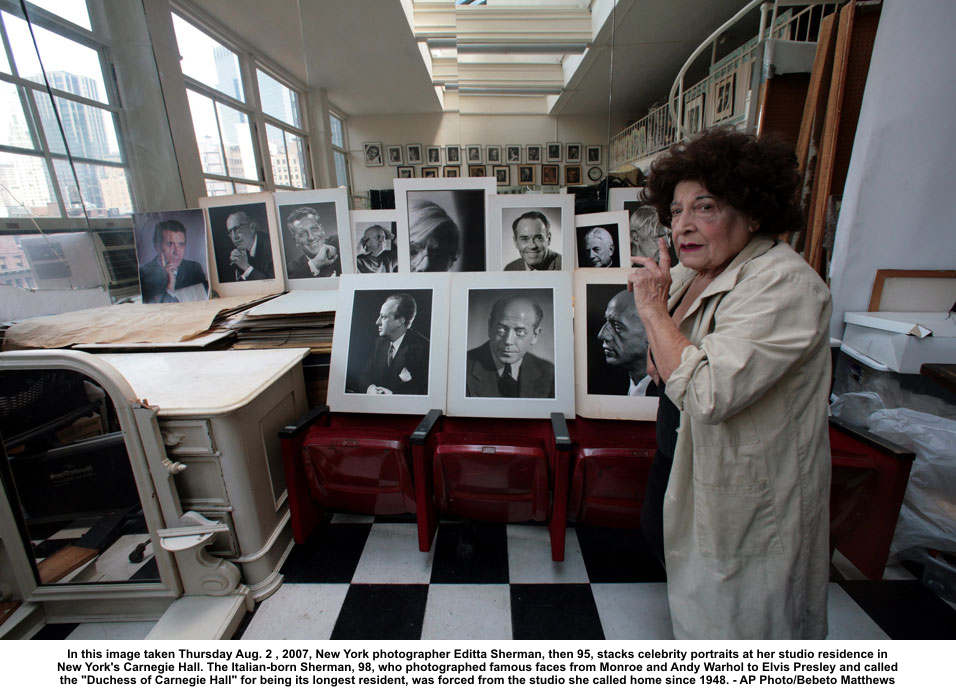
Editta-Sherman

In this image taken Thursday Aug. 2 , 2007, New York photographer Editta Sherman, then 95, stacks celebrity portraits at her studio residence in New York’s Carnegie Hall. The Italian-born Sherman, 98, who photographed famous faces from Monroe and Andy Warhol to Elvis Presley and called the “Duchess of Carnegie Hall” for being its longest resident, was forced from the studio she called home since 1948. She’s not been allowed to sleep there since early July and must also remove her belongings by Aug. 31. A resident since 1949, she raised five children in a studio with 25-foot ceilings and a view of Central Park. Her rent was frozen at $650 a month.- AP Photo/Bebeto Matthews

NEW YORK (AP).- All of her neighbors are gone, forced out. Now Elizabeth Sargent, the last holdout tenant of Carnegie Hall’s towers, is preparing to leave the her affordable studios that for more than a century housed some of America’s most brilliant creative artists. Red scaffolding surrounds Carnegie Hall as the city-owned towers are being gutted this summer in a $200 million renovation that includes adding a youth music program. Celebrities like Robert De Niro and Susan Sarandon had fought to save the homes, petitioning the city not to “displace these treasured artists and master teachers.”

Musicians, painters, dancers and actors thrived in the two towers built by 19th-century industrialist Andrew Carnegie just after the hall went up in 1891. The towers—one 12 stories high, the other 16—housed more than 100 studios, some with special skylights installed to give painters the northern light they prize.

Ms. Sargent, a one-time dancer, is now in her 80s and in remission from cancer. For 40 years, she’s lived on the ninth floor of the red-brick southern tower above the famed stage of the 119-year-old landmark. She has until Aug. 31 to clear out.

After a years-long legal battle, the two women finally reached agreement for new Midtown Manhattan apartments where rents will be subsidized by Carnegie Hall Corp. for the rest of their lives.

some new old work done today

July 28, 2010

sometimes i do shoots with the sole purpose of working on them later in photoshop to achieve what my vision is. this series is a work in progress with many fits and starts and today was no exception.

i had lots to do other than going to the farmers market and buying fresh vegetables but it was the time to sit here trying to make a few, well actually two images  happen. but the jury is still out on one of them while i love what happened with the other one.

so i’lll try and let you into my mind a bit and ‘show not tell’ one of the few things i learned in screen writing at ucla.

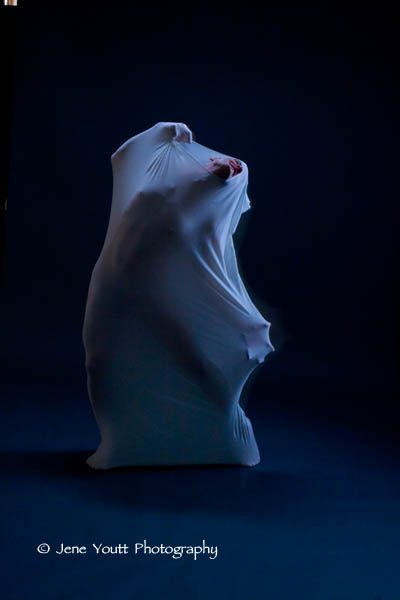
this is what i began with in the studio, mary made the costume as she has a sewing machine from my idea

abstract dancer suit

dancer suit

here is the final image i originally envisioned. it’s a composition of three different images reworked via layers in photoshop

birth of the tree of life

born of the tree of life

this process i learned from a very talented director i worked with on As The World Turns, Paul Lammers, adapted for sure to what i am doing now but always kept in the back of my mind. tricks sort of act that way, it has come in very useful over the years but like anything good only has limited uses.

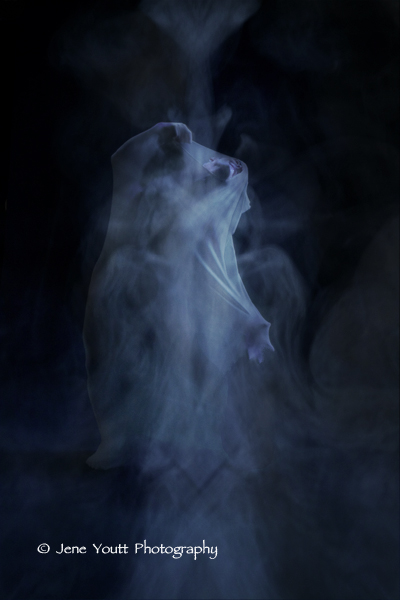
untitled

now this image is straight from the session, notice the different quality of smoke and how it affects the photograph, while the images works on it’s own i don’t think it as powerful as the previous image.

here is the another image from the same session that i’ve done a number of times and i might get one that i really like but this will do for now

man nude birth

born of

i guess you can see that i have a thing about birth. it all comes from seeing a movie when i was young showing natural childbirth i was fascinated and i still am by the whole process, but it goes by so quickly i hardly remember seeing my own sons head pop out then body sliding into the nurses hand.

who knows really what generates our creativity. i am happy to be away from the hungry ghosts of the past and to be able to have days like today with a farm fresh vegetable salad for dinner.

don’t you just love summer?

jene

New Orleans Photography Workshops w Joyce Tenneson

July 28, 2010

New Orleans Photography Workshops
Scholarship Application

Bringing your photographic vision to a larger audience with Joyce Tenneson
September 18-19, 2010

Please send the completed application, letters of recommendation and digital portfolio on a disc
(labeled with first and last name) to:

The New Orleans Photography Workshops
Attn: Scholarship Applications
1927 Sophie Wright Place
New Orleans, LA 70130

Application Deadline: Applications must be received by August 21, 2010.
Notification: Applicants will be contacted via e-mail by August 23, 2010.

About the scholarship: The scholarship is open to fine art photographers interested in
introducing their work to galleries or museums and photography educators who are in a position to
teach these skills to their students.
For more information about the workshop: http://www.neworleansworkshops.com (see
“Upcoming Workshops” tab)

To apply, please submit the following:
1. Scholarship application: see page 2.
2. Two letters of recommendation: The recommendations should be from people who are not
related to you.
3. For photographers: Digital portfolio of 10 images
• Image files should be formatted as 72 dpi jpgs at 10” long dimension.
• File names must include your first and last name (ex: John_Doe_4.jpg).
Note: Educators are not required to submit a portfolio.
For questions or more information contact: info@neworleansworkshops.com or 877-316-
0009
New Orleans Photography Workshops
Scholarship Application
Bringing your photographic vision to a larger audience with Joyce Tenneson
September 18-19, 2010
Please send the completed application, letters of recommendation and digital portfolio on a disc
(labeled with first and last name) to:

The New Orleans Photography Workshops
Attn: Scholarship Applications
1927 Sophie Wright Place
New Orleans, LA 70130
1. Last Name: _________________________________________________
2. First Name: _________________________________________________
3. Street address: _______________________________________________
4. City, state, zip code: __________________________________________
5. Telephone 1: ________________________________________________
6. Telephone 2 (optional): ________________________________________
7. E-mail: _____________________________________________________
8. Website (optional): ___________________________________________
9. For educators only:
Institution Name: _________________________________________
Institution Address: _______________________________________
Subject(s): _______________________________________________
Grade(s): ________________________________________________
10. Please attach an explanation of how a workshop on introducing photography to galleries and
museums will benefit you and the development of your career. (maximum 300 words)