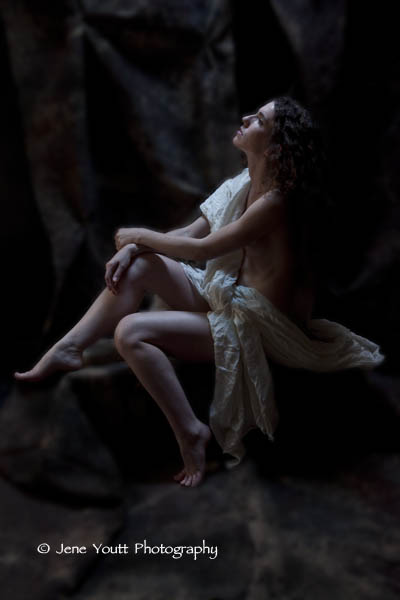
Mary has an opening at 3rd Annual Governors Island Art Fair, come meet the artist.

August 26, 2010

NEW YORK METRO ART SCENE

To start the fall display of gallery openings and events, 3 of Mary’s

mary

images will be part of the 3rd annual Governor’s Island Art Fair exhibiting with TheGreatNude Small Works. Although the images are B&W they are a part of my “All That Glitters” body of works.

So come out and support and meet some of the NY Metro area artists who will be there for the opening. be sure to say hello to mary.

The Art Fair runs form Sept 4th through the 26th on Saturdays and Sundays only.  And remember the gift of art is lasting and can have good investment value as the emerging artists’ work original or ltd editions increase over time.

So if you don’t want to be stuck in traffic on the LIE or GSP heading to the beaches, wander around the Island.  The island also is home to the National Historic Landmark District featuring 18th Century fortifications so wear comfortable shoes as you stroll the grounds.

There is no admission fee to enter the Fair where 120 abandoned army barracks will be filled with visual art, music and performers.

Saturday Sept. 4th 11 – 6pm.  opening reception from 3pm to 6pm – Building 12 – Section H-4

By subway:  1 to South Ferry Station

4, 5 to Bowling Green

R, W to Whitehall St Station

By ferry:  FREE from the Brooklyn Bridge Park Pier 6 (starting at 11am)  Pier 6 is located at the end of Atlantic Avenue at Columbus Street

There is also a ferry from Manhattan:

Directions to the Governors Island Manhattan Ferry
The Governors Island ferry departs from the Battery Maritime Building located at 10 South Street, adjacent to the Staten Island Ferry in Lower Manhattan. The ferry terminal is accessible as follows:  click this link for schedules

By Subway
1 to South Ferry station
4, 5 to Bowling Green station
R to Whitehall St. station

MoMA presents “Pictures by Women – A History of Modern Photography

August 26, 2010
Written by Ann Levin, Associated Press
Thursday, 26 August 2010 02:13

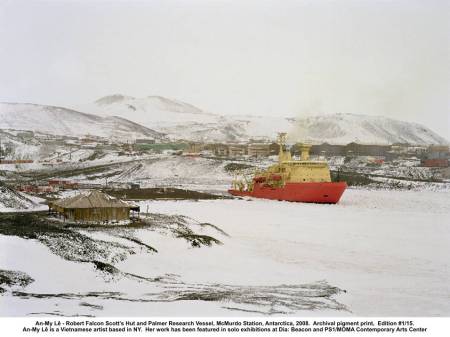
Robert-Falcon-Scotts-Hut

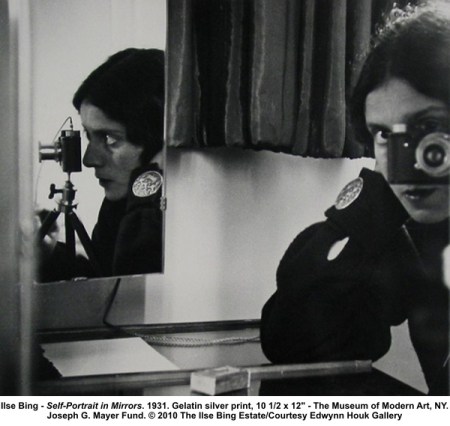
NEW YORK, N.Y. – The Museum of Modern Art’s photography collection is so rich that it can present virtually the entire history of the medium using only images taken by women and in many cases, of women. It’s instructive to realize that whatever genre or style in which men worked, even industrial photography, women were doing the same. The show is organized chronologically, beginning with a gallery of 19th and early 20th century photographs that illustrate the two traditions of documentary and pictorial photography. For much of photography’s 170-year history, women have expanded its roles by experimenting with every aspect of the medium.Pictures by Women: A History of Modern Photography presents a selection of outstanding photographs by women artists, charting the medium’s history from the dawn of The show continues with a stunning array of photographs by European artists in the 1920s and 1930s, including Ilse Bing’s 1931 “Self-Portrait in Mirrors,” which shows her looking straight at the viewer and in profile at the same time, an illusion made possible by using her camera as a third eye. the modern period to the present.

Including over two hundred works, this exhibition features celebrated masterworks and new acquisitions from the collection by such figures as Diane Arbus, Berenice Abbott, Claude Cahun, Imogen Cunningham, Rineke Dijkstra, Florence Henri, Roni Horn, Nan Goldin, Helen Levitt, Lisette Model, Lucia Moholy, Tina Modotti, Cindy Sherman, Kiki Smith, and Carrie Mae Weems, among many others. The exhibition also highlights works drawn from a variety of curatorial departments, includingBottoms, a large-scale Fluxus wallpaper by Yoko Ono.

The most compelling in the first category is a series of photos taken by Frances Benjamin Johnston at the all-black Hampton Institute (now Hampton University), founded to educate former slaves. At the other end of the spectrum are the self-conscious, artistic photographs by Gertrude Kasebier, known for her symbolic, soft-focus images of Victorian motherhood such as the 1899 “The Manger” and 1904’s “The Heritage of Motherhood.”

And since the art world seems to be having a Picasso moment, with major shows in museums and galleries and the record-breaking sale of one of his paintings at auction, be sure to look at an untitled work from 1930 by Picasso’s lover and muse Dora Maar, a highly regarded artist in her own right. It shows a woman from the rear with her long black coat lifted up in the wind.

The show continues with a stunning array of photographs by European artists in the 1920s and 1930s, including Ilse Bing’s 1931 “Self-Portrait in Mirrors,” which shows her looking straight at the viewer and in profile at the same time, an illusion made possible by using her camera as a third eye.

Ilse-Bing-Self-Portrait-New

You’ll also want to spend time in front of two prints by French photographer Germaine Krull, whose beautifully composed images of urban landscapes show that women could do muscular photographs of architectural structures as well as any man.

Although Dorothea Lange is among the best-known U.S. photographers, male or female, the curators have rightly devoted an entire wall to almost 20 of her photographs, all the subjects girls and women. They range from her iconic Depression-era picture “Migrant Mother, Nipomo, California” to the poignant image of Japanese-American children saying the pledge of allegiance soon after President Roosevelt ordered the relocation of 120,000 Japanese-Americans into grim camps in the West.

The mid-to-late 20th century is represented by MoMA’s newly acquired colour photographs of New York street life by Helen Levitt, best known for her work in black and white, and uncomfortable but affecting images by Austrian-born Lisette Model and Diane Arbus.

Witty wallpaper just outside the entrance shows close-ups of human buttocks, reproduced from a 1960s-era film made by Yoko Ono. The images look vaguely human up close but resolve into a pillowy abstraction when seen from a distance.

And as you leave the show, “29 Palms: Mortar Impact,” a large, black-and-white photograph by Vietnamese-American photographer An-My Le, depicts a few clouds of smoke rising from the barren desert floor, framed by the distant peaks of a rugged mountain range. It suggests the bleakness of war, hints at U.S. engagement in Iraq, and in its simplicity and clarity, is a work of stunning beauty.

The sixth gallery of the exhibition will close on Aug. 30, and the other five will remain on view through 21 March, 2011.

Visit on the Net: http://www.moma.org/

art knowledge news

jene

Ipad App Flexfolios

August 24, 2010

here is a neat new app for the IPAD which seems to be a must have for the on the go photographer. i am not an IPAD user nor do i think i’ll be one in the future. but for some people i can see the use for this app Flexfolios

it was developed by a fellow i know emmanuel faure and antoine verglas and seems to work like a charm. one can order it directly for flexfolios or through the apple itunes store. it even has a utube video here showing it’s use.

jene

The Man Who Made Robert Mapplethorp

August 24, 2010
Written by Roger Finch
Tuesday, 24 August 2010 01:33
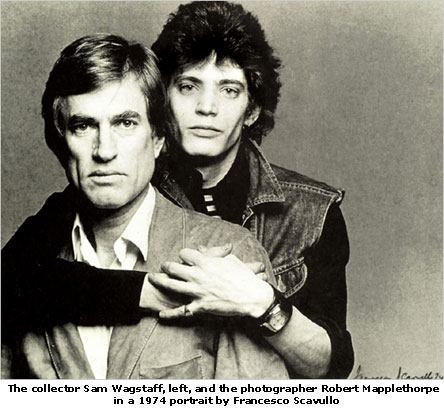
Sam Wagstaff TheCollector

Sam Wagstaff TheCollector

New York City – Mr. Sam Wagstaff was one of the first private art collectors to start buying photographs as early as 1973, long before there was a serious market for them.  His photography collection came to be regarded not only for its scholarship. It was also original and unorthodox, and turned out to be extremely valuable.  Mr. Wagstaff sold it to the J. Paul Getty Museum in 1984 for $5 million, a fortune at the time, establishing that institution’s collection of photographs, now among the finest in the world.

But the Wagstaff mystique deepens around his relationship to Robert Mapplethorpe, his lover, to whom he was also mentor and career impresario.  Mr. Mapplethorpe, 25 years his junior, was the bad boy photographer who scandalized the National Endowment for the Arts with his formal and highly aestheticized homoerotic photographs, which were given a retrospective at the Whitney Museum of Art in 1988, securing his legacy.  Still, obscenity charges were brought against the Cincinnati Museum of Art when it mounted an exhibition of Mr. Mapplethorpe’s work in 1990.  Mr. Wagstaff himself affectionately called him “my sly little pornographer.”

Mr. Mapplethorpe, a young artist from a working-class neighborhood in Queens, was making elaborate constructions with beaded jewelry when he and the patrician Mr. Wagstaff, who had been a well-known curator at the Wadsworth Atheneum Museum of Art in Hartford, met at a party in Manhattan in the early 1970s.

Throughout the film, interviews with more than a dozen people who knew them both provide an intimate and anecdotal picture of their lives, both individually and together.  In particular, Patti Smith, the poet and rock star, offers tender descriptions of her friendship with both men.

Ms. Smith’s friendship with Mr. Mapplethorpe began in 1967 when they were both art students at Pratt Institute in Brooklyn.  They were living together near the Chelsea Hotel in the early 1970s when Mr. Mapplethorpe first brought Mr. Wagstaff to meet her.  “Sam came in and seemed totally at home in my mess,” she recalls.  “We liked each other immediately.  He had such a great sense of humor and had such a nonpretentious and nonsanctimonious spiritual air.”
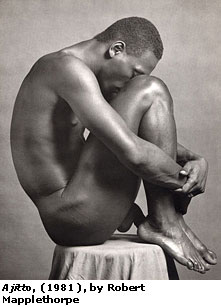
Robert Mapplethorpe Ajitto

Robert Mapplethorpe Ajitto

Dominick Dunne met Mr. Wagstaff when they were both young men in New York, and he talks about the dichotomy between Mr. Wagstaff’s life in the closet in the 1950s and his more public profile later with Mr. Mapplethorpe.  “Sam Wagstaff was the New York deb’s delight,” he says in the film.  “He was probably one of the handsomest men I ever saw. Tall and slender and aristocratic-looking. And he was funny.  And he was nice.  And the girls went absolutely nuts over him.”

Gordon Baldwin, a curator at the Getty Museum, recalls in the film that Mr. Wagstaff was proud of his aristocratic background and says Mr. Wagstaff told him more than once that his family had owned the farms where the Metropolitan Museum is now, at the time of the Revolution.  “It was pretty clear that he came from a starchy background,” he said.

Mr. Wagstaff certainly made up for lost time.  In the early 1970s, he “became an eager participant in the excesses of the age,” says Joan Juliet Buck, the writer who narrates the film with a lofty voice, reading adulatory, if not lapidary, biographical prose that delivers the facts about Mr. Wagstaff’s life in a tone aimed at, well, posterity.  He was “always in rebellion against his conservative and upper class background,” she notes.

“He often held drug parties in his Bowery apartment,” Ms. Buck says at one point, as if holding her nose at the very idea.  “He used drugs for sex and he liked the alternative perspectives they offered.”

Philippe Garner, a director of Christie’s in London and a friend of both men, says in the film: “My guess is that Robert gave Sam the courage to explore areas of his personality, to savor a darker kind of lifestyle than he would have done on his own.  He unlocked a dark genie within him.”

Despite Mr. Wagstaff’s sybaritic activities and his relationship with Mr. Mapplethorpe, unconventional at the time, he managed to amass a world-class photography collection and also to shape the other man’s career.  From the humble Polaroids Mr. Mapplethorpe was making when they first met to his more provocative and refined photographs, which now command $300,000 a print at auction, the influence of Mr. Wagstaff’s taste and aesthetic sensibility on his work is undeniable.
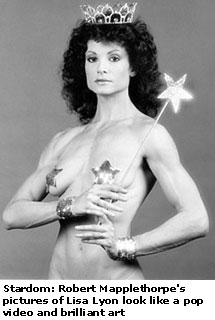
Robert Mapplethorpe Stardom

Robert Mapplethorpe Stardom

The film’s title, “Black White + Gray,” has several meanings.  Most, if not all, of the photographs in the Wagstaff collection were black and white.  Most of Mr. Mapplethorpe’s best-known work is black and white too, and many of his nude subjects were African-American.

But more specifically, the title refers to an exhibition called “Black, White and Gray” organized by Mr. Wagstaff as a curator at the Wadsworth Atheneum in the early 1960s.  The show included works by Barnett Newman, Ellsworth Kelly, Ad Reinhardt and Jasper Johns, among others.

The show “sent shock waves through popular culture and heralded fashion’s embrace of Minimalist aesthetics,” Ms. Buck says in her narration.  At the time Vogue magazine published an eight-page feature on James Galanos’s couture, with Mr. Wagstaff’s exhibition as the backdrop.  “Back in the 1960s, curators like Sam, Frank O’Hara and Henry Geldzahler were much more like artists than a lot of curators on the scene are today,” Raymond Foye, the publisher of Hanuman Books, an independent press, says in the film.

The film’s narration tends to cast Mr. Wagstaff in nothing less than Olympian terms: “His aesthetic underscores an unequal vision grounded in passion, intelligence, sexuality and clever financial speculation,” Ms. Buck recites as rare self-portraits by Mr. Wagstaff are shown.  “He had few rivals in his time. And none at all today.”

The intimate, never-before-shown photographs of Mr. Wagstaff and Mr. Mapplethorpe throughout “Black White + Gray” make great social anthropology, and the interviews with Ms. Smith, Mr. Dunne and others give depth and warmth to an otherwise stiff, if earnest, portrait.

Both Mr. Wagstaff and Mr. Mapplethorpe died of AIDS, Mr. Wagstaff in 1987 and Mr. Mapplethorpe in 1989.

One snippet of footage shows a shy and endearing Ms. Smith reciting a short poem of hers in an interview on the BBC in 1971: “New York is the thing that seduced me.  New York is the thing that formed me. New York is the thing that deformed me. New York is the thing that perverted me.  New York is the thing that converted me.  And New York is the thing that I love too.” . . .

By Philip Gefter

art knowledge news

Fassbinder: Berlin Alexanderplatz’ at KW Institute

August 24, 2010

for those people who’ve kept up with my eclectic postings know this i some of my all time fav films. it’s a long one for sure 16 hours. i first saw it on PBS when they were a public educational television station, now they are just a tape playing house showing safe nature films and raising money to line the executives pockets. i’ve been there done that. has anyone who’s seen the replacement of Bill Moyers and Now know

Press

Berlin– The monumental film Berlin Alexanderplatz that Rainer Werner Fassbinder made for television is based on Alfred Döblin’s 1929 novel. The film consists of thirteen episodes and an epilogue. It runs to fifteen hours and thirty-nine minutes. When it was first screened in Germany in 1980, it triggered heated debates and gained international recognition as one of the cinematic masterpieces of the past decades. A meticulously restored 35-mm version of Berlin Alexanderplatz Remastered  has been successfully presented to the public at the 57th Berlin International Film Festival in February.  On exhibition 18 March until 13 My, 2007.

Press

On March 17, 2007, KW Institute for Contemporary Art will open Fassbinder: Berlin Alexanderplatz – An Exhibition. The show will present this unusual and fascinating work in a way that enables visitors to choose their own mode of approach. In fourteen separate rooms, the episodes and the epilogue of Berlin Alexanderplatz will be screened in permanent loop. In addition, all the episodes will be shown in chronological order and full length on a central big screen. Visitors can thus decide how they approach Berlin Alexanderplatz: they can divide its unusual length up into pieces, watch episodes several times, or return to the exhibition whenever they like, as the entrance ticket entitles holders to repeated visits. The parallel screening of all the episodes in one place will highlight Fassbinder’s impressive visual idiom and his artistically challenging, free and innovative use of images.

The epilogue to Berlin Alexanderplatz marks a high point in Fassbinder’s creative work, combining visual and narrative planes in a complex collage that anticipates contemporary artistic positions. The exhibition also presents stills from the film’s 224 scenes. Moreover sketches from Fassbinders storyboard will be on view for the first time ever. A further, highly personal document are the tapes on which Fassbinder himself recorded his script for the film and which have never previously been made accessible to the public.

The exhibition is accompanied by a catalogue (in German; approx. 600 pages), edited by Klaus Biesenbach, with essays by Susan Sontag and Rainer Werner Fassbinder. The catalogue includes extensive illustrations. Furthermore the publication contains the complete screenplay as well as the biography, blbliography and filmography. Curator: Klaus Biesenbach.

Press

KW Institute for Contemporary Art is regularly listed among Germany’s foremost modern art institutions and attracts international media coverage. KW has no collection of its own but instead views itself as a laboratory for communicating and advancing contemporary cultural developments in Germany and abroad by means of exhibitions, workshops and resident artists’ studios, as well as by collaborating with artists or other institutions and by commissioning works.

Founded in the early 1990s by Klaus Biesenbach and a group of young art enthusiasts, the institution is located on the site of a abandoned margarine factory in Berlin’s Mitte district. It symbolizes, perhaps more than any other institution, the city’s development into a center of contemporary art in the decade after the fall of the Wall.  As well as presenting the first solo shows or major new projects of outstanding international artists such as Doug Aitken, Dinos & Jake Chapman, Paul Pfeiffer, Santiago Sierra and Jane & Louise Wilson, KW also introduced emerging new artists from Berlin and elsewhere in Germany to a wider public.

Visit KW Institute for Contemporary Art at: www.kw-berlin.de

The Work Office (TWO) is now hiring!

August 22, 2010
The Work Office (TWO) is participating in the Dumbo Arts Festival and is now hiring!
Visit www.theworkoffice.com to apply. TWO is participating in the Dumbo Arts Festival from September 24–26th. We are accepting applications on a rolling basis through September 7th.
The Work Office (TWO) is a multidisciplinary art project disguised as an employment agency. Informed by the Works Progress Administration (WPA) of the Great Depression in the 1930s, TWO is a gesture to “make work” for visual and performing artists, writers, and others by giving them simple, idea-based assignments that explore, document, and improve daily life in New York City. From a temporary, publicly accessible office, TWO’s administrators will hire employees and during the Dumbo Arts Festival will exhibit work and distribute Depression-era wages at a Payday Party. You are invited to submit an application online, choosing from one of the following assignments:
Build a bridge
Document a need for repairs
Make a regional travel guide for your block or neighborhood
Record an oral history
Reinterpret a newspaper photograph
Design a poster to promote something
Catalog existing WPA structures in New York
Make a mixed CD related to…
Give a concert for your houseplant
Start an American tradition that you’d like to be preserved
Assign yourself
A TWO administrator will contact and interview applications of interest. Applications are evaluated based on the strength and clarity of your proposed response to one of our assignments. Once hired, you will have a week to complete your assignment, for which you will be paid $23.50, the weekly wage for an artist in the Federal One Project (the arts division of the WPA). You must be able to complete your assignment during the work week of September 13th–20th.
TWO will hold a Payday Party at the office during the Dumbo Arts Festival on Saturday, September 25th. Employees will collect their wages and the public will be invited to view the week’s works and learn about the project. Completed assignments will also be on view during the entire Dumbo Arts Festival from
Friday, September 24th through Sunday, September 26th.
Questions? Write TWO at: apply@theworkoffice.com
For more about DAF, visit: www.dumboartsfestival.com
The Work Office (TWO) is made possible by a Brooklyn Arts Council Regrant, Two Trees Management,
Brooklyn, NY and donations from generous individuals.
Naomi Miller
The Work Office (TWO)
917 289 0926
The Work Office will be open September 24–26, 2010 during the Dumbo Arts Festival
Friday 5–9 pm, Saturday & Sunday 12–6 pm
Payday Party  Saturday 6–8 pm
We will be located at 45 Main Street, 8th Floor, Brooklyn, NY.
Take the A/C to High Street, F to York Street

—–Inline Attachment Follows—–

_______________________________________________
opportunities mailing list
opportunities@chashama.info
http://lists.chashama.info/mailman/listinfo/opportunities

wedding invitation, sounds simple?

August 19, 2010

when mary and i do weddings the part i always love to do are the details, like rings, shoes and bouquets. the same thing when i worked at WNET was the gifts on pledge break, no producers just the cameraman, stagehand myself and the products. loved it.

also a good time to check out my micro stuff with the 5D Mll which i’ve never done changing lenses starting with the 50mm and my adapter lenses of +4 then the +10 whoa, talk about close. but my 72mm doesn’t have a +10 the highest is a +4,+3,+2. i went with the 24-70 72mm lens opening it up to 24mm. the 50mm with the +10 was cool but didn’t show enough of the whole composition.

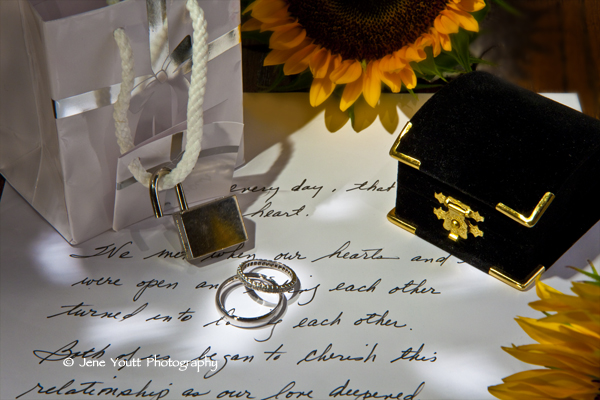
wedding invitation pic

wedding invitation pic

here is the one mary said she liked best. now getting here seems simple enough but looks can be deceiving.  these images don’t do the picture justice but give you a general idea of final product. it’s like those photo mags who show you pictures of the step by step photoshop actions. only problem are the pictures are too small for a human to read. well i’ll do the same here.

Screen shot

Screen shot

if you can read this i’d be surprised, but it does show you that after capture there are details needing attention. nothing just happens in 6 layers. it all began with the letter mary wrote beginning with ‘ it’s not everyday, that love enters your heart.’ then come the rings, hers was the easiest  but not a traditional wedding ring but called an ‘Eternity’ ring because it’s a band of diamonds surrounding the finger. shes going to wear her mothers wedding ring also so the two rings really go together nicely.i just wanted a plain band which after much consideration is what i went with.

but the devil is in the details and because of needing certain parts of the image in focus, not my usual forte, other parts needed blurring, ugly shadows removed and some bright spots toned down. the last thing i did here was to add the sunflower reflection to the lock face from another capture, because this one looked plain and boring.

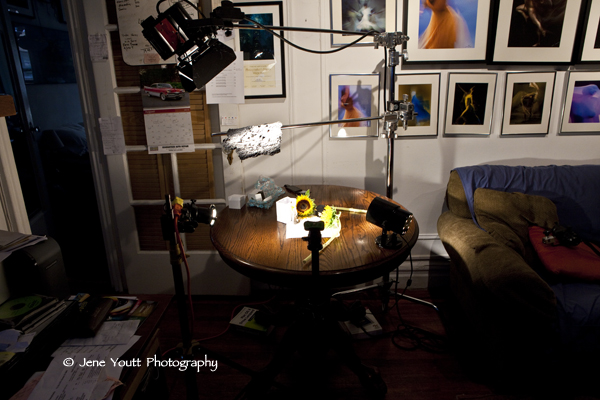
whole lighting setup

whole lighting setup

not a pretty site is it? but wait there is more.

the pattern comes from a piece of blackwrap shown here attached to a gobo arm attached to C stand with a mafer clamp. a quick and dirty way of doing patterns something i did on CBS 60 minutes show.

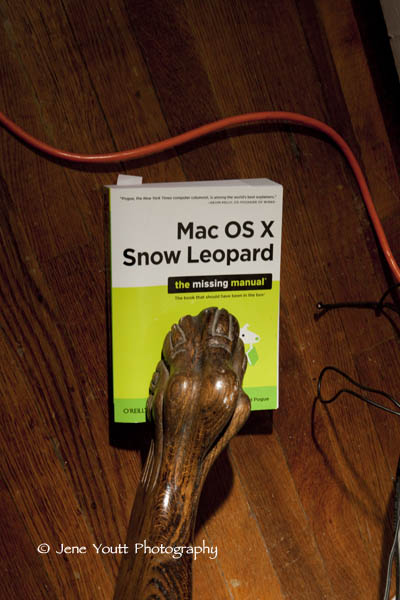
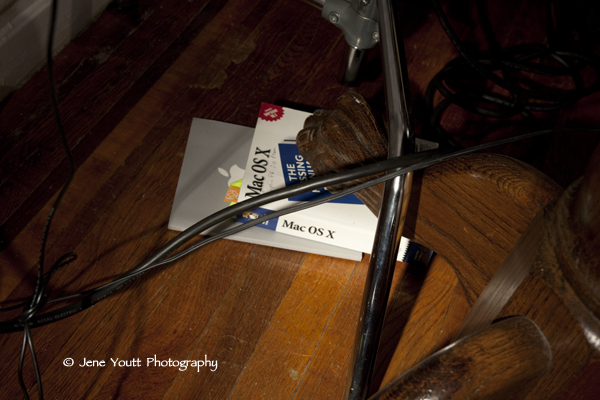
but it all began with tilting the table so i had a better angle, having two of David Pogue’s book came in handy

so the altman fresnel is a source for gobo, a wall reading lamp with a 75 w frosted bulb for right fill and an MR 16 spot with frost lighting the sunflowers from camera left. the shadow in the middle is my tripod.

so just to get this shot is a half a days work. now the next thing on the list is music. mary asked what’s your favorite songs, duh. so the story goes.

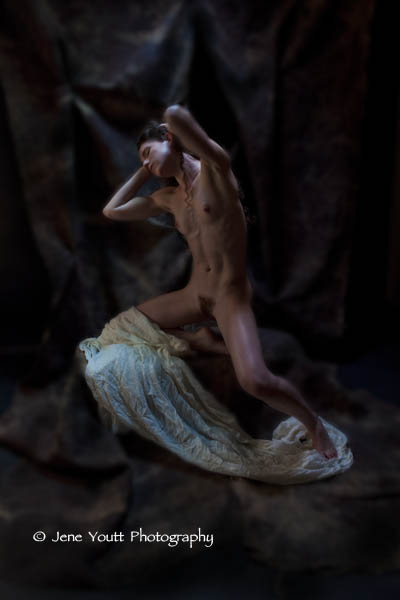
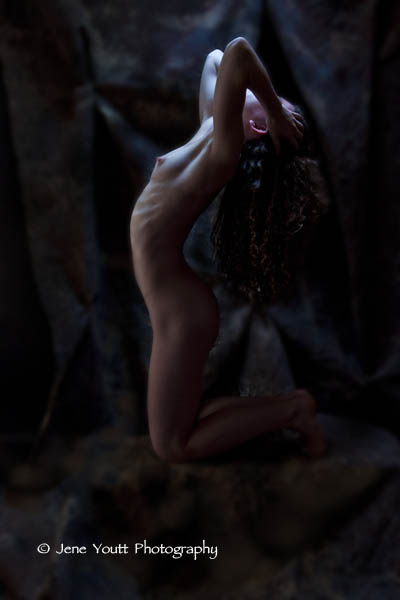
more Keira Grant nudes

August 17, 2010

sometimes i make myself sick doing things and not really paying attention to what i am doing. well so far that’s exactly what i’ve been doing today.

first mistake is having missed the PDN digital contest  which closed monday. I had a very nice image i wanted to submit but needed to clean it up a bit. oh well, lets move on to today where i wanted to go through the Keira Grant shoot

keira grant

and send some images she has requested but these images she’s never seen so this is also for her as much as it is for you

female nude

keira thinking

i retouched 7 images. had to move a open eye to one of them which i liked better than the closed eye she had in that take. so time to resize them and save for the web. i have an photoshop action for that, to save me time. well i ran the action thinking it would save the jpegs to my desktop and i’d drag and drop where i wanted them later.

female nude

keira streching

what i really did was resize the tiffs and save them as tiffs and not jpegs. so now i have some small tiffs which are useless  and  small jpegs which i can use for the web. ugh

making myself more work instead of less. what do they say ‘ if i didn’t have bad luck i’d have no luck at all’

female nude

keira praying

maybe this is what i should be doing to the Adobe gods, i wonder if it would really help? this old agnostic probably would get hit by lightning.

female nude

waiting for the gift

female nude

angel wings flapping

female nude

eye 4 an eye

i can’t hear myself thinking because the sun is streaming in here through the window telling me to go outside.

female nude

keira sitting

so what i need to do is just finish this posting up and move on to finding car parts as the xr7 money pit has gone to the paint shop and begin shooting the wedding rings so invitations can get designed and go out in the mail.

jene

for all you video artist, video-dumbo seeking submissions

August 13, 2010

video_dumbo is an international festival for contemporary video art. We are seeking submissions for the 2010 edition, as part of the Dumbo Arts Festival, September 24-26 2010.

Our focus is on contemporary video art. We are looking for:

A. single channel work for the screening programs
B. video installations [single/multi channel and interactive software]

NOTE: For video installations the selected artists are responsible for the installation, production costs and all the equipment required for your work to be exhibited. Sorry we are unable to provide extra equipment.

The festival panel will make a final selection of works after the entry deadline. If your work is selected, you will be notified by e-mail by August 30, 2010. The screening copy of your work as a .mov file (in a DataDVD) or in miniDV format will need to be delivered to the festival office no later than September 10, 2010 . Entrants are responsible for shipping costs. Please do not use fiber envelopes.

There is no entry fee. Submission deadline: August 21, 2010.

SUBMIT NOW AT WWW.VIDEODUMBO.ORG


If you have any questions regarding the application process send an email to: videodumbo@gmail.com

hot summer relief, night time swim

August 12, 2010

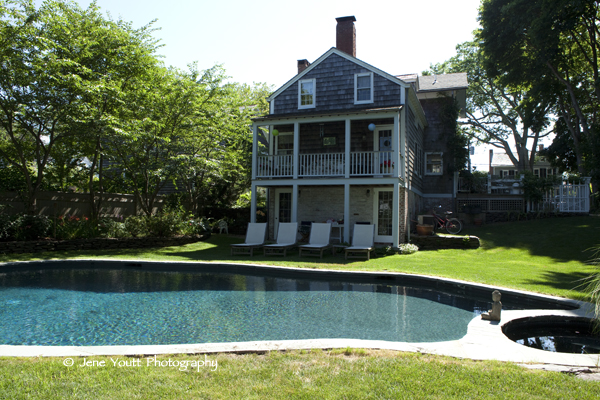
awhile ago we were invited out to the hamptons to a friends house to get away from the city, it’s always nice to explore new places and see different suroundings. so we gladly jumped in the car and drove out to the hamptons traffic jam. that’s what it become once you exit the LIE onto Rt 27.

i haven’t been out to hamptons in years and even then traffic was slow but manageable now it’s totally unbearable i don’t know how people stand it, no matter what time of day or night. oh well

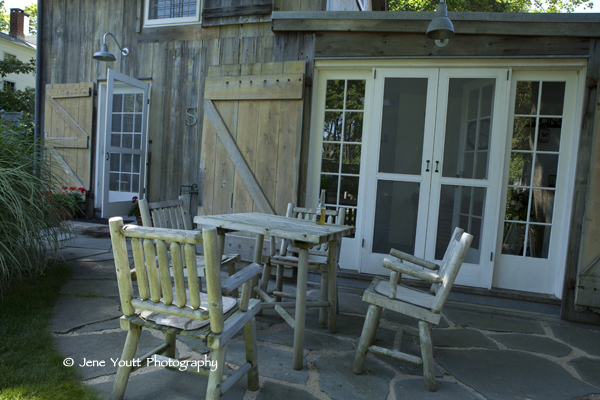
we stayed in the barn, all the animals had been moved out by the time we got there.  breakfast table and chairs set out for company.

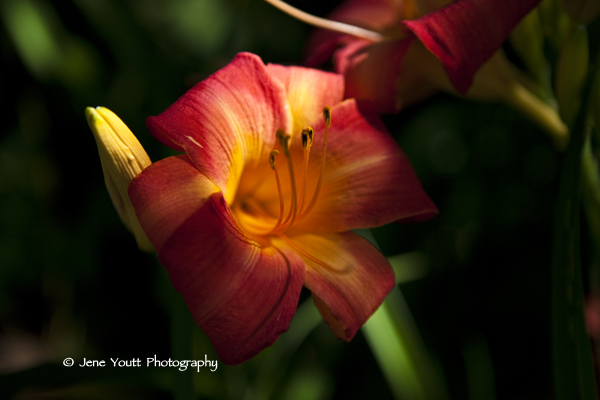
the house was lovely surrounded with flowers all around the yard

but we arrived in plenty of time to wander around the town and see the sights have an ice cream cone before dinner. nice to be a grown up isn’t it?

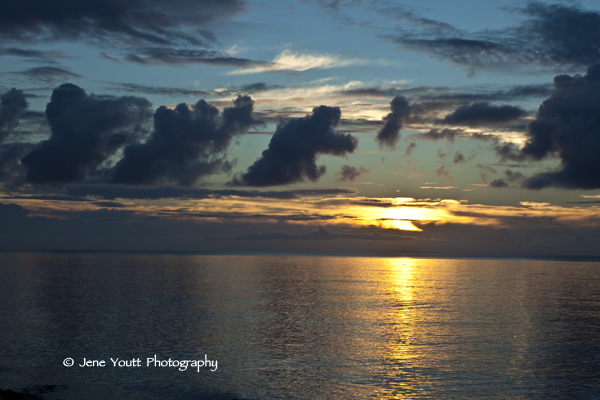
sunset

sunset

dinner was lovely nice time had with friends sharing fine food and wine. i wonder who was it that first discovered wine making? What would this world be like without google even though they and verizon are trying to put roadblocks on the internet having questions answered is cool.

Certainly wine, as a natural phase of grape spoilage, was “discovered” by accident, unlike beer and bread, which are human inventions. It is established that grape cultivation and wine drinking had started by about 4000 BC and possibly as early as 6000 BC. The first developments were around the Caspian Sea and in Mesopotamia, near present-day Iran. Texts from tombs in ancient Egypt prove that wine was in use there around 2700 to 2500 BC. Priests and royalty were using wine, while beer was drunk by the workers. The Egyptians recognized differences in wine quality and developed the first arbors and pruning methods. Archeological excavations have uncovered many sites with sunken jars, so the effects of temperature on stored wine were probably known. see wine pros

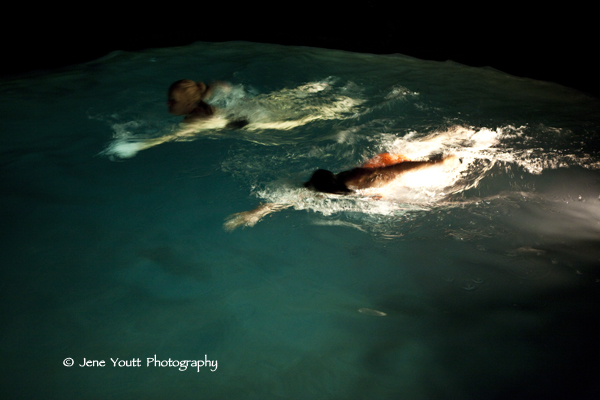
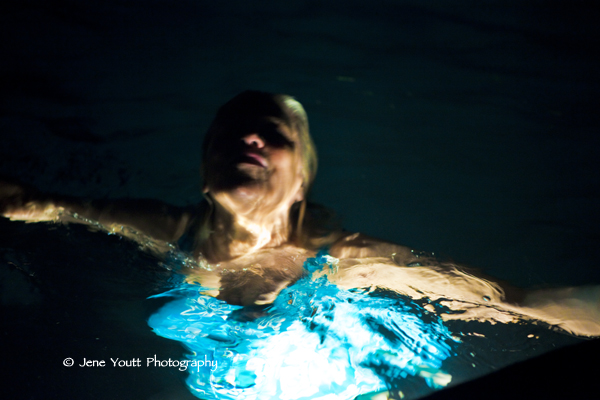
but after the dishes were cleared and coffee served the swimming pool beckoned under the clear starry night. we all rushed off to change and splashed into the pleasantly cool waters. i am not very quick to pick up my camera, something i might have to learn, but i am more about being part of rather than looker on,  if you know what i mean.

but because of the loveliness of the setting i wanted to linger on the memories longer that my mind could be trusted. only a few came out but i did like them anyways.

mary being sillythat’s why i love her

m&l racing

another friend

friend

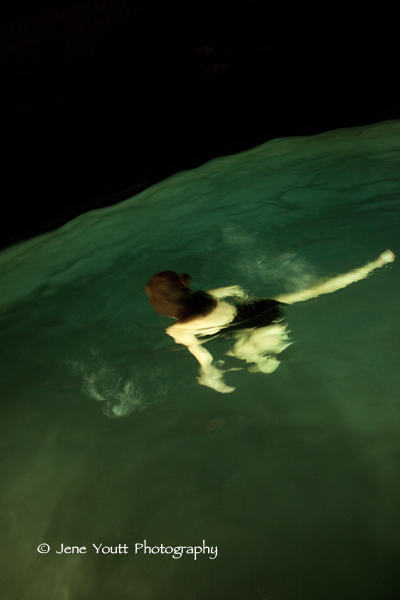
but this is one of my favorites below. i call it ‘ swimming off world ‘

swimming off world

while these images aren’t perfect and wouldn’t make any of the people’s scrapbooks because you can’t see faces i hope that sometimes my work captures the feeling of the moment. would i make the cut at life magazine if it were still around, i don’t think so.

i call this blog fuzzypictures because what with the advent of auto focus cameras, yes i have a few myself, it’s not about a fine focused image. yes i do have a few around here somewhere but sometimes it’s just not important.

jene