legal information from JPG News? “War on Photography”

January 19, 2012

PHOTOGRAPHY & THE LAW – War on Photography

Posted by Mickey H. Osterreicher — 18 Jan 2012

I have been asked to write a blog about legal issues facing photographers. I thought that the best way to begin was to provide a little bit of background about myself and a brief overview of some of the things that are happening on an almost daily basis throughout the country.

As Of Counsel to Hiscock & Barclay, LLP my practice area is Media & First Amendment Law. Most importantly I also serve as General Counsel to the National Press Photographers Association. Before becoming an attorney I was a photojournalist with almost forty years experience in print and television. Rather than bore everyone – for those who want to know more about me they can read my Bio or go to my profile page.

There has always been tension between the press and government regarding news coverage of matters of public interest.

Unfortunately since 9/11 the “War on Terrorism” has somehow morphed into the “War on Photography.” Visual journalists and citizens taking photographs or recording video in public places have been experiencing extraordinary interference nationwide from security personnel and law enforcement officials at all levels of government. This infringement upon protected First Amendment activities is often based on erroneous beliefs by those in authority that photography of certain public areas, buildings, landmarks or police officers may be prohibited because of anti-terrorism concerns.

In recent months the Occupy Wall Street protests have only exacerbated the situation – where photographers have been detained, interfered with and in many cases arrested for doing nothing more than taking pictures or recording video of matters of public concern in traditional public forums such as parks and city streets.

As one of two NPPA attorneys I get calls and emails everyday concerning incidents involving photographers. In many cases just publicizing what happened helps. Other cases are worthy of writing about in the NPPA blog, which in recent days has been full of such stories.

Recently, Donald R. Winlsow, the editor of News Photographer Magazine, published a nightmare tale about what happened to one photojournalist when he was arrested by police in Montgomery County, MD for doing nothing more than recording their activities. Another recent case involved a student photojournalist at R.I.T. covering an Occupy Rochester protest who was arrested. Because he was an NPPA student member I represented him in court and was able to have the charges dismissed.

But these horror stories about blatant violations of First Amendment rights don’t just happen to news photographers. In the next installment of Photography & the Law I will tell you about some of the citizens who have had the unfortunate experience of being stopped, interfered with and all too often arrested for doing nothing more than taking a picture or recording video.

For those interested the NPPA is a non-profit organization dedicated to the advancement of visual journalism in its creation, editing and distribution. NPPA’s almost 7,000 members include photographers, editors, students and all those interested in photography willing to abide by a code of ethics. Since its founding in 1946, the NPPA has vigorously promoted the constitutional rights of journalists as well as freedom of the press in all its forms.

Feel to follow me on Twitter @nppalawyer or Facebook and please don’t forget to take a look at the NPPA websitewhere you can find out more information about membership in an organization that advocates for and helps protect all photographers’ rights. I look forward to discussing these issues with you, the JPG community, and writing about the many different facets of photography and the law such as copyright, licensing and user-generated content.

This is JPG News Daily photography related news and goings-on at the JPG blog
old work new views

January 17, 2012

what else is there to do on this rainy grey day. my honey is out at the house and i am here. so i’ll just try and catch up on stuff i’ve been meaning to do but other things got in the way. a few days ago, maybe it was weeks as time and to do list come and go. i do get a good snuggly feeling when i get things done in  my life and then there is always more. i guess never rest for a creative i am not one to sit and relax. altho sitting in front of the warm fireplace today would be nice, but here i am staring at a white screen trying to fill it with black marks.

i decided to expand my Model Mayhem portfolio from a free site to one i pay for. not that i get any work from the site nor do man would be models line up for me to shoot them. i guess i am like a scotch an acquired taste.but i decided to put up some fashion images i had shot maybe years ago just to expand my client base, ha ha. so far it hasn’t worked.

but to those who follow this blog i often go through old shoots looking for new stuff which i did to add to my portfolio.

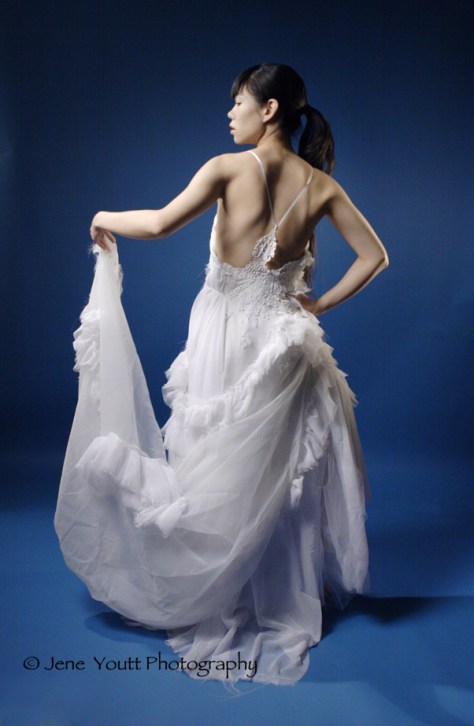
wedding dress

black & white

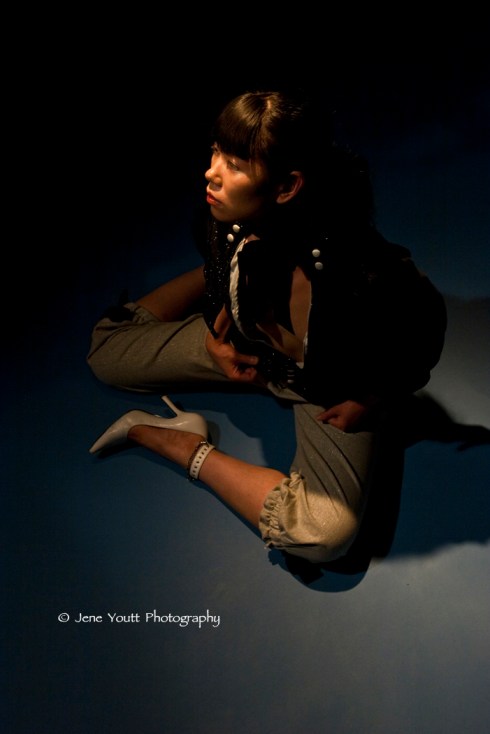
btw way she hated these images maybe not these one but for most of the shoot she had her eyes looking down as asians are taught, when i mentioned it she said her dance teacher told he the same thing. i thought the clothes lovely and tried my best but she wasn’t a happy camper.

low keyed fashion

coyly

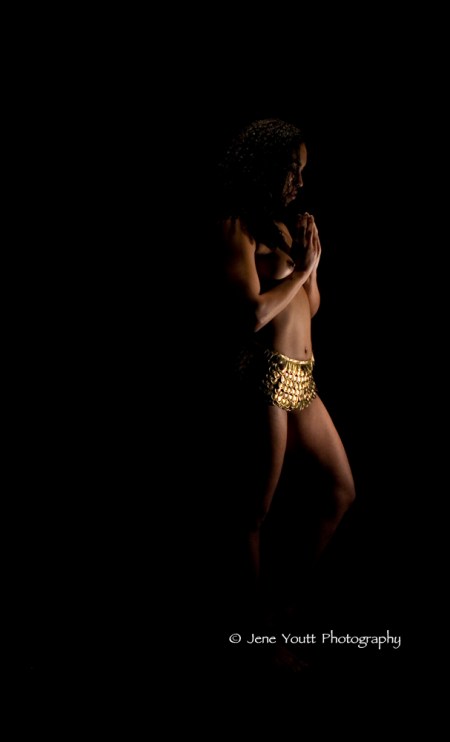
so these are just a couple of fashion images i loaded on to Model Mayhem but going thru my hard drives, of which i have a few, i looked at rachels folder. she is a nude new york model/student making her way through school, where i found these lovely images which also fill out my new quest to do fitness images.

nubian princess

on ever shoot i find something about the model that i find interesting, there isn’t that many things about a nude body that’s special yet i find them and that’s what keeps me doing them. here is one i really love

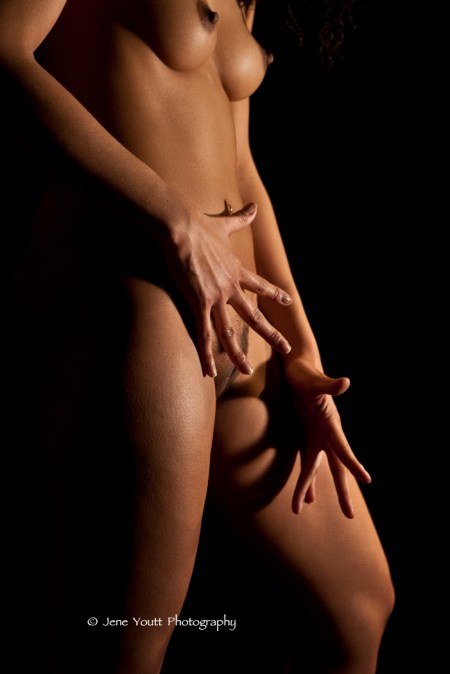
Hands

i love those hands

semi yoga pose

this one i put as my avatar on Mayhem thinking it was safe but lovely with good definition on her back. i don’t mind shadows.

forward bend

another skinny dancer model that i love the definition in her body.

nude dancer

dancer in red

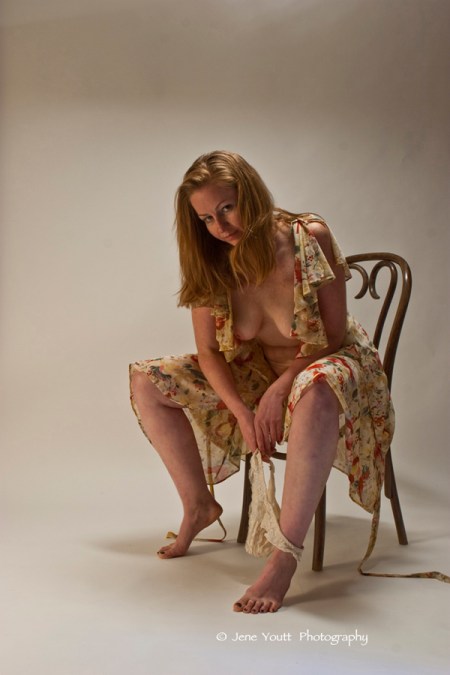
but some images and this is the only image from this shoot i like, working with amateurs doesn’t always work out. but this one i enjoy maybe because to me it tells a story.

waiting

i get click throughs on this blog to a lot of these nude images so i have to wonder if only males do google nude female searches or does that matter. what do they do with them?  i know of other togs who actually get work from their facebook pages, not too many but some. me i avoid facebook when ever possible. these images would never make it on facebook. i’ve already been restricted on Flicker and i’ve no idea why even through they sent me an email explaining what to do. it was a long explaination.

oh well

another ghost in the machine

so that’s it for today, the ravings of a artist photographer. thanks for stopping by.

jene

Hey folks we need some help here stop SOPA, PIPA contact your congress person

January 17, 2012
SOPA, PIPA opponents prepare for Capitol Hill piracy showdown

by Kenneth Corbin, CIO   Jan 17, 2012 10:00 am

Opponents of controversial anti-piracy legislation are gearing up for a major fight in both the House and the Senate as they press for support for an alternative bill they say would avoid draconian measures that, if enacted, could create major security vulnerabilities in the architecture of the Internet.

The two lawmakers leading the charge, Sen. Ron Wyden (D-Ore.) and Rep. Darrell Issa (R-Calif.), took to the Consumer Electronics Show in Las Vegas last week to press their case – a fitting setting, as the mammoth trade show gives an annual coming out party for tech firms’ latest innovations. The trade group that puts on the show, the Consumer Electronics Association, has been a vocal member of the lobbying efforts to oppose the Stop Online Piracy Act (SOPA) in the House and the Senate version, the Protect IP Act (PIPA), both of which the organization argues would impose dramatic limits on online innovation by exposing Web firms to excessive legal liability in the name of curbing piracy.

“We have been teaming up on this and have been working on this for some time,” Wyden said of his partnership with Issa, who in turn added that the two “in many ways are not predictable partners.”

Wyden and Issa are backing an alternative anti-piracy bill, the Online Protection and Enforcement of Digital Trade (OPEN) Act, a measure they say would create a more effective path for copyright holders to protect their intellectual property from foreign websites that profit from piracy, while avoiding the disastrous consequences they anticipate resulting from the enactment of SOPA or PIPA.

Although they vary slightly in their language, both SOPA and PIPA would empower the Department of Justice to seek an injunction from a federal judge against a foreign website that it considers to be primarily dedicated to piracy. If the judge agreed, Justice could then prevail on all manner of Internet players, including service providers, search engines, payment processors and ad networks, to cut off services to the offending site.

Critics of the bill, which include major Web companies such as Google and Facebook, have warned that in its efforts to crack down on overseas piracy, the legislation would inevitably ensnare legitimate websites in a form of censorship that would threaten to banish innovative and lawful companies from the Internet.

Additionally, a host of Internet luminaries and security experts have warned of the impact the legislation could have on the core naming and routing system of the Internet, creating the sort of network errors and insecurity that are common to the Internet landscape in authoritarian countries where state censorship is the norm.

“The biggest problem is the damage done to the domain name system [DNS] in these two bills,” Wyden said. Wyden, who serves on the Senate Intelligence Committee, said that the provisions that could jeopardize the DNS are at odds with the work that members of the national security community are doing to shore up the critical infrastructure of the Internet from cyberattacks. “Everything they’re trying to do in terms of cybersecurity is premised on the domain name system,” he said.

Wyden and Issa both stressed that they agree with the backers of SOPA and PIPA up to the point that online piracy and the trafficking of knock-off pharmaceuticals and other goods are real problems that deal a major economic blow to U.S. firms. But the consensus breaks down there.

The OPEN Act takes a far more limited approach, and places jurisdiction for complaints against foreign websites with the International Trade Commission, rather than the Justice Department and the federal courts. And instead of going after a wide range of Internet players in a bid to isolate the infringing site, the OPEN Act would limit the response to payment providers such as Visa and PayPal, choking off the sites’ influx of revenue.

While Wyden stressed the security concerns the members have with SOPA and PIPA, Issa called the bills’ language on jurisdiction their “fatal flaw.” He argued that the ITC is a far better venue for handling overseas infringement claims for a variety of reasons, including language in the OPEN Act that would ensure a continuity among the judges who handle such cases, compared to the merry-go-round of judges on the federal bench that could be involved.

Additionally, he suggested that the ITC is a more favorable venue for small content owners to assert their IP rights both because its process is faster than U.S. courts and litigation is less expensive, claims that SOPA supporters dispute.

“You can, in fact, get justice at a very reduced cost. Theoretically you could get justice without an attorney,” Issa said. “We’re not claiming that the ITC is perfectly prepared. What we’re saying is there’s a better solution and it ought to be considered.”

In broad strokes, the battle lines over online piracy legislation have pitted content-oriented industries such as film and music against Web firms and open Internet advocates, though each side has marshaled a long and diverse list of stakeholders to support its position.

Some of the most outspoken critics have thrown their lot in with the OPEN Act. Google, Facebook, Twitter and other members of the Net Coalition advocacy group have delivered a letter ( PDF) to Wyden and Issa endorsing their legislation.

“This approach targets foreign rogue websites without inflicting collateral damage on legitimate, law-abiding U.S. Internet companies by bringing well-established international trade remedies to bear on this problem,” the companies wrote.

The debate over the competing anti-piracy measures is on track to flare up in short order after Congress comes back in session later this month. Issa has scheduled a committee hearing Jan. 18 to focus on the national security ramifications of the IP legislation under consideration. He said that he plans formally to introduce the OPEN Act, the drafting of which has been the subject of a crowdsourced debate on the Web, the day before the hearing.

Issa said that House Judiciary Committee Chairman Lamar Smith (R-Texas), the lead sponsor of SOPA, has signaled that he intends to introduce a manager’s amendment that will amount to a “major” overhaul of the bill in its current form, but that he had not shared a draft with other committee members.

A spokeswoman for Smith did not respond to a request for comment on the status of the bill or the criticisms of its provisions, but had previously confirmed that the committee will renew its work marking up the legislation shortly after the holiday recess.

In the Senate, PIPA is scheduled to receive consideration on the floor Jan. 23 and 24, a debate that Wyden hopes to derail with a filibuster.

Both Wyden and Issa cast their campaign as something of a David vs. Goliath struggle, as opposition to SOPA and PIPA has been largely at the grass-roots level, stoked by Web firms that are outgunned in Washington by the deep-pocketed lobbies supporting the measure. Nevertheless, they noted modest success in peeling off some lawmakers who had initially signed on as cosponsors of the legislation, and hope that more will follow suit as they continue to sound the alarm about the bills’ provisions.

“I think it would be fair to say that our side has been fighting above our weight, and we are now moving into the last rounds and we’re still on our feet and there is tremendous support growing for our side,” Wyden said. “We’re up against the savviest, toughest, smartest lobbying folks around.”

macworld news

jene

Here it is again…. Armory Show and nine other art fairs in one city, poor tired feet

January 17, 2012

artwork: Installation view of the Armory show in New York City

New York City – These days contemporary-art fairs tend to travel in franchised packs. A large successful fair spawns parasite copycat fairs, and before you know it, you’ve got an art-fair fair. New York is having one this weekend. The Armory Show, March 8-11 1912 now in its 10th incarnation, is back, accompanied by nine younger, smaller, less prestigious fairs, the most ever. Those who make their way through all of them should be honored — like the seven-summits climbers who scale the highest peak on each of the world’s continents — or medicated for obsessive-compulsive disorder.

Given a downwardly spiraling economy that no doubt will affect all aspects of the art world, fairs included, this situation may be temporary. But even without the falling dollar and nervous hedge funders, there is a point at which critical mass fosters inertia.

There is nothing wrong with art fairs that fewer of them wouldn’t cure. Once, they were finite tribal rituals. Dealers around the world who didn’t see one another often would set up camp for a few days, experience the hive mind, exchange information (and goods) and network. The public came, first the frenzied-shopping few and the informed observers, then the general audience.

But these days, with so many fairs, dealers now see entirely too much of one another. They often spend most of their time at fairs or preparing for, or recovering from, them. And the fairs now run like clockwork, almost in their sleep, you could say.

artwork: At Michael Stevenson, hats by Meschie Gaba The Armory Show on Pier 94, for example, is in top form. It lacks the stylish comforts and city-wide branding of the Frieze Fair in London, but at least it is now being held under one roof, on one pier instead of two. And there’s always Chelsea, the world’s biggest nonstop art fair 30 blocks to the south. The Armory doesn’t have the balmy weather and exposed skin of Art Basel Miami Beach, but, hey, it is happening in March, not February — this year anyway. And while it lacks Art Basel’s older European dealers, with their booths full of choice modern masters, a sense of maturity seems to have settled upon the place.

And so it is that the Armory Show goes down very smoothly, not unlike the Whitney Biennial or last summer’s Venice Biennale. An air of orderly professionalism pervades; outrageousness of any kind is rare. There are no cringe-inducing moments, although the cluttered, quasi-Rauschenbergian installation cooked up by Assume Vivid Astro Focus for the exterior of the V.I.P. Lounge comes close

The show’s smoothness extends to the layout, which is surprisingly nonhierarchical, with more- and less-established dealers in larger and smaller spaces mingled throughout. Some booths are like large vitrines; you can see everything from the aisle. Others are like small galleries; you can walk in, browse and admire the furniture, which is sometimes as interesting as the art.

At Modern Institute, Anselm Reyle, Cathy Wilkes, Katja Strunz, Jim Lambie and Victoria Morton pursue different pictorial languages, from flat to sculptural, on the wall, on the floor and free-standing. (For more free-standing color, try Meschac Gaba’s knit hats as architectural models at Michael Stevenson, and, at Jack Shainman, Jonathan Seliger’s towering rendition of an Hermès shopping bag in car enamel on aluminum.) At Canada, Joe Bradley presents the fair’s most stripped-down, to-the-point painting: four panels of unpainted beigey vinyl titled “Bread.”

At Galerie nächst St. Stephan, the different concepts of painting all but come to blows, what with Imi Knoebel’s update of Russian Suprematism in beams of bright, anodized aluminum; Adrian Schiess’s wall-size, iridescent, lyrical abstraction (based on a photograph and printed by ink-jet); Helmut Federle’s wispy little abstractions, the result of time spent in Japan; and Adam Adach’s rough rendering of trash compactors hanging on a wall covered with newspaper front pages from around the world, each neatly shorn of images. Bjarne Melgaard’s parody of Neo-Expressionism snarls forth from several booths, while Jonathan Meese’s equally satirical version — more colorful than usual — chews up the carpet at Contemporary Fine Arts.

At Blum & Poe, Chiho Aoshima abandons her usual high-gloss surfaces to create a soft, cartoony, urban wrap-around mural on paper, melding photography and digital manipulation with clouds as old as Japanese screens. At Patrick Painter, Ivan Morley reiterates a mildly Abstract Expressionist composition (middle-period Guston) with thread, while Tim Berresheim uses ink-jet to print a frazzled, linear, computer-derived motif on wood. At Rivington Arms, John Finneran is painting stacks of things like trash cans and free-floating lips on metal with panache and humor, conjuring a cameraless Warhol.

At Murray Guy, a dozen large images by the German photographer Barbara Probst show the same woman photographed at the same instant from all angles, stretching one second into three-dimensional space, like Cubism. The galleries of Foxy Production and Marc Foxx have landed across the aisle from each other with large, competing sculptures by Sterling Ruby in vandalized white Formica.

artwork: At the Derek Eller booth, the manic master draftsman, Dominic McGill add a collage to his arsenal in “Moloch.?Nearby, at the Derek Eller booth, the manic master draftsman Dominic McGill also meditates on modernism past and future, while adding collage to his arsenal in “Moloch.” In this enormous, new, volcanic drawing-collage, the words of Baudrillard, Santayana, George W. Bush and many others collide and combust around a fiery newsreel-like cluster of magazine images, all red. Their shape is based on the flailing monster at the center of Max Ernst’s “Fireside Angel,” which was inspired by the rise of Franco. Mr. McGill has mustered a commensurately apocalyptic tone. He makes the end seem near, and for much more than just art fairs.

Another conversation concerns one-person shows. Some are little retrospectives, like the surveys of Eleanor Antin (Ronald Feldman), Adrian Piper (Elizabeth Dee), Martin Creed (Hauser & Wirth) and Jenny Holzer (Cheim & Read).  Other solos feature new, unfamiliar names. One of the best is at Hotel, a London gallery, which has devoted its small, black-walled booth to the elegantly goth paintings and also the sculptures of Michael Bauer.

Here is information about the art shows this weekend in Manhattan. Unless noted, all run through Sunday.

THE ARMORY SHOW, Pier 94, 12th Avenue at 55th Street, Clinton; thearmoryshow.com.

BRIDGE ART FAIR, New York 2008: the Waterfront, 269 11th Avenue, near 27th Street, ; bridgeartfair.com.

DIGITAL AND VIDEO ART FAIR, (DiVA) 2008 New York, White Box, 525 West 26th Street, Chelsea, and in shipping containers throughout the West Chelsea gallery district, 20th to 26th Streets, between 10th and 11th Avenues. (212) 604-0519; divafair.com.

LA ART IN NY, Altman Building, 135 West 18th Street; laartfair.com.

NEW YORK ART AND DESIGN FAIR, Park Avenue Armory, Park Avenue at 67th Street; www.newyorkdesignfair.com. Through Monday.

POOL ART FAIR, “Meet Me Here,” Hotel Chelsea, 222 West 23rd Street; poolartfair.com.

PULSE ART FAIR NEW YORK, Pier 40, 353 West Street, West Village; pulse-art.com.

RED DOT NEW YORK CITY, Park South Hotel, 122 East 28th Street; reddotfair.com.

SCOPE NEW YORK, Scope Pavilion, Lincoln Center, Damrosch Park, 62nd Street and 10th Avenue; scope-art.com.

VOLTA NY, 7 West 34th Street, (646) 641-8732; voltashow.com.

By . . Roberta Smith

Art Knowledge News

jene

Cindy Sherman knows all the world loves a clown

January 9, 2012

The Museum of Modern Art Announces a Retrospective of Cindy Sherman for 2012

artwork: Cindy Sherman - Untitled #425, 2004 - Chromogenic color print, 70 3/4 x 89 3/4" (179.7 x 228 cm). - Courtesy the artist and Metro Pictures, New York - © 2011 Cindy Sherman

NEW YORK, N.Y.- The Museum of Modern Art will present the exhibition Cindy Sherman, a retrospective survey tracing the groundbreaking artist’s career from the mid 1970s to the present, from February 26 through June 11, 2012. The exhibition will bring together more than 170 key photographs from a variety of the artist’s acclaimed bodies of work, for which she created myriad constructed characters and tableaus. The first comprehensive museum survey of Sherman’s career in the United States since 1997, it will draw widely from public and private collections, including the collection of The Museum of Modern Art. The exhibition is organized by Eva Respini, Associate Curator, Department of Photography, The Museum of Modern Art.

art knowledge news

jene

Exciting new developments in computational photography may render aperture irrelevant

January 4, 2012
Tuesday, August 16, 2011

Misinformation: Camera Tech

Exciting new developments in computational photography may render aperture irrelevant

By David Willis
In early July, researchers at Cornell University were able to develop a lens-free camera that’s literally pinhead-sized.At 100th of a millimeter thick and one-half a millimeter on each side, the microscopic camera uses no lenses or moving parts, and is said to cost pennies to manufacture. Affectionately dubbed the Planar Fourier Capture Array, the “camera” is a flat piece of silicon that looks like a tiny compact disc, and each pixel is able to capture a vital piece of imaging information that can be combined computationally into a single image.

Myth: Losing Focus Is A Bad Thing
The term “camera” is vague in that all it implies is a device that’s able to capture images and, in general, store them. As digital technology advances and computers become more and more intrinsic to the photographic process, even this broad definition is going to be put to the test. A new technology from Lytro, for instance, allows you to adjust the vital focus of an image after it already has been taken. The camera’s core concept is based around the “light field,” which is comprised of all of the rays of light in a scene. Rather than funneling two-dimensional light rays through a lens and sandwiching them to a camera’s sensor, the Lytro camera takes these light rays and then projects them to a sensor that includes an incredibly efficient microlens array. Lytro is introducing a new file format (.lfp), and the camera includes an interior “light field engine” that works in concert with desktop software to produce “Living Pictures” that maintain multiple focusing points throughout the image.

Once browsers have adopted the format, these images also will carry the necessary information for adjusting focus as they’re shared online. With their first field camera, Lytro is promising an instant shutter without lag, both 2D and 3D capabilities in a single image and taken with a single lens (sort of), a continuously focusable image (discounting motion blur), and better low-light sensitivity because the camera takes all of the light in a scene from all angles. Not surprisingly, their first release is planned to be a point-and-shoot device for consumers, without video, and available by the end of the year. From Lytro’s site: “Relying on software rather than components can improve performance, from increased speed of picture taking to the potential for capturing better pictures in low light. It also creates new opportunities to innovate on camera lenses, controls and design.”

Particularly for action, event and reportage photographers, the implications for photography are enormous, even perhaps allowing for multiple focal points in an image without the need for extensive postprocessing stacking of multiple exposures. The technology, however, isn’t new. In fact, researchers have been aware of light-field theory for three-quarters of a century, and light-field rendering of 2D images from 4D information even was suggested by Marc Levoy and Pat Hanrahan in 1996. A German company called Raytrix actually has had plenoptic light-field cameras available for purchase for nearly a year, offering similar possibilities at a somewhat larger price. Adobe also has been experimenting with a plenoptic camera that takes a three-dimensional image utilizing a grouping of specially configured lenses that combine multiple captures into one behemoth, 100-megapixel image.

There are a lot of thoughts online about how this technology could, or could not, change the field of photography as we know it. Plenoptics removes many of the physical limitations of a lens, including lens aberrations, missed focus and the binding relationship between depth of field and aperture. Removing focus (and, to an extent, aperture) from the image equation has broad implications, however, culminating in the concept that you could theoretically place a camera anywhere, fire it remotely, make changes on a computer and remove the photographer from the image-taking process entirely. Of course, you can do that already. Whether through focus stacking of multiple exposures or software options that give you extensive control over bokeh, these options are already available to photographers and clients. Regardless, removing focus doesn’t necessarily remove the photographer. A camera, no matter how advanced, is just a tool. A photographer is someone who knows how to wield that tool effectively.

reprint from Digitalphotopro

 Jene

Emmanuel Fremin Gallery is pleased to announce its grand re-opening 1/5/12

January 4, 2012

EXHIBITION: INDEPENSENSE by GIUSEPPE MASTROMATTEO

Emmanuel Fremin Gallery  is pleased to announce its grand re-opening in
its new, larger Chelsea space located at  547 West 27 Street, suite 508.
The gallery first vernissage will be held on January 5, 2012 from 6-8 PM,
introducing a 5 week solo show for Italian born artist Giuseppe
Mastromatteo
for his “Indepensense” series. Following a wide acclaim
reception in 2011 at Art Hamptons, the AAF, Greenwich Art Fair and Red Dot
Miami, this will be be the first solo show for Giuseppe in the United
States.

Giuseppe Mastromatteo was born in Italy in1970 . After a period spent as a
recordist’s assistant inside a record company, he graduated from Accademia
di Comunicazione di Milano in art direction. He writes about the Arts,
teaches Advertising at various significant academic institutions, and
collaborates with the Triennale Museum of Milan in the role of art
director. Since 2005 his works have been exhibited at the Fabbrica Eos Art
Gallery, Milan as well as at national and international art fairs. He
currently lives and works in Milan.

Mastromatteo’s portraits bring poetic Surrealism back to life. They could
be collages, but take advantage of the subtlety of digital technology to
reproduce humanity in impossible and illusory dimensions. Ripped faces,
eyes and ears which run through hands, are the centre of an imaginary truth
that draws inspiration from the visions of Magritte and Man Ray to land
inside a new visual synthesis with stylistic patterns representing the most
contemporary photography of our time, in a continuous overlapping of visual
languages that live in the world of advertising and genuine research.
Backgrounds are white, the light homogeneous: nothing averts the detailed
expressions in the characters of this silent and fascinating theatre of the
absurd. Transfigured bodies, pierced and lacerated do not show any form of
violence, but instead pose solemnly in front of the photographer=92s lens,
beyond any suffering. No expression exists in these faces, there is no
tension, but rather a sense of timelessness that leaves us open to reflect
about the uncertainty of this third millennium. The observer’s eye is
immediately attracted by the extravagance of these creatures, which at the
same time produces a true sense of discomfort and uneasiness. Mastromatteo
intervenes in the interior sense of beauty. The models he chooses for his
images bring to the stage classic canons of harmony and equilibrium
creating a complex dialectict between fascination and repulsion. From here
the evident sensation emerges of discovering oneself in front of a Pantheon
where every possibility of self identification is precluded. A universe
unto itself is the object of aesthetic contemplation and intriguing
reverence, magnified by the means with which this is all narrated because
photography continues to maintain a link with an indissoluble reality of
facts. The process of recognition inherent in portrait photography appears
as something distant. Physiognomy comes to light only to recover the
aesthetic detail of our time. Reality and fiction appear as outdated ideas
with full attention focusing on memory. As a conclusion, in order to bring
together feelings and fragments of this project, photography in itself
seems not enough and becomes something more, transforming into a metaphor
of itself, reaching the final objective of communicating through other
forms and channels.

Denis Curti.

Emmanuel Fremin Gallery
547 West 27 Street suite 508, New York, NY 10001
646.245.3240

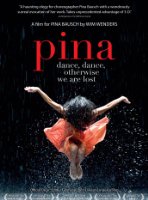
PINA the movie in 3D by wim wenders at BAM

December 29, 2011

last night in the rain we drove out to brooklyn BAM to see PINA

the Wim Wenders 3D film on Pina Bausch work with Tanztheater Wuppertal. I’ve had the extreme pleasure of seeing the company perform at BAM during the Next Wave festival . My first ever experience seeing Pina’s work  was the Rite of Spring at BAM which blew me away.

Pina Bausch Krueger

at that time i was working with Ralph Holmes on Guiding Light for Procter & Gamble on CBS. Ralph lit Dance In America for PBS for years and was considered the preeminent  television dance Lighting Director. oh did i say we share an Emmy together. not to take anything away from Jennifer Tipton whom i also worked with, nor any of the other designers who worked on this series

I would tell him about the company, actually rave about the company and Next Wave to him. he would smile nod his head in acknowledgment of our shared love of dance and go about his work. he was a wonderful teacher and i sought his guidance, as we shared sets going from his studio to mine as to how he lit it to keep the show consistent.

but i digress from lasts night experience. I had apprehensions about seeing a 3D movie which i hadn’t seen since i was a kid remembering , PHANTOM IN THE RUE MORGUE  in 3D with heads flying, corpses falling in ones lap.but we were quite surprised at the intimacy the 3D achieved with  dance.

the movie starts i think with Rite of Spring after a few spoken words (see link for short opening sequence.) and it just doesn’t stop going from one piece to another interspaced between with dancer reminiscences of Pina, how she communicated with them.

what struck me was the phrase ‘when words end, DANCE’ or something like that. another piece in the film was Cafe Muller which again on seeing it at BAM left me speech less. so simple yet complex what did i think and i didn’t have a ready answer. dance theater that made you think. whoa nellie.

don’t know  if you can tell how much i love dance, as a child i would dance in front of our stand up radio in the living room when no one else was around and i loved the Fred Astair or Gene Kelly like ‘Singing In The Rain’ type movies it looked like so much fun. but i was buried in Schenectady with very little chance of breaking out, besides i was pretty young and wet behind the ears to wander world.

another Pina dance featured in the movie was Vollmond ( full Moon). Pina’s work is so sensual and the film captures that sensuality. the one disturbing aspect of the 3D technique is a slight loss of sharpness. after all you’re wearing these ill fitting glasses  and it distracts a bit from the total presentations but not enough to keep people out of the theater.

This movie is playing 4 times a day through Monday 1/2

and 3 times Tuesday 1/3 through Thursday 1/5 at the BAM Rose Cinema  $15 general admission but worth the price.

Challenging the Forces of Xenophobia with Art, one picture at a time

December 26, 2011


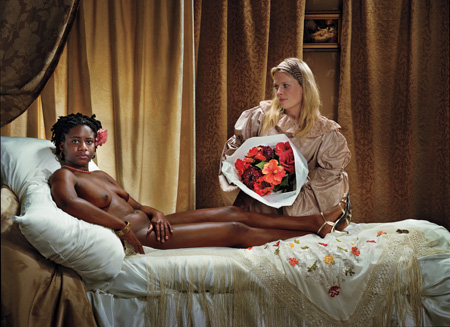
Jan Banning's 'National Identities' project includes his version of Manet's 'Olympia' Painting

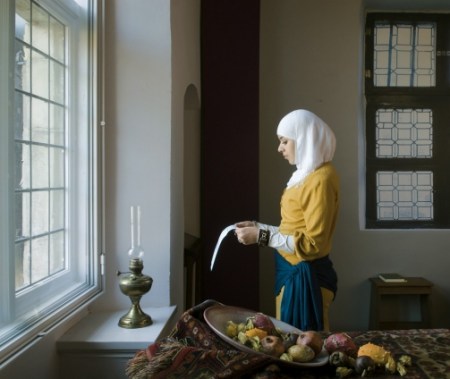
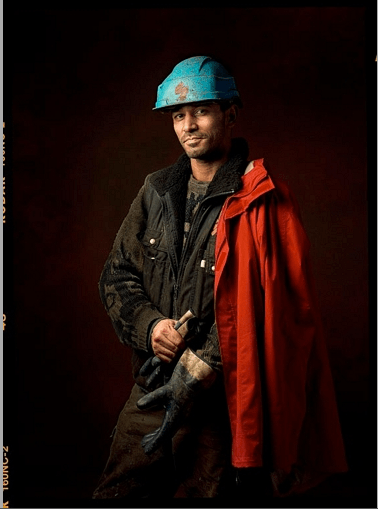
With a new series of images called “National Identities,” Dutch photographer Jan Banning re-creates works by Old Masters with a multicultural twist as a means of challenging the rising forces of xenophobia in Europe. His version of Vermeer’s “Girl Reading a Letter at an Open Window” (c. 1657) for instance, features a young Muslim woman wearing a headscarf, reading by a closed window. A proud Turkish laborer posed for his recreation of Rembrandt’s 1654 portrait of the artist’s friend and patron, Jan Six. And his homage to Manet’s “Olympia” (c. 1863) switches the black and white subjects of the original, so the nude woman is black and the lady-in-waiting is white.

“By doing this, I question the concept of homogeneous ‘national identities’ of European countries,” Banning writes in Newsweek International, which recently published the images. Banning, who is himself the son of immigrants to the Netherlands, explains to PDN that “[Anti-immigration parties] are stressing the importance of national culture all over Europe. The idea is that immigrants should adapt to [European] cultures, or they should get out.

”

On his Web site, Banning reminds readers that during the Dutch golden age of the 17th century, “the percentage of immigrants was about the same as it is now.” Not only were many proletarians from foreign countries, but so were various men of arts and letters, including Descartes and Spinoza.

Banning says he got the idea for his project five or six years ago when he was studying the work of various Enlightenment painters. Looking at the work of Vermeer in particular, he says, “It struck me that so many of the women in his paintings are wearing scarves.” He recalled how his mother, a Christian, wore a headscarf to church services when Banning was a boy. But now, he says, scarves are the lightning rod of debate and a symbol of “other” because Muslim women wear them. “People are making such a fuss,” he says.

Jan Banning's version of Vermeer’s “Girl Reading a Letter at an Open Window” (c. 1657)

That led to his first piece in the series, showing a Muslim girl reading an application for a citizenship course by a window. The challenge was finding a location that matched the scene of the original Vermeer. After looking at 25 possibilities, Banning came upon a suitable room inside a museum for religious art near his home in Utrecht. The subject of the photograph is the daughter of his long-time housekeeper, who is Moroccan. “She is very modern, and a practicing Muslim,” Banning says. The image seems to dare Western viewers to deny her culture—and humanity—without casting a shadow over their own.

“His creative solution to addressing the hypocrisy in the right wing’s position on immigration in Europe is brilliant,” says Newsweek senior photo editor Jamie Wellford.

Jan Banning's Turkish Turkish laborer posed for his recreation of Rembrandt’s (c 1654)

Banning says he struggled for months over the symbols and meanings of the original paintings before recreating them. “I didn’t want to do this in a superficial way,” he says. “I really wanted to grasp the ideas of the original paintings.

”

The “Olympia” work presented several challenges, both technical and symbolic. Switching the black and white subjects was the easy part. But what, he wondered, was the importance of the expression of the original “Olympia”? What was the significance of the cat? And of the dog, in an earlier Titian painting that Manet’s painting referenced? Banning eventually figured out that the dog signified the naked subject’s loyalty, while the cat signified just the opposite. But, what animal to put in his own image as an international symbol? A hawk, he thought, “could be kind of absurd.” So he ended up choosing a mouse (look closely) to symbolize his subject’s vulnerability, in a political sense.

At first, he tried to imitate the lighting of the Manet painting. “I got pretty close, but once you transpose that [painting] to photography, it becomes very boring,” he says. (He ended up using lighting that was far less flat.) Banning also discovered that a barely noticeable opening in the curtain behind the servant in the Manet painting was not trivial. “I thought, let’s leave it out. But then I found it was hard to balance the composition without it.” (He included the opening, adding a reproduction of a small Rembrandt painting in the gap.)

Banning says the image still needs work. “I’m not happy with the mouse. I’m OK with the idea of the mouse, but I didn’t get the particular mouse that I wanted. I also have my doubts about the clothing of the white woman in the background, and maybe the expression could be better,” he says.

It’s a painstaking project, and because of the effort he has to put into each image, he expects to create only two or three more. Currently he’s planning an image of the Annunciation, for which he is now studying many different renditions. He also decided to release the first images before the series is complete, because xenophobia is a pressing issue right now. “My idea is to use it in a political context. I didn’t want to wait,” he says.

Asked about the danger that political messages pose to the integrity of artistic works, Banning says, “Of course I’ve been wondering: Is this simply propaganda? I don’t think it is. At least that is my hope. I have no problem putting messages in my work that are commenting about society, and raising questions. What I try to stay away from is suggesting a one-dimensional solution to things.”

By David Walker for Photo District News

Musée de l’Elysée suspends Prize in wake of censorship of Palestinian artist

December 22, 2011


.

Photo from an exhibition of works by Larissa Sansour: Ex-Terrestrial, Kulturhuset, Stockholm. 23 October 2010 – 13 February 2011. (http://www.larissasansour.com)

Introduced in 2010 to support young photographers, the prestigious €25,000 Lacoste Elysée Prize is awarded by the Swiss Musée de l’Elysée in Lausanne Switzerland, with sponsorship from Lacoste, the clothing brand.

The Musée de l’Elysée has decided to suspend the organisation of the Lacoste Elysée Prize 2011 in response to the decision of the organizers to exclude the work of Palestinian artist Larissa Sansour’s work.

Sansour was among eight finalists shortlisted for the 2011 prize

Eight nominees for the 2011 prize were selected to take part in the contest, and asked to produce three photographs on the theme la joie de vivre.

With the help of a grant of €4,000, each nominee had “carte blanche” to interpret the theme how they saw fit, whether directly or indirectly. The nominees were free to make a submission based upon their existing work or as an entirely new project.

An expert jury was scheduled to meet at the end of January 2012 to select the winner of the Lacoste Elysée Prize 2011.

Larissa Sansour was among the eight artists shortlisted for the 2011 prize. In December 2011, sponsor Lacoste demanded that Sansour’s nomination be revoked. Lacoste stated their refusal to support Sansour’s work, describing it as “too pro-Palestinian.”

In November 2011, three photos from Sansour’s ‘Nation Estate’ project were accepted, and she was congratulated by the prize administrators for her work and professionalism. Sansour’s name was subsequently included in all literature relating to the prize and on the website as an official nominee. Her name has since been removed, however, and her project was withdrawn from an upcoming issue of contemporary art magazine ArtReview introducing the nominated artists.

Sansour was asked to approve a statement saying that she voluntarily withdrew her nomination “in order to pursue other opportunities.” Sansour refused to agree to such a statement.

Sansour says, “I am very sad and shocked by this development. This year Palestine was officially admitted to UNESCO, yet we are still being silenced. As a politically involved artist I am no stranger to opposition, but never before have I been censored by the very same people who nominated me in the first place. Lacoste’s prejudice and censorship puts a major dent in the idea of corporate involvement in the arts. It is deeply worrying.”

Sansour’s multimedia project ‘Nation Estate’ was “conceived in the wake of the Palestinian bid for UN membership. Nation Estate depicts a science fiction-style Palestinian state in the form of a single skyscraper housing the entire Palestinian population. Inside this new Nation Estate, the residents have recreated their lost cities on separate floors: Jerusalem on 3, Ramallah on 4, Sansour’s own hometown of Bethlehem on 5, etc.

Sansour’s shortlisted work, ‘Nation Estate,’ conceived in the wake of the Palestinian bid for UN membership, is a multimedia science fiction project that imagines a future Palestinian state in the form of a skyscraper. The single skyscraper houses the entire Palestinian population, with residents recreating their lost cities on separate floors.

Sansour from Bethlehem is a prominent Palestinian artist and filmmaker. Her most recent film, ‘A Space Exodus,’ was nominated for the short-film category at the Dubai International Film Festival

The Musée de l’Elysée has announced its suspension of the 2011 Prize and has offered to exhibit ‘Nation Estate’ outside the framework of the prize and Lacoste’s sponsorship.

originally reported in ahramonline

more on Larissa Sansour rejection at Artinfo or see her web site larissasonsour for more info on her.