‘Robbie’: A Short Film That Proves Sometimes You Don’t Need a Camera to Make a Great Film

July 28, 2012

reblogged from no film school

We write a lot of posts about cameras here on No Film School in order to make our readers aware of what options are out there and what each particular camera is capable of. But as you know, the camera doesn’t make your film. The story is the most crucial part of any narrative film, and you don’t necessarily need a camera or a crew to make that film a reality. Sometimes, all you need is some public domain footage, the right music, and an editing program. This what Australian filmmaker Neil Harvey used to create his beautiful short film Robbie:


The film-making process involved downloading about 10 hours of footage from the NASA archives and compiling a list of shots which resonated with me at some level. I did this over about 2 or 3 months when I had the spare time. From there, I put these selected shots on an editing timeline and watched them back until characters and narratives began developing in my mind. That is when I met Robbie.

Whether you use Harvey’s method of having your story emerge out of compelling images or you write a script and then find the images that fit, with some effort and creativity you can make a great film. If you’d like to dive in and make your own found footage film, there are some good resources for 720p footage at The Internet Archive’s 35MM Stock Footage Collection, and NASA, and if you’re looking for a more extensive collection of footage –albeit SD– check out FedFlix, and the Perlinger Archive.

Link: Short of the Week – Robbie

thanks to nofilmschool

jene

do you need a new skin? well alien skin is looking for beta testers using an IOS device

July 26, 2012

Are you the kind of person who likes getting new software before anyone else? Are you a Photoshop or Lightroom fan? Have an iOS device? Then you might consider being a beta tester of some new apps in development by Alien Skin software.

Alien Skin, makers of Photoshop and Lightroom plug-ins like Image Doctor, Blow Up, Exposure, and Eye Candy, are currently seeking volunteers to beta test two upcoming iOS apps, called Pintograph and Alt Photo. Pintograph mimics the effect of mechanical drawing devices, allowing users to create geometric line art.

Alt Photo enables users to transform pictures with a wide array of filters, many of which are from the Exposure plug-ins.

Beta testing for Pintograph is going on now and runs through August 20th. Testing of Alt Photo will take place in the fall.

If you’re interested in being a beta tester for either product, you can apply by filling out a brief survey. Alien Skin is accepting a limited number of beta testers, so if you’re interested, fill out the survey soon.

For more information on the beta testing program, visit the Alien Skin blog.

July 24, 2012

everything old is new again and thanks for reminding us.

annalinehan's avatarFans in a Flashbulb

Florence Henri, Self-portrait, 1938

Florence Henri’s manipulation of mirrors, prisms, and reflective objects to frame, isolate, double, and otherwise interact with her subjects–one of the most distinctive and adventurous features of her photographic work–often confounds viewers’ ability to distinguish between reality and reflection. In this 1938 self-portrait, the mirror’s frame, running down the center of the picture, disturbs what appears at first glance to be a simple view of the artist seated at a table, signaling the discontinuity between the two sides of the picture and the impossibility of understanding or visualizing the physical space occupied, seen, and abstracted by the photographer. Henri also experimented with photomontage, multiple exposures, photograms, and negative printing in her work, consistently constructing images that undermine the camera’s capacity for realism to create multifaceted, artificial, imagined spaces. The spatial and psychological ambiguity produced by Henri’s complex and disorienting compositions accounts not only for their…

View original post 312 more words

video intern opportunity at Howard Schatz studio or how to work for free.

July 19, 2012

here’s a post on craigslist that some young video head would just love to do. but it’s working for free and i never had the opportunity even when jobs were plentiful in the 60’s. i had picked up the habit of eating and sleeping in a bed and had no one in the world to support me but me. i had to do some pretty disgusting things just to survive and it was still hard.

not to say people didn’t help me because they did and for that i’d like to say Thank you, where ever you are.

below howard is asking someone to ‘intern’ in his studio for no pay. yes howard is a wonderful commercial photographer, sometimes noted as a photographer of the year, 20 books printed, covers on time mag, etc. i’ve seen howard’s work amazing stuff. he justifies free internships by saying the people who do these learn a lot. i am sure they do, that is if someone else is footing the food bill.

howard’s not alone in asking people to work for free as this is the new trial period in this day and age. steve mc curry uses interns.

i am sure who ever takes this opportunity will learn a lot and have very good contacts from howard’s studio. but one would think, i do that an accomplished photography studio could pay their workers something even the pages at CBS get paid.  oh well i guess i am way old school [ atlas shrugged ] in thinking people are worth something. in the old days when you apprenticed for someone at least you could sleep on a pile of straw over in the corner on the floor. but no mention of straw in the adv.

times have changed or have they. my understanding of a apprenticeship was a contract between two parties where you came away with a learned trade, here video production. well tell that to all the ny one correspondents who lug cameras around town getting news stories for low pay thinking someone in the major networks see them and offer a decent paying job. what the network executives saw were people willing to work cheap. now the ideal tv network news person should be 24 years old , start at $24,000 a year salary and be available to work 24 hours a day. so much for breaking onto the national scene.
with this logic i am the one out of step here it takes a lot of money to run a photography studio or tv network so why spend the money on salaries when you can offer a person a learning experience. but asking someone to work for free doesn’t sit well with me.

_____________________________________________________________________________

Schatz Ornstein Studio is looking for a full time intern to work in the production department.
Internship starts Monday July 30th. This is an unpaid internship.

You will work hand and hand with the studio’s Producer and Executive Producer assisting on the production end of all projects.
Our work ranges from advertising jobs, to editorial and artistic (personal projects). We are also in the process of printing our
19th and 20th book, so you will have the opportunity to be part of the process.

This is a great opportunity for someone very eager to be a professional photography and TV commercials producer.
You will be immersed 100% into the world of production. This is a very hands-on internship.

Some of the tasks you will be performing:

– Assist producer on shoots
– Pre-production: Assist producer with call-sheets, pre-pro books/ meetings, quotes, vendors, crew.
– Administrative Support
– Research (for new or existing project).
– Handle/ develop projects as assigned
– Set-up/ run Castings
– Since we are a small group, duties will also include studio cleanup, recycling, etc.

We are looking for someone who has/ is:

– Eager to be a producer
– Smart, quick and resourceful
– Good writing skills
– Detail oriented
– Committed to the job/ team
– Capable to take directions from supervisors
– Eager to learn all aspects of production
– Quick learner
– Can take larger projects as assigned, and follow through
– Professional demeanor

For more information on our work, please visit our website
http://www.howardschatz.com

Please send a short cover letter and your resume to Ivana Stolkiner, Producer to the email address above.
No phone calls, please.

The Clock, Christian Marclay @ The Lincoln Festival thru aug 1, 2012

July 13, 2012

are you looking for something to do in this sweltering summer heat here in the city that never sleeps. well this might be right up your alley at the Lincoln Center festival. see link here for line updates. for some reason new yorkers don’t mind standing in line because there are so many of us wanting to go somewhere from buying our groceries or being entertained.

Artwork That Runs Like Clockwork

Christian Marclay/Paula Cooper Gallery

Christian Marclay’s 24-hour film montage, “The Clock,” is coming to the David Rubenstein Atrium in Lincoln Center.

By
Published: June 21, 2012

This summer the city that never sleeps will have another glimpse of an artwork that doesn’t relent much either: “The Clock,” a spellbinding, time-telling 24-hour wonder of film and sound montage by Christian Marclay, the polymath composer, collagist, video artist and pioneer turntablist.

An assemblage of time-related movie moments that had its debut in London in autumn 2010, Mr. Marclay’s “Clock” is already a popular classic. It is also a functioning timepiece; a highly compressed, peripatetic history of film and film styles; an elaborate, rhythmic musical composition; and a relentlessly enthralling meditation on time as an inescapable fact of both cinematic artifice and everyday life. Perhaps the ultimate validation of appropriation art, it thoroughly demonstrates how existing works of art — in this case films — become raw material for new ones.

“The Clock” counts off the minutes of a 24-hour day using tiny segments from thousands of films. Bits of “High Noon,” “Gone With the Wind,” “Laura,” “On the Waterfront,” “The Godfather” and “A Clockwork Orange” speed past, mixed with early silent films and less familiar foreign ones.

As the action, music, sound effects and dialogue of one film bleed into those of another, each segment specifies a time, sometimes through spoken words, but mostly through shots of wristwatches, clocks, time clocks and the like. All are synced to real time. When it is 11:30 a.m. in “The Clock,” it will be 11:30 a.m. in the world outside. Exactly.

The first New York showing of “The Clock,” at the Paula Cooper Gallery in January 2011, had people lining up around the block in a relatively deserted west Chelsea in the dead of winter. Now, for 20 days starting on July 13, Lincoln Center will present the piece in a specially built theater in the David Rubenstein Atrium on Broadway between 62nd and 63rd Streets. Admission will be first come first served in a setting — lined with movie-palace velvet curtains and outfitted with enormous couches that blur boundaries between living room and screening room — that accommodates only about 90 people at a time.

It may be a challenge to get in, even in the wee hours, which is when I want to go, but I intend to make every effort, and recommend that you do too. The piece will run Tuesday through Thursday from 8 a.m. to 10 p.m. and then settle in for three 38-hour weekend marathons beginning at 8 a.m. Fridays and running to 10 p.m. Sundays. It will be closed Mondays and ends on Aug. 1.

more information on the artist Christian Marclay can be found at the New Yorker here

enjoy, but i won’t be standing in line myself they give me the willies.

jene

Just When You Got Digital Technology and smart phones apps down, opps film is back

July 9, 2012

i wonder who reads this blog, who’s the angry bird that winds up in my spam folder, why do i need snow removal in poland, who are these people, are they people at all? the internet is so full of information it’s really hard for anyone to keep on ‘top of it’ as they  say. that’s the fun part, so here is another piece of photography tech info that you really need to know.

Lomography

A panoramic image captured by one of Lomography’s cameras, the Spinner 360.

By
Published: May 30, 2012

When is the last time you took a photo with an old-school camera — the kind that doesn’t have a wireless connection, needs to be loaded with finicky rolls of film and is too bulky to slide into a back pocket?

Film’s Comeback

Lomography

Photos taken with La Sardina, which embrace the imperfections of film, are all taken on 35-millimeter film.

Anne Bowerman

A photo taken with film made by the Impossible Project, which was born of an effort to salvage a film format that seemed doomed to disappear.

Lomography

An image taken with Diana F+ demonstrates the camera’s charm and appeal.

Unless you are a professional photographer or an artist, it has probably been a while. Most people have abandoned film cameras for digital models or, more recently, smartphones outfitted with lens accessories and apps like Instagram that make photo-sharing extremely simple.

But film photography is having another moment in the sun, thanks to some hip, quirky companies like Lomography and the Impossible Project, which are resurrecting this seemingly archaic art for enthusiastic hobbyists. These companies and their customers tend to embrace the imperfections of film, rejecting the cold precision of digital photos.

It is important to bear in mind, of course, that film photography takes a little more effort than tapping a button on a screen. In my experience, the pros outweigh the cons, but both are worth considering before you invest a significant amount of time — and coin — into this hobby, particularly if you are new to the world of film.

Let’s start with the cons. Analog cameras require a little more precision to operate than digital ones. It can take some time to figure out how they work and to learn how to reload them without dropping them on the sidewalk. The film itself is fairly delicate and often needs to be refrigerated and shielded from the sun. The pictures are rarely perfect. Certainly, the artsy streaks and blurring that some of the cameras mentioned below can give to images are part of the charm and overall appeal. But it can be frustrating to have a sprawling white smear blotting out the scenic vista you were hoping to capture.

Cost is another factor; expect to part ways with a few bills at first, for getting set up with equipment, and then for buying the film and having it developed. Even finding a place to develop film can be challenging, although many chain drugstores and professional photography shops still do.

Given all that, the upsides to working an old-school camera into your daily routine are numerous. Perhaps the most interesting benefit is how it shapes the way you interact with your surroundings. The luxury of documenting every meal, sun-soaked afternoon and live concert with a smartphone’s vast memory bank does not exist with film cameras. You have a limited number of frames to shoot with, forcing you to carefully weigh what you want to capture. That sounds like a drawback until you consider the advantages of being more present in the moment, since you aren’t constantly engrossed by the screen of your smartphone.

There is also something refreshing about not immediately knowing what your image will look like. It instills a kind of patience that has all but disappeared as we surround ourselves with real-time technology. And when the prints show up, there can be wild variations in color and the sort of unpredictability that turns a photo into something that seems like a unique piece of art.

As an added bonus, film cameras are the ultimate icebreakers. Spotting a Polaroid camera in the wild is rare, so if you walk into a party with one, you’re guaranteed to be the most popular person in the room.

Here are some options available to those who want to try their hand at wielding an old-fashioned camera.

LOMOGRAPHY This company manufactures and sells a line of quirky cameras online and in a handful of stores around the globe, including locations in New York, San Francisco, Tokyo, Rio de Janeiro and London. Most of their offerings, which start at around $50, use 35-millimeter film. They include the simple Russian LC-A+, which produces whimsical, color-drenched pictures; cameras with a fisheye lens that create a bulging, surrealist perspective; and the Spinner 360, which comes rigged with a manual ripcord that whirls the lens around to capture a panoramic image.

My personal favorites are the cute DianaF+ and La Sardina, stylish and compact machines that fit easily into a handbag and look like something you would see on the set of a chic Italian movie. For the ambitious, the company recently began selling a camera called the LomoKino that captures short movies on 35-millimeter film.

It takes a while to get used to a Lomography camera when you’ve been shooting on an iPhone or digital camera. I never knew if the film was advancing properly, and once I accidentally yanked off the back panel, ruining at least five exposures by baring them to the light. But once you get past the initial awkwardness of the machinery, it’s so much fun to take photos of your friends on a crowded dance floor, flowering trees and lazy dogs lolling in the sun with a funky, old-looking camera. No one minds when you stick it in their faces to get a shot — making it an easier sell than the intrusive glowing screen of an iPhone.

THE IMPOSSIBLE PROJECT When Polaroid announced it would cease production of its film and abandon its signature technology in 2009 amid flagging fortunes, a group of Polaroid fans leapt to attention and started campaigning to save the format. After raising money from backers, they began hiring former Polaroid engineers and buying the company’s equipment, determined to reverse-engineer its chemical formulas and production techniques.

Those efforts were successful: The Impossible Project manufactures and sells a variety of instant film, online and in stores in New York, as well as through various art galleries and dealers around the world.

The company’s film is designed to work in the Polaroid 600 and SX-70 cameras. If you cannot find one in your parents’ attic, you’ll have to scavenge your own from eBay, Etsy or a garage sale. Or you can buy a camera that the Impossible Project has salvaged and refurbished. A starter kit containing one Polaroid camera and a pack of film starts at $129. These neat machines generate gasps of awe when you pull them out.

FUJI INSTAX Another company that still makes instant film, Fuji, recently released a small line of instant cameras that are available from a variety of online retailers, starting at around $100; a pack of 10 shots costs $10. Although I begged my sister for a Fuji Mini for my last birthday, thinking it’d be easier to lug around, I wound up preferring the larger 210 format, which my friend Alan brings along on all of our social outings. The photos that the Mini camera spits out are adorable, but tiny, and harder to hang on a wall or frame and give to a friend.

originally published in NYTimes here

Introducing the Polaroid Z2300 Instant Printing Digital Camer

July 5, 2012

way cool do you remember the days of click and peel ?

Nostalgia Never Dies:

By Leslie Lasiter –

Amidst the slew of top-of-the-line, hi-tech photography gear, it’s refreshing to see something old made new again. The Polaroid Instant Camera has been a mainstay in garage sales and thrift stores, eventually finding a home with a member of its large cult following. Despite its antiquated photo processing and bulky shape, the Polaroid is beloved for its stuck-in-time quality, and dreamy, if not slightly blurry, images.

The new Polaroid Z2300 shares many of the treasured qualities of its predecessor, with its simplistic layout and paperweight-like quality. If it were a car, it would likely be dubbed a “clunker,” but its heaviness should not dissuade the devout instant camera fans from giving it a shot. The camera has a three-inch LCD screen and 10 megapixel sensor, and can print photographs the size of a business card on ZINK paper.

In photography chronology, the Polaroid Z2300 occupies a space somewhere between the old Polaroid 600 Instant Cameras and Instagram. Staying true to its roots, the Z2300 prints out photographs within seconds to give you something tangible to put in your wallet or stick to your photo album (the photographs have a peel-away adhesive on the back). However, if your photo album has already made the jump from scrapbook to Macbook, the Z2300 has a USB port for easy uploading.

Much like Instagram, the Polaroid Z2300 allows users to choose from a variety of vintage filters, and even adds the classic Polaroid white border. The Z2300 can be pre-ordered now for $159.99 and has an August 15th ship date. A 30 pack of the ZINK paper costs $14.99, a bargain considering the hefty price tag on a ten pack of Polaroid 600 film. For lovers of low-tech cameras, the Polaroid Z2300 puts a hi-tech twist on a classic.

originally posted http://resourcemagonline.com/blog2/

jene

Sex sells @ Emmanuel Fremin gallery opening

June 29, 2012

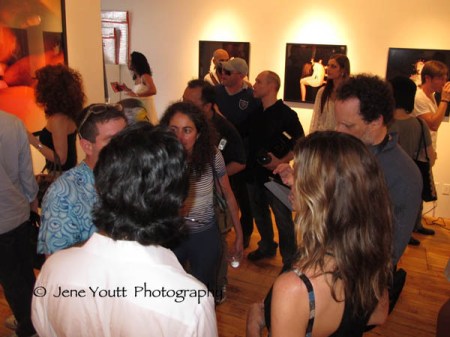
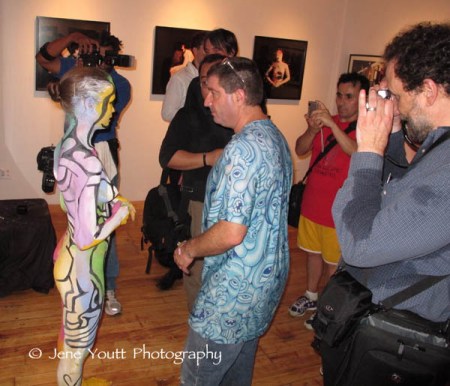
may have been one of the hottest openings with around 500 people crowding to get in a small space. when i say hot i mean the temperature of the room.

after the crowd cleared out a bit and we weren’t pressed up against each other there was room to see the art hanging around the room

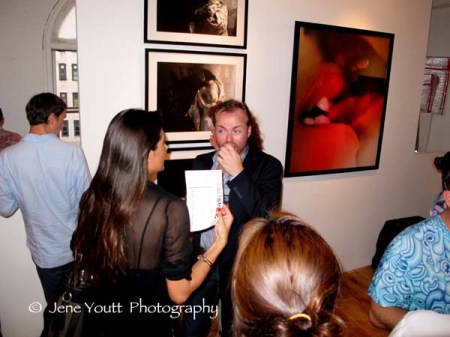
or just have a chance to converse with your fellow gallery goer.

all under the watchful eyes and smiling face of emmanuel who’s always wandering around introducing people to art and artist.

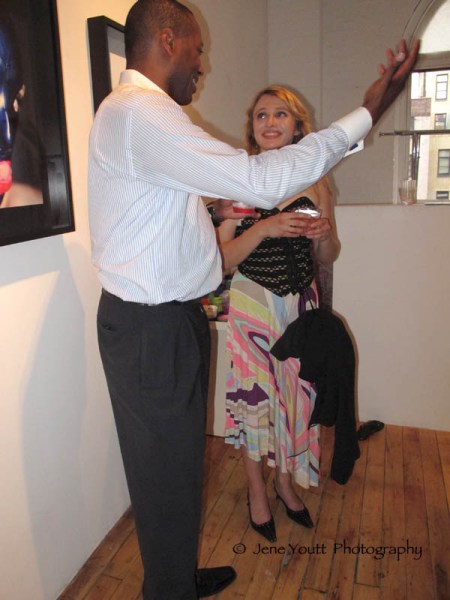
while the lovely lady Mary Nguyen has her own way of attracting people

an enjoyable evening of art and friendship had by all

well some people just want to start out cooler than others as this young lady with her bodypainter friend surrounded by sweaty togs.

exhibit B

or this fellow contemplating his LCD screen, did he get it?

to see more pictures of the opening check out the farcebook page here

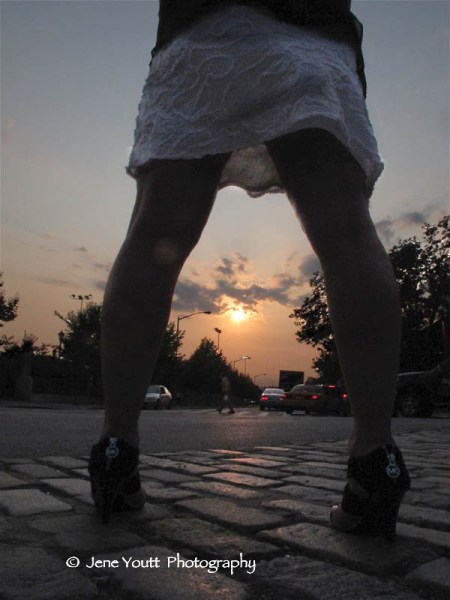
my favorite pic of the night happened when we were walking from the bus to gallery on 11th avenue.  my wife against the sunset

in her sexy shoes and summer skirt woohoo

jene

Brooklyn’s Photoville….this weekend june 28-31,2012

June 28, 2012

dart

Special for DART Subscribers at Photoville

By Peggy Roalf   Thursday June 28, 2012

pVorganizers_3.jpg

SPECIAL INVITATION FROM THE PHOTOVILLE TEAM


Hi Everyone,

I hope you are all having a lovely few days and gearing up for the final 4 days of PHOTOVILLE!

As many of you know we are going to try and have the PDN / Curator Party – which was rained out last week – this Thursday from 7pm – 10pm

To receive a VIP wristband – please RSVP – do reply early as capacity is limited.

PHOTOVILLE will also be open to the public during the party, and there will be a bar and food trucks on site throughout the night. [For those without the VIP bracelet, it’s a cash bar/food service].

Many many thanks and see you all Thursday we hope!

Cheers,

Sam, Dave and Laura

PHOTOVILLE

In the event that it rains, please check on Facebook, Twitter and HERE for updates.

THURSDAY, JUNE 28

4:30pm – 5:30pm Talk: Musee Magazine “The Art of Fashion Portraiture” Fashion is much more than glossy magazines and designer labels. Discover how to translate a portrait into an iconic fashion image. Presented by Andrea Blanch

FRIDAY, JUNE 29

5:00pm – 6:00pm Artist Talk: Ed Kashi “Photojournalisms: Images and Journals from Ed Kashi’s New Book” Kashi will discuss the evolution of this unique and personal project, shedding light on what it means to be balance the rigorous work of a traveling photojournalist while also raising a family.

6:30pm – 7:30pm Panel: Daylight Magazine “Photographs Not Taken” A fascinating discussion of photographers’ essays about failed attempts to make a picture. Panelists: Will Steacy, Ed Kashi, Elinor Carucci. Moderated by Taj Forer and Michael Itkoff

6:00pm – 8:00pm En Foco “Editing Your Portfolio”” A seminar filled with tips on how to build a strong, cohesive body of work, followed by a group critique. Participants are encouraged to bring a work-in-progress portfolio, some prints, their CV and artist statement. Register here: http://photoville-enfocoportfolio-629.eventbrite.com/

8:30pm United Photo Industries presents “Highlights from The Fence” A presentation of juror highlights from The Fence, UPI’s summer-long outdoor photo exhibition exploring the multi-faceted theme of ‘community.’

pVille_2a.jpg

SATURDAY, JUNE 30 | TALKS AND PANEL DISCUSSIONS

11:15am – 12:00pm Presentation: “Running or Ruining Your Photography Business” Van Driel speaks about the mistakes of talented photographers who ruin their businesses, only because they neglect commercial ‘rules’.

12:30pm – 1:15pm Presentation: The American Society of Media Photographers “The Future of Photography” Are we over saturating our culture with imagery or is visual imagery simply the foremost way we communicate? Presented by Gail Mooney

1:30pm – 2:30pm Panel: Rock Paper Photo “Beyond the Picture: The Art of Selling Music Photography” What does it take for music and entertainment photographers to successfully market and sell their work? Panelists: Anna Webber, Baron Wolman, Julie Grahame

2:45pm – 3:45pm Artist Talk: Wyatt Gallery “Using Your Photography to Make A Difference” Wyatt Gallery talks about his show “Tent Life: Haiti” and discusses his experience with HealHaiti.org. Discover how you can use your style of photography to make a difference.

4:00pm – 5:00pm Talk: En Foco “Foot in the Door” Getting your “Foot in the Door,” is a seminar for emerging photographers and photo-based artists looking to prepare themselves for new opportunities, and take their marketing to the next level.

5:15pm – 6:15pm Community Collaborations Community-based art is a hyphenated field in which artists collaborate with people whose lives directly inform the subject matter to express collective meaning, help participants find their voice, and build community. Panelists: Petruska Bazin Larsen (The Laundromat Project), Leah Cohen (Red Hook Justice Project), Katie Kline (ICP), Lorie Novak (NYU) and teen photographers. Presented by Lorie Novak

6:30pm – 7:30pm “Talk: The Impossible Project “Embracing the Impossible” This is the story of how a handful of passionate analog instant film enthusiasts saved the last remaining Polaroid plant and all the adversities they had to overcome.”

pVille_2b.jpg

SATURDAY, JUNE 30 | HANDS-ON WORKSHOPS

11:15am – 12:15pm The Impossible Project “An Introduction to Impossible Film and the Polaroid 600 Camera” This workshop is designed to explore the full potential and versatility of any Polaroid 600 series camera. Register here: http://photoville-impossible-630.eventbrite.com/

12:30pm – 1:30pm Lomography “Introduction to Lomography” The history and philosophy of Lomography. Try out a Lomography camera for yourself as we take aphotowalk around the park. Register here: http://photoville-introtolomo-630.eventbrite.com/

2:00pm – 3:00pm Lomography “Diana F+” Join us to learn the basics of the Diana F+ camera while getting some useful tips & tricks on how to get the best images. Register here: http://photoville-dianaf-630.eventbrite.com/ 

3:30pm – 4:30pm International Center of Photography “How to Make a Camera out of Anything” This workshop takes a quick look at the history, theory, and practice of pinhole photography and participants make their own camera. Presented by Liz SalesRegister here: http://photoville-icppinhole-630.eventbrite.com/

5:00pm – 6:00pm Lomography “Plastic Fantastic Workshop” From multi-lens marvels like the Actionsampler, Supersampler, Oktomat, and Pop 9, to the 170 degree-grabbing magic of the Fisheye and Fisheye2. Register here: http://photoville-plasticfantastic-630.eventbrite.com/

6:15pm – 7:15pm Orwo “Film Winding Workshop/Demonstration” Presented by George Campbell Registration not required. 

7:30pm – 8:30pm Lomography “Lomographic Lightpainting” Light up Brooklyn with color-splashed, flash-popped, light-streaked Lomographic masterpieces. Register here: http://photoville-lightpainting-630.eventbrite.com/

10:00am – 5:00pm Center for Alternative Processes “One Day Tintype Workshop” This will be an intensive one-day introduction to the tintype process that was the leading mode of photography in the 1850′s and 1860′s. Cost: $250 registration + $50 materials fee Register here: http://capworkshops.org

SATURDAY, JUNE 30 | NIGHTTIME PROJECTION
8:30pm FotoVisura presents “Women in Photography”
 Adriana Teresa Letorney will showcase a selection of work by emerging women photographers from the FotoVisuracommunity.

SUNDAY, JULY 1 | TALKS AND PANEL DISCUSSIONS

11:15am – 12:15pm Talk: “Copyright 2.0” Copyright 2.0 will review key provisions of the Copyright law that all photographers should know, and will challenge listeners to think about how the law and user’s behavior must be reformed to make the law more effective. Presented by Michelle Bogre

12:30pm – 1:30pm Artist Talk: Janelle Lynch “Los Jardines de Mexico” Lynch will discuss her recent work, including the work from her book “Los Jardines de Mexico.” Presented by The Camera Club of New York

2:00pm – 3:00pm Panel: “Photography as Activism” This presentation will include a brief history of activist photography, and then a panel of committed photographers will present current projects and discuss their role as advocacy journalists. Panelists TBA Presented by Michelle Bogre

3:15pm – 4:15pm Panel: The Center for Photography at Woodstock “Surface Tension” A curatorial discussion of recent exhibitions which present work by photographic artists which free the medium of its traditional documentary impulse, instead creating images which push our understanding of what a photograph could and should become via gestures of abstraction, deconstruction, and manipulation by the artists’ hand. Panelists: Ariel Shanberg (Executive Director, CPW), Akemi Hiatt (Program Associate, CPW), Michael Foley (Foley Gallery), and other panelist(s) TBA

4:30pm – 5:30pm Talk: The Impossible Project “Embracing the Impossible” This is the story of how a handful of passionate analog instant film enthusiasts saved the last remaining Polaroid plant and all the adversities they had to overcome.

pVille_Garden.jpg

SUNDAY, JULY 1 | HANDS ON WORKSHOPS

11:15am – 12:15pm Lomography “Meet the Lovely Diana Mini” In this workshop we explore all the tricks and techniques that the Diana Mini is capable of! Register here:http://photoville-dianamini-630.eventbrite.com/

12:30pm – 1:30pm The Impossible Project “An Introduction to Impossible film and The Polaroid SX-70 Camera” Delve into the magical world of the iconic Polaroid SX-70 camera with the new Impossible Project film. Register here: http://photoville-impossible-71.eventbrite.com/

2:00pm – 3:00pm Lomography “The Legacy of the LC-A” The ultimate meet and greet to the camera that started it all: The Lomo LC-A! Register here: http://photoville-lcalegacy-71.eventbrite.com/

3:30pm – 4:30pm International Center of Photography “How to Make a Camera out of Anything” This workshop takes a quick look at the history, theory, and practice of pinhole photography and participants will make their own pinhole camera. Presented by Liz Sales Register here: http://photoville-icppinhole-71.eventbrite.com/

5:00pm – 6:00pm Lomography “La Sardina Skylines” Say hello to the 35mm sardine can camera, La Sardina! Register here: http://photoville-lasardina-71.eventbrite.com/ 

SUNDAY, JULY 1 | SPECIAL DEMONSTRATION

11:00am – 5:00pm The Center for Alternative Photography “Tintype Photo Booth” If you are looking for a portrait photograph that captures the passion of your unique, individual personality, step into our portable tintype photo booth and experience the magic of this 19th century photographic process! Cost $35 public / $30 for Penumbra Foundation members More information here: http://capworkshops.org/photoville-2012/

All photos: Peggy Roalf

NOTE: DART is a media sponsor – and a big fan – of Photoville.

June 27, 2012

a nice morning read to begin the day, thought i’d pass this along to you