Archive for the ‘educational’ Category

Cheerleaders Banned from wearing Breast Cancer T shirts

October 14, 2011

Lately it’s almost a everday occurance that i wonder why i ever served in this countries armed forces to protect the american way of life if these types of things go on.

ABC News’ Carrie Gann reports:

Cheerleaders at Gilbert High School in Gilbert, Ariz., can’t wear the pink t-shirts they bought to raise money for breast cancer research because the school’s administrators claim the slogan they bear is inappropriate.

According to a Thursday report in the Arizona Republic, the squad’s shirts say “Feel for lumps, save your bumps,” and the team planned to wear them during the school’s football games during their cheers on the field and while collecting money from the crowd.

Gaylee Skowronek, the cheer booster club president, told the Arizona Republic the administration approved the squad’s plan to raise money, but the school’s principal, J. Charles Santa Cruz, objected to the slogan on the shirts and banned the cheerleaders from wearing them.

“We thought the shirt was age-appropriate,” Skowronek said. “I think it’s hypocritical they would approve a fundraiser for breast-cancer research but they won’t approve a shirt to bring awareness to breast cancer.”

“All we want to do is support the cause and raise money for breast-cancer research,” said Ashlee, 16, a member of the squad.

This is not the first time breast cancer awareness campaigns have caused a stir for edgy messages. The Keep a Breast Foundation makes bracelets and t-shirts that say “I [heart] Boobies” and distributes them to young people with the goal of raising their breast cancer awareness. The bracelets have been banned by several school districts across the U.S., but in April, a federal judge in Pennsylvania upheld public school students’ rights to wear them.

Other breast cancer organizations are more cautious when it comes to supporting campaigns with these kinds of messages.

“While Komen for the Cure tends to stick with more mainstream language about breasts, we do understand that young people talk differently than adults,” said Andrea Rader, the director of marketing communications of Susan G. Komen for the Cure, a network of breast cancer survivors and activists based in Dallas. “We generally support efforts to educate and engage young people, especially young women, about this disease.”

JPG Magazine Breast Cancer Photo contest

October 13, 2011

Breasts… They Need Your Support!

With National Breast Cancer Month (October) upon us (http://www.nbcam.org/), we want to throw our support behind some great organizations that are helping those patients, survivors, families and others that have been affected by this disease.

This Shoot Out photo contest is intended, mirroring the goal of NBCAM, to increase awareness of the disease and to raise funds for research into its cause, prevention, diagnosis, treatment and cure.

Enter your images that promote breast cancer awareness and/or celebrate the beauty, strength, spirit and nurture threatened by the disease. Enter your images that tell a story of inspiration, of strength, of survival. Enter your images that are touching, humorous, sensual, perceptive… real.


We want to really make a splash. We’ve got lofty goals for this contest and would love to see the total raised get OVER $100,000. To do this, WE NEED YOUR HELP! We need everyone to get the word out… share this on Facebook, Twitter, via email. Tell your friends, your neighbors, your clients, your kids’ friends… everyone.

The ‘starting pot’ will be $100 in total, but we want to see a truly inspiring number here. So help us get these numbers growing! Help us demonstrate the power of images to help raise awareness and money to make a difference!

We’ll be updating the prizing as the entries come in, so check back… and enter as often as you can! You’re supporting a great cause!

Remember, a portion of the proceeds from your entry fees will be donated to these fine charities to help in the ongoing battle against this disease:

Susan G. Komen for the Cure, Breastcancer.org, and Standup2cancer (su2c) – you can also visit these links directly to learn more and/or donate.

Once the contest has closed and winners have been announced, the cash prizes will be awarded and the donations paid to the 3 charities.

Enter now~!       JPG Blog

P.S. To do more to advance the discussion, awareness and overall message of breast cancer awareness, prevention, detection, treatment and support check out:

Cafe Express

Zazzle


The Keep A Breast Foundation


Check them out. Be aware.

To help spread the word on your site or blog, check out these slogan buttons (and others from Blogaholicdesigns):

Show Your Support- Grab A Badge

good luck all log in or sign up for JPG Community

Steve Jobs, Focus and Simplicity, Mantra rooted in Buddhist

October 6, 2011

Long before Steve Jobs became the CEO of Apple and one of the most recognizable figures on the planet, he took a unconventional route to find himself — a spiritual journey that influenced every step of an unconventional career.

Jobs, who died Wednesday at the age of 56 of pancreatic cancer, was the biological child of two unmarried academics who only consented to signing the papers if the adoptive parents sent him to college.

His adoptive parents sent a young Jobs off to Reed College, an expensive liberal arts school in Oregon, but he dropped out and went to India in the 1973 in search of enlightenment.

Jobs and his college friend Daniel Kottke, who later worked for him at Apple, visited Neem Karoli Baba at his Kainchi Ashram. He returned home to California a Buddhist, complete with a shaved head and traditional Indian clothing and a philosophy that may have shaped much of his corporate values.

Later, he was often seen walking barefoot in his trademark blue jeans around the office and reportedly often said that those around him didn’t fully understand his way of thinking.

“I wouldn’t say Steve Jobs was a practicing Buddhist,” said Robert Thurman, a professor of Buddhist studies at Columbia University, who met Jobs and his “Tibetan buddies” in the 1980s in San Francisco.

“But he was just as creative and generous and went outside the box in the way that he looked to Eastern mental discipline and the Zen vision, which is a compelling one.”

“He was a real explorer and very much to be mourned and too young at 56,” said Thurman. “We will remember the design simplicity of his products. That simplicity is a Zen idea.”

Thurman met Jobs in San Francisco in the 1980s with Grateful Dead drummer Mickey Hart and actor Richard Gere. The discussion was about Tibet.

“It was before the Dalai Lama, and he was very sympathetic and had advice for the Tibetans,” he said. “But he was into his own thing and didn’t become a major player.”

Jobs used Dalai Lama in one of Apple’s most famous ad campaigns: “Think Different.”

“He put them up all over Hong Kong,” Thurman said of the computer ads. “But then the Chinese communists squawked very violently and as my son says, ‘He had to think again.'”

Zen Buddhist monk Kobun Chino Otogawa married Jobs and his now widow, Laurene Powell, in 1991.

Jobs could have just as easily taken his philosophy from the hippie movement of the 1960s. The Whole Earth Catalogue was his bible, with founder Stewart Brand’s cry, “We are as gods.”

The catalogue offered an integrated and complex world view with a leftist political calling. Jobs later adopted the catalogue’s mantra: “Stay hungry. Stay foolish.”

Buddhism a Wake-Up Call for Steve Jobs?

The catalogue also delved into spirituality. In one 1974 article, author Rick Fields wrote that Buddhism is “a tool, like an alarm-clock for waking up.”

That may have been the case for Jobs. He said in his now-famous 2005 Commencement speech at Stanford that he lived each day as if it were his last, admonishing graduates not to “live someone else’s life.”

“Don’t be trapped by dogma — which is living with the results of other people’s thinking,” Jobs said. “Don’t let the noise of other’s opinions drown out your own inner voice.”

In that speech he told students to relish the time to follow their passions, recounting the time after he dropped out, but continued to audit non-credit classes like calligraphy. The elegant typefaces — serif and sans serif — were later introduced for the first time in the Macintosh.

“I didn’t have a dorm room, so I slept on the floor in friends’ rooms, I returned coke bottles for the 5 cent deposits to buy food with, and I would walk the seven miles across town every Sunday night to get one good meal a week at the Hare Krishna temple,” he said. “I loved it.”

Jobs was also influenced by Richard Baker, who was head of the Zen Center in San Francisco from 1971 until 1984, when Baker resigned after a scandalous affair with a wife of one of the center’s benefactors. But Baker helped the center grow to one of the most successful in the United States.

Jobs was receptive to Baker’s message of change, “helping the environment and empowering the individual.”

Jobs admitted to experimenting with the hallucinogenic drug LSD, which he has said was “one of the two or three most important things” in his life.

In an unauthorized biography by Alan Deutschman, a college friend said that Jobs had even been a lover of folk singer Joan Baez, who was 41 at the time, and the attraction was largely because she had also been intimate with another ’60s icon, Bob Dylan.

He was a fan of the Beatles, who also embraced spirituality and made a similar pilgrimage to India. Jobs told television’s “60 Minutes” he modeled his own business after the rock group.

“They were four guys that kept each other’s negative tendencies in check; they balanced each other,” he said. “And the total was greater than the sum of the parts. Great things in business are not done by one person, they are done by a team of people.”

Jobs said that “focus and simplicity” were the foundation of Apple’s ethic.

“Simple can be harder than complex: You have to work hard to get your thinking clean to make it simple,” he told Businessweek in 1998. “But it’s worth it in the end because once you get there, you can move mountains.”

Even the minimalist design of his products — from the first Macintosh to the sleek iPad have a “aesthetic simplicity and keenness of line” that smacks of Japanese Zen, according to Columbia’s Thurman.

Former Pepsico President John Sculley, who eventually fired Jobs, said walking into Jobs’ apartment had the same design feel.

“I remember going into Steve’s house, and he had almost no furniture in it,” Sculley said in a 2010 interview with Businessweek.”He just had a picture of Einstein, whom he admired greatly, and he had a Tiffany lamp and a chair and a bed. He just didn’t believe in having lots of things around, but he was incredibly careful in what he selected.”

Jobs reportedly convinced Sculley to work for Apple when he asked, “Do you want to spend the rest of your life selling sugared water, or do you want a chance to change the world?”

Jobs Gave People Computer Power

Thurman contends Jobs’ greatest success was not necessarily financial.

“It was his initial role in making the PC available to individuals to give them computer power,” said Thurman. “He was democratizing computer power. It was his own inspiration of things and not accepting the status quo and breaking through the power of the people.”

Though Jobs may not have been a devout practitioner of Buddhism, his personal and corporate vision certainly struck the same tone — “wisdom and compassion,” he said.

“Zen vision is that human beings can understand reality if they focus their mind on it and develop wisdom,” said Thurman. “When you do, you have the greater capacity to arrange the nature of things and to help people.”

But the irony of Jobs’ spirituality was that as much as it reflected the most beautiful aspects of the products he made, those very “machines” have in some ways enslaved a generation of users, according to John Lardas Modern, a professor of religious studies at Franklin and Marshall College in Pennsylvania.

Jobs made computers and hand held devices that have allowed people to become “disembodied” on a certain level — “to escape and transcend the mundane reality of bodily existence,” according to Modern.

Such spirituality begs for freedom from the trappings of tradition, he said, but they have a down side.

“These machines are amazing,” said Modern. “For the last 12 hours, I have been seeing people on Facebook and Twitter in praise of how the devices he made allow ease and convenience and empowerment.”

“I love my iPad, precisely because it feels like an extension of my mind and I can’t live without it,” said Modern. “The irony is, these products ground us in a chair behind a desk, behind a computer and in a sense they have pushed us inward?and you don’t have physical connections with others.”

“It cuts both ways,” he said.

originally posted ABC News & Yahoo News

SEE Los Angeles Times story on “Steve Jobs’ virtual DNA to be fostered in Apple University

Jene Youtt

HERE is currently accepting applications to HARP

September 27, 2011

HERE is currently accepting applications to HARP which commissions and develops new hybrid works over a 1- to 3-year period. Our deadline is January 2, 2012.

HERE has been one of New York’s most prolific producing organizations since 1993, and today, stands at the forefront of the city’s presenters of daring new hybrid art. We have a long history of supporting unique and innovative artists, ensuring them the opportunity to develop and perform original work as well as assist them in enhancing their skill in all areas of artistic work. Through the HERE Artist Residency Program (HARP), artists are able to develop their work in a peer-based program designed to nurture new and unique work. Our community of mid-career resident artists meet monthly, show works-in-progress, develop workshop productions, and mount full-scale productions.

For more information regarding the HERE Artist Residency Program and how to apply, please visit: http://here.org/programs/harp/

Acts of Lights, on dancing with Martha Graham

April 22, 2011

another review of a photographic book i bought when we saw the Graham company in their last New York season this past year. Acts of light, Martha Graham in the 21st Century shows a completely different side to Martha’s work. the photography is excellent done by John Deane and text by Nan Deane Cano. I do recommend this book to anyone who loves dance. it’s a worthy one to have laying around on your coffee table, actually both books are wonderful.

book cover

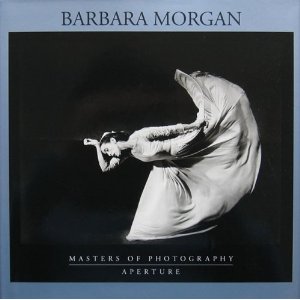
what separates this book from Barbara Morgans lovely B&W book on almost the same subject is color for obvious but the sharing from the dancers point of character. what they are thinking about the different roles they are asked to perform some directly from Martha herself and some maybe from other dancers. this is what i loved about the book, it gave me another dimension  on Martha’s work.

book cover

what is so exciting to me about this book are the pictures of dancers i knew or have worked on their creations. Valerie Bettis, Anna Sokolow, Jose Limon then Merc Cunningham, Doris Humphrey, Charles Weidman and Martha Graham herself but also included are pictures of Dr. Daietz Teitaro Suzuki along with other personal work.

now my images of Martha were more like the cover on Barbara’s  book but what i see in Acts of Light are costumes much different than the fully covered  ones in Morgan’s book. while there is nothing outrageous in either book, also no nude female forms while the men have much less clothing on. i’ve often wondered how female dancers have seen themselves over the years even now.

i love the well toned human form  but cringe looking at how my body has develpoed a mind of it’s own these days. who is that person looking back from the mirror at me. but then again i don’t spend hours in dance class nor wrestling with a bare, more like a bag of potato chips.

Edward Steichen, the Conde Nash years 1923-1937

April 20, 2011
Seine river

Paris, Seine river

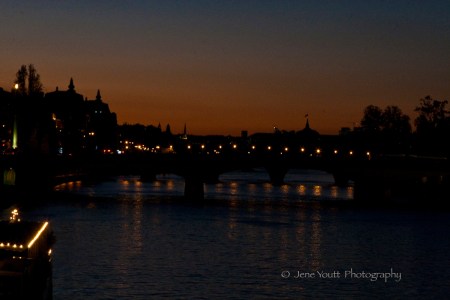
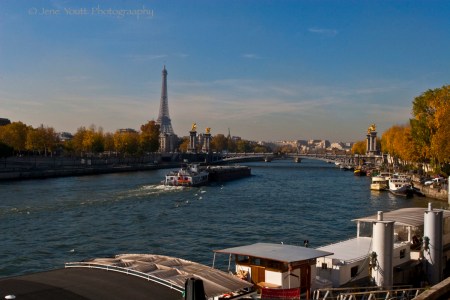
when mary and i first visited Paris we were very lucky except for the grey sky’s most everyday, after all  it was at the end of October a bit chilly and who cared it was Paris and we were together. the streets seeped with history and the museums budged with art and cafes everywhere with fresh baked croissants.

we rented an apartment through Craigs List and sight unseen were located on the right bank two blocks from the Louvre, somewhere around the Rue du Roule talk about luck and location whoo. by the way Paris has a great jazz radio station with even a feed from WBGO here in Newark NJ. the apartment was small but clean with a kitchenette and a double bed.

but not everyday was gloomy there were some lovely days and being with my honey made up for any rainy days

Seine river with Eiffel tower

Museum passes in hand we headed out into the great city of lights to see what we could discover. no we didn’t do the Louvre first as we wanted to be outside enjoying Paris. we walked around a lot since we were in the middle of everything. mary was taking a photography class back in NJ so she had homework assignments, not a bad place to do your homework.

but this isn’t about Paris yet connected in every way in my mind. we discovered the photographic exhibit called Edward Steichen In High Fashion, The Conde Nash Years at the Jeu de Paume Museum, organized by the Foundation for the Exhibition of Photography, Minneapolis and The Musee de L’Elysee,Lausanne.  We never had a clue it would be there nor did we know too much about Steichen’s work.

the photography  exhibit blew me away and how much of it that was on display wow. the portrait of Gloria Swanson 1924 has to be seen in person it’s just amazing. all of the prints were wonderfully done as one would expect from an artist such as Steichen even though he’s long gone. along with all the prints there was a movie interview with him in his studio which i fell in love with because it showed all his lighting equipment and he sat next to a huge camera sort of a Steichen at work type of thing. the floor was covered with big black wires powering the plato convex spotlights, floods etc of that period.

At the end of the exhibit comes the book store and trinket shop. i picked up the accompanying book and wanted to buy it right away but alas i am just a dumb american who can’t read French, besides it’s a pretty big book to lug around europe. Steichen worked in B&W photography which is pretty amazing in it’s own right. What he did with his limited space and flats is pretty amazing.

so i am in a book buying binge now and i ordered one from amazon having just finished it this week. i must say it to is a wonderful book especially for people who never had an opportunity to see the traveling exhibit which has long gone into retirement. i wish i had been able to read the book and then see the exhibit again. i think would have gotten more out of the exhibit at the time but one can’t, at least i haven’t found a way to time travel yet.

i recommend this book to anyone who has a love of B&W photography or fashion history, it’s a real treasure.

some say artist working in commercial endeavors looses touch with the art. we all got to eat and would like other people to enjoy our work, i always feel that i am sending my children to a foster home when someone buys a picture. Steichen had this to say  in a letter to

Mrs Chase;

“in connection with our idea about dignified and distinguished presentation of ‘Beauty’ pictures if they can be done in Duotone they will be greatly enhanced. there are some works of art in the Louvre that if presented in a peep show would be condemned s pornographic. in the Louvre they are art – make Vogue a Louvre.”

don’t we all just want to be loved for what we do? i’ve fallen in love here with a master of B&W photography and this book shows why he’s considered such.

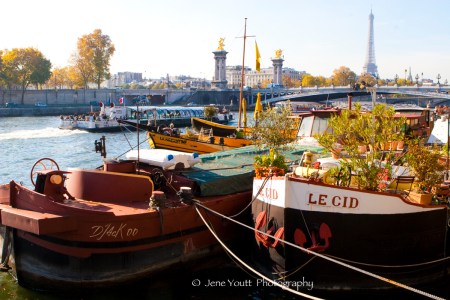
this is the next place i want to stay in Paris or maybe Amsterdam

house boats

jene

www.jeneyoutt.com

reading Minor White books instead of making photos

April 5, 2011

i’ve been buying photography books and reading them lately. i’ve an old time relationship with books, walking into a used book store smelling paper just overcomes any hesitation i have to spend money. i usually walk out of the store with an arm full of books. yes one could say all the books on my shelves are useless until one picks them up and opens them.

i get dizzy remembering them, my copy of the ‘Rainbow book’, put out by the Fine Art Museums of San Francisco explaining everything you wanted to know about rainbows is just so cool sitting on top of Hollywood Glamor Portraits , next to Barbara Morgan’s dance photography, see the list goes on. be still my heart.

one of my favorite teachers whom i never had the chance to meet is Minor White. his name has been spoken reverently around me by photographers i’ve known and liked so that has created in me a hunger to learn about him.

my first purchase was Minor White’s ‘Rites & Passages’ an  Apeture foundation book, which i found very interesting, because in included his photographs and excerpts from his diaries and letters and biographic essays by John Baker Hill.

minor white 'rites & passages'

i don’t think by reading a book one can get close to the teacher but maybe some word or phrase might make a wheel or clog move and mesh causing a connection. looking at pictures stimulates my imagination because i am sort of seeing through the photographers eyes. not always do i get it but it’s like sex, the fun is in the doing, not the final outcome.

for anyone interested in Minor White’s work and opinions this is a worth while sit down. i really enjoyed this book

the second Minor White book is ‘The Moment of Seeing’, Minor White at the California of fine arts, by Stephine Comer & Debroah Klochko with an essay by Jeff Gunderson is printed on lovely paper but most of the book was a disappointment for me. i really don’t care who attended California Fine arts school when. i am sure by now a lot of them are dead and gone as i soon will be.

the moment of seeing.great cover  photo reminds me of cartier bresson’s work

there is a twenty page pedagogy of some Whites teachings but just getting to page 79 was a chore. maybe i should have sped through the beginning chapters  but i didn’t.  i did like reading minor white’s ‘seeing a photograph’ in the pedagogy but getting there was a big boring chore as i was looking for information about minor’s teaching’s, not who he taught. what he thought and taught was what interested me. the portfolios of the students and teachers are nice, not cluttered with words just pictures and who was there is history in itself.

what happened in the school started by Ansel Adams who then went off doing his Zone system landscape work and left to minor white and other great names in photography is pretty cool but i wanted to hear from the various creatives their views on working.

oh well not everyone likes everything. spring is here time to explore the world around us again lovely flowers poke their fragrant bodies in the air.

have a good day

jene

http://www.jeneyoutt.com

Studio St. Petersburg by Deborah Turbeville

March 16, 2011

recently i bought three photography books at amazon and have been asked to review my purchases, so i might as well do it here as well. this will be the first one i write about.

since i am a self-taught photographer i don’t have much organized photography education so what ever i pick up it’s from here and there. i came to Deborah Turbeville’s photography in an oblique way which was through a wonderful man and teacher, well actually Milton was a salesman at B&H when i met him, who worked in the darkroom developing area.

Milton Spieel was his name who has passed through my life and so many other countless photographers. RIP. he always had a story or joke to tell and if you asked a question an answer. one day i guess we were talking about picture styles and i brought up my dance series of fuzzypictures and he told me about one of his customers, Deborah Turbeville who he knew from Willoughby’s photo which was the place to go in the 70’s 80’s for photography, then located on 32nd street.

Deborah would tell Milton to not tell her assistants how to operate the photo equipment she would send them in for. one day she was in the store buying some gear and had her portfolio with her and asked Milton if he wanted to see it? ‘Sure’ he said,  well he wasn’t impressed because of her style, he said he would have thrown it in the garbage. Milton did mention she did a book on Newport RI Remembered that made her friends, so i’ve kept my eyes open for it and have ordered it today.

well Deborah got the last laugh on Milton, she has many photography books in print while Milton is feeding the worms. Studio St Petersburg  is the first book i have of hers. Mary and i were lucky to have seem one of her photography exhibits at the Staley-Wise gallery down in soho, heres a link to my short review. she is a unique photographer to say the least.

deborah turbeville

Deborah Tuberville

my guess on taste would be like caviar as it needs to be acquired before one can really appreciate it. Mary and i both enjoyed the Past Imperfect exhibit and seeing her work as large prints is amazing. Deborah Tubeville was born 1938 in new england and moved to new york when she was twenty. See her profile in Professional Photographer as she really is a legend.

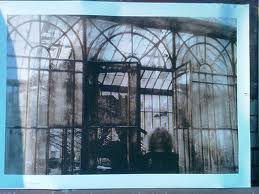
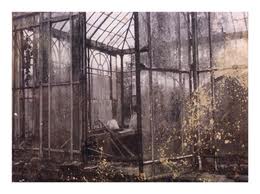
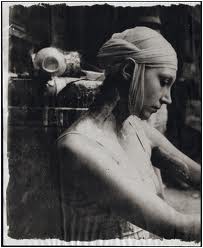
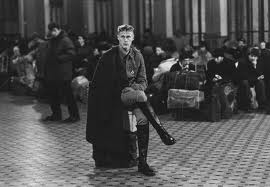
but i love her work because it’s not so much about photography but more about feelings. When Jackie Onassis commissioned her to photograph the unseen Versailles, the late president’s wife urged the photographer to ‘evoke the feeling that there were ghosts and memories.’ Turbeville began by researching the palace’s ‘mistresses and discarded mistresses’, then photographed not just the palace’s grand chambers and vistas but its store rooms and attics.

well that’s what Studio St. Petersburg is about for me the feelings of the past guess that’s why her exhibit called past imperfect. our memories of the past events place and people are clouded over by so many uncontrollable things. so to see photographs that take this cloudiness into consideration and make the viewer work to see and understand what might be the story presented is pretty cool.

deborah tubeville

although there is no need for back story in this picture. i think it’s pretty understandable.

deborah tubeville

one might wonder what ever happened here in this old house? what history

might have walked these halls, looked from these windows?

but what first attracted me to Tubeville was her sensuality that came through to me in her fashion work.

deborah turbeville

tubeville 2

she like so many other fashion photographic icons had her own style that didn’t conform to the norm which is why it’s so refreshing to see anytime. timeless comes to mind. Studio St Petersburg just makes me want to go see that city even more. do i think i’ll find what she did? no i am no fool.

today is so different from yesterday, but today in Japan we have another atomic power problem. to think of all those brave russian souls who perished fighting the Chernobyl disaster or crippled with its aftermath makes me sad.

of course it wasn’t too many months or weeks ago that atomic energy power plants were in the news as an attractive alternative for the united states energy follies, as there isn’t any real energy policy put forth by our government. oh well

sorry about all this rambling on about one thing or another that might not have been relevant to photography. well maybe x-ray photography  but that’s not what i was discussing here.

i hope i might have opened up another creative connection for you, books by Deborah Tubeville for my readers. sorry no new naked women today but as the masthead says opinions, and i’ve got plenty.

jene youtt

www.jeneyoutt.com

Martha Graham 2011 New York season

March 11, 2011

Rose Theater
Broadway at 60th Street
Columbus Circle
New York, NY  10023
Tel: (212) 258-9800
Visit Web Site

$48-$133

Dates

Wed, March 16, 2011 – Sun, March 20, 2011

Hours

Wed: 7:30 pm
Thurs, Fri: 8 pm
Sat: 2 pm, 8 pm
Sun: 3 pm

Program A: Wilson/Graham
Fri, March 18, 8 pm
Director Robert Wilson calls his Snow on the Mesa “a personal portrait of Martha Graham.” Not seen since 1996, it evokes the creative journey of the artist—“the path that chose her,” as Graham said. Maple Leaf Rag, Graham’s last ballet, is a humorous spoof of her work.

Program B: New Revival/ New Work;
Wed, March 16, 7:30 pm
Sat, March 19, 8 pm
Explore Graham’s 1943 Deaths and Entrances, inspired by the Brönte sisters. This program pairs the new production with an exciting world premiere by Taiwanese choreographer Bulareyaung Pagarlava that references the Graham ballet and its themes.

Program C: The Noguchi/Graham Connection;
Thurs, March 17, 8 pm
The company celebrates the collaboration between sculptor Isamu Noguchi and Martha Graham. The program features audience-favorite Appalachian Spring, Cave of the Heart, a 20th century retelling of the Medea story, and Embattled Garden, an erotic Adam-and-Eve tale of contemporary marriage.

Program D: Political Dance Project
Sat, March 19, 2 pm
Those who missed it last year will want to catch the reprise of Dance is a Weapon, a dance and multimedia montage including work by Graham, Isadora Duncan, Jane Dudley and others. Thirty New York City high school students take the stage in the 1935 Panorama, Graham’s great call to social action.

Program E: Wilson/Graham/Noguchi;
Sun, March 20, 3 pm
An official event of Carnegie Hall’s Japan/NYC Festival. Combining the Robert Wilson and JapanNYC programs, this matinee offers Snow on the Mesa and Embattled Garden during the popular Sunday afternoon time slot.

  • Directions: Subway: Trains to Columbus Circle

About this Organization

Martha Graham Dance Company
The Martha Graham Dance Center is the repository of 181 dances choreographed by Martha Graham, many of them astonishing works of great beauty. Since its inception in 1926, the company has performed in over 50 countries throughout the world.

Armory week art madness

March 2, 2011

here is a listing and address of this weeks shows for more detailed information visit http://www.artcards.cc

2011 New York Art Fairs

The Armory Show – Modern
Pier 92, at W 54th street

The Armory Show – The International Fair of New Art
Pier 94, at W 46th street

Pulse New York
125 W 18 Street
March 3-6

The Art Show (ADAA)
Park avenue at E 67 street

March 2-6; Wed-Sat, noon-8pm; Sun noon-6pm Gala Benefit Preview, March 1, 5:30-9:30pm

Independent
548 W 22 street, March 3-6

The Dependent Art Fair
160 W 25 Street, March 4th, 4-9pm

VOLTA NY
7 W 34th Street

Thursday, March 5, 1-9pm Friday, March 6, 1-9pm Saturday, March 7, 1-9pm Sunday, March 8, 1-9pm $15

SCOPE New York
320 West Street
March 2-6

Fountain NY
Pier 66, 12th Ave at W 26 Street
March 3-6

PooL Art Fair New York
7 E 27th Street
March 4-6

Moving Image
269 11th Avenue, March 3-6

Red Dot
82 Mercer Street
March 3-6

Verge Art Brooklyn
81 Front Street, Brooklyn, NY;

Thursday-Saturday, 3 – 5 March, Noon to 10 pm; Sunday, 6 March, Noon to 6 pm