Archive for the ‘death’ Category

things i am looking forward to do when i get back from hawaii….. woohoo

January 30, 2012

we are off to Hawaii [the big island]  tomorrow, apartment is secure from the neighborhood burglar, as secure as i can make it now, so don’t worry it never does any good anyways. have most of camera gear with me and i’ll try to be more careful this trip. i am sure i’ve over packed too much clothing but don’t know what we’ll run into. humpbacked whales breaching woohoo, redhot lava flows, volcanos active and not, lots of stars, sandy beaches, hawaiian shirts. plenty of sunscreen and cf cards.

this is our 1st year anversary after having put our dog to sleep ending her suffering. of course i have to dream about her last night. part of growing older being seperated from the ones we love. something to look forward to. oh well i’ve nothing but fond memories of her.

now if i could only figure out how to relieve my sons suffering but he’s not an honest person with anybody and without honesty there’s not going to be much progress. i think he’s on his way to living in a cardboard box and hollering curse words at passing people, talk about pain there it is. theres noting i can do about it.

yesterday we went to see ‘Crazy Horse’ at film forum, Celebrated documentary director Frederick Wiseman spent ten weeks with his camera exploring one of the most mythic places dedicated to women: ‘The Crazy Horse.’

Over the years this legendary Parisian cabaret club, founded in 1951 by Alain Bernardin, has become the Parisian nightlife ‘must’ for any visitors, ranking alongside the Eiffel Tower and The Louvre. which i thought was beautifully lit but it’s the crazy horse. what’s not to like except the length of the movie, but wonderful anyways.

these are some of the things i am looking forward to do when we get back. well these and getting ready for a joint exhibit with mary in Lancaster PA beginning in April. i will post more on the exhibit closer to the date when we figure out what’s going to be shown.

it’s so wonderful living in a cultural center, we get an opportunity to see so much as it comes through. walking down the street today i saw shoots coming up to meet the sun, they think it’s spring already. now if only i could get my wireless system to work. oh well.

heres the partial list:

Weegee at icp

Weegee: Murder Is My Business

January 20–September 2, 2012

For an intense decade between 1935 and 1946, Weegee (1899–1968) was one of the most relentlessly inventive figures in American photography. His graphically dramatic and often lurid photographs of New York crimes and news events set the standard for what has become known as tabloid journalism. Freelancing for a variety of New York newspapers and photo agencies, and later working as a stringer for the short-lived liberal daily PM (1940–48), Weegee established a way of combining photographs and texts that was distinctly different from that promoted by other picture magazines, such as LIFE. Utilizing other distribution venues, Weegee also wrote extensively (including his autobiographical Naked City, published in 1945) and organized his own exhibitions at the Photo League. This exhibition draws upon the extensive Weegee Archive at ICP and includes environmental recreations of Weegee’s apartment and exhibitions. The exhibition is organized by ICP Chief Curator Brian Wallis.

cindy sherman at moma:
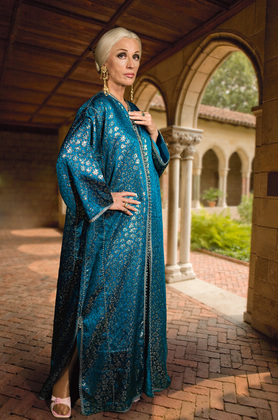
Cindy Sherman. Untitled #466. 2008. Chromogenic color print, 8' 1 1/8 x 63 15/16" (246.7 x 162.4 cm). The Museum of Modern Art, New York. Acquired through the generosity of Robert B. Menschel in honor of Jerry I. Speyer. © 2011 Cindy Sherman

Cindy Sherman

February 26–June 11, 2012

The Joan and Preston Robert Tisch Exhibition Gallery, sixth floor

Cindy Sherman (American, b. 1954) is widely recognized as one of the most important and influential artists in contemporary art. Throughout her career, she has presented a sustained, eloquent, and provocative exploration of the construction of contemporary identity and the nature of representation, drawn from the unlimited supply of images from movies, TV, magazines, the Internet, and art history. Working as her own model for more than 30 years, Sherman has captured herself in a range of guises and personas which are at turns amusing and disturbing, distasteful and affecting. To create her photographs, she assumes multiple roles of photographer, model, makeup artist, hairdresser, stylist, and wardrobe mistress. With an arsenal of wigs, costumes, makeup, prosthetics, and props, Sherman has deftly altered her physique and surroundings to create a myriad of intriguing tableaus and characters, from screen siren to clown to aging socialite.

Bringing together more than 180 photographs, this retrospective survey traces the artist’s career from the mid 1970s to the present. Highlighted in the exhibition are in-depth presentations of her key series, including the groundbreaking series “Untitled Film Stills” (1977–80), the black-and-white pictures that feature the artist in stereotypical female roles inspired by 1950s and 1960s Hollywood, film noir, and European art-house films; her ornate history portraits (1989–90), in which the artist poses as aristocrats, clergymen, and milkmaids in the manner of old master paintings; and her larger-than-life society portraits (2008) that address the experience and representation of aging in the context of contemporary obsessions with youth and status. The exhibition will explore dominant themes throughout Sherman’s career, including artifice and fiction; cinema and performance; horror and the grotesque; myth, carnival, and fairy tale; and gender and class identity. Also included are Sherman’s recent photographic murals (2010), which will have their American premiere at MoMA.

In conjunction with the exhibition, Sherman has selected films from MoMA’s collection, which will be screened in MoMA’s theaters during the course of the exhibition. A major publication will accompany the exhibition.


The exhibition is organized by Eva Respini, Associate Curator, with Lucy Gallun, Curatorial Assistant, Department of Photography.

Major support for the exhibition is provided by Jerry I. Speyer and Katherine G. Farley, The Modern Women’s Fund, and The William Randolph Hearst Endowment Fund.

Additional funding is provided by The Broad Art Foundation, David Dechman and Michel Mercure, Robert B. Menschel, Allison and Neil Rubler, Richard and Laura Salomon, The Robert Mapplethorpe Foundation, Glenstone, Michèle Gerber Klein, Richard and Heidi Rieger, Ann and Mel Schaffer, and The Junior Associates of The Museum of Modern Art.
In memory of Ruth Currier 1926 – 2011, Limon Dancer

October 7, 2011

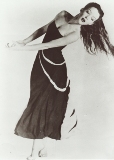
Ruth Currier

A former director of the José Limón Dance Company and a primary disciple of Doris Humphrey, died on October 4, 2011 at the age of 85.

I had toured as the Technical Director/ Lighting Supervisor for the company for Jennifer Tipton while Ruth Currier was the artistic director of the company. In my opinion she was a wonderful lady and it was a pleasure to have had the opportunity to know and work with her. She knew what she wanted and wasn’t afraid to ask for it from me or her dancers. I’ve had the privilege to see her dance in archival films with the original Limon company while we were on tour. The only references I can find to Ruth  in the New York City Public Library, Jerome Robbins Dance Division are taped interviews. Pity as she danced beautifully, the films do live in some college somewhere.

Ruth Currier was born in Ohio as Ruth Miller, she was raised in Durham, North Carolina and attended Black Mountain College where she studied piano with Fritz Cohen and danced with Elsa Kahl. She moved to New York to continue her piano studies and study dance with Doris Humphrey and José Limón. She joined Limón’s company in 1949, and soon began appearing in leading roles and participating in the creation of new works. Her first new dance was Humphrey’s Invention, a trio in which she appeared with Limón and Betty Jones.

Ruth Currier, Jose Limon

Ruth Currier was a prominent performer with Limón for nearly two decades, creating roles in some of his most important and enduring works, such as There is a Time and Missa Brevis. She also created roles in Humphrey classics such as Night Spell and Ruins and Visions.

Currier became increasingly involved in the creation of Humphrey’s works, officially serving as creative assistant throughout the final decade of Humphrey’s life. Humphrey had sketched out her final work, Brandenburg Concerto No. 4, but only managed to complete the first movement before her death in 1958, asking Currier to complete the choreography. It was my pleasure and honor to light the first performance of this dance for the company. Currier’s choreographic apprenticeship coincided with her own growing reputation as a dancemaker, having made an auspicious debut with a 1955 duet, The Antagonists, in which she appeared with Betty Jones. She would go on to create more than fifty works, including Quartet and Toccanta for the Limón Company and the Ruth Currier Dance Company, which she formed in 1958.The Limón Company survives the founders death, Jose, with the help of Ruth Currier…

After five years as artist-in-residence at Ohio State, she returned to New York to direct the Limón Company, having been invited by the dancers to lead them after Limón’s death in 1972. Her five years as director helped make the case that the Limón Company could continue, in itself a formidable achievement at a time when conventional wisdom held that a modern dance company could not survive its founder. A 1975 New York Times article dubbed her “something of a miracle worker”. One of Ruth Currier’s notable achievements as a director of the Limón Company was broadening the repertory well beyond the scope of Limón and Humphrey works. One particularly ambitious acquisition in 1977 was Kurt Jooss’s The Green Table – a work with special personal significance since its composer, Fritz Cohen, had been Currier’s piano teacher at Black Mountain College more than thirty years earlier.

Ruth Currier

Currier resigned from the directorship of the Limón Company in 1978, devoting her efforts for the next twenty years to teaching at the Ruth Currier Dance Studio and at the Limón Institute. Teaching had long been a central focus, with assignments over the years at Julliard, Bennington, Sarah Lawrence, and residencies throughout the world.

Ruth Currier defined the principles of Humphrey and Limón, and established a formal base for using the principles to teach contemporary technique. See her Bio and tribute to Ruth’s teachings on adriaan kas web page.

Steve Jobs, Focus and Simplicity, Mantra rooted in Buddhist

October 6, 2011

Long before Steve Jobs became the CEO of Apple and one of the most recognizable figures on the planet, he took a unconventional route to find himself — a spiritual journey that influenced every step of an unconventional career.

Jobs, who died Wednesday at the age of 56 of pancreatic cancer, was the biological child of two unmarried academics who only consented to signing the papers if the adoptive parents sent him to college.

His adoptive parents sent a young Jobs off to Reed College, an expensive liberal arts school in Oregon, but he dropped out and went to India in the 1973 in search of enlightenment.

Jobs and his college friend Daniel Kottke, who later worked for him at Apple, visited Neem Karoli Baba at his Kainchi Ashram. He returned home to California a Buddhist, complete with a shaved head and traditional Indian clothing and a philosophy that may have shaped much of his corporate values.

Later, he was often seen walking barefoot in his trademark blue jeans around the office and reportedly often said that those around him didn’t fully understand his way of thinking.

“I wouldn’t say Steve Jobs was a practicing Buddhist,” said Robert Thurman, a professor of Buddhist studies at Columbia University, who met Jobs and his “Tibetan buddies” in the 1980s in San Francisco.

“But he was just as creative and generous and went outside the box in the way that he looked to Eastern mental discipline and the Zen vision, which is a compelling one.”

“He was a real explorer and very much to be mourned and too young at 56,” said Thurman. “We will remember the design simplicity of his products. That simplicity is a Zen idea.”

Thurman met Jobs in San Francisco in the 1980s with Grateful Dead drummer Mickey Hart and actor Richard Gere. The discussion was about Tibet.

“It was before the Dalai Lama, and he was very sympathetic and had advice for the Tibetans,” he said. “But he was into his own thing and didn’t become a major player.”

Jobs used Dalai Lama in one of Apple’s most famous ad campaigns: “Think Different.”

“He put them up all over Hong Kong,” Thurman said of the computer ads. “But then the Chinese communists squawked very violently and as my son says, ‘He had to think again.'”

Zen Buddhist monk Kobun Chino Otogawa married Jobs and his now widow, Laurene Powell, in 1991.

Jobs could have just as easily taken his philosophy from the hippie movement of the 1960s. The Whole Earth Catalogue was his bible, with founder Stewart Brand’s cry, “We are as gods.”

The catalogue offered an integrated and complex world view with a leftist political calling. Jobs later adopted the catalogue’s mantra: “Stay hungry. Stay foolish.”

Buddhism a Wake-Up Call for Steve Jobs?

The catalogue also delved into spirituality. In one 1974 article, author Rick Fields wrote that Buddhism is “a tool, like an alarm-clock for waking up.”

That may have been the case for Jobs. He said in his now-famous 2005 Commencement speech at Stanford that he lived each day as if it were his last, admonishing graduates not to “live someone else’s life.”

“Don’t be trapped by dogma — which is living with the results of other people’s thinking,” Jobs said. “Don’t let the noise of other’s opinions drown out your own inner voice.”

In that speech he told students to relish the time to follow their passions, recounting the time after he dropped out, but continued to audit non-credit classes like calligraphy. The elegant typefaces — serif and sans serif — were later introduced for the first time in the Macintosh.

“I didn’t have a dorm room, so I slept on the floor in friends’ rooms, I returned coke bottles for the 5 cent deposits to buy food with, and I would walk the seven miles across town every Sunday night to get one good meal a week at the Hare Krishna temple,” he said. “I loved it.”

Jobs was also influenced by Richard Baker, who was head of the Zen Center in San Francisco from 1971 until 1984, when Baker resigned after a scandalous affair with a wife of one of the center’s benefactors. But Baker helped the center grow to one of the most successful in the United States.

Jobs was receptive to Baker’s message of change, “helping the environment and empowering the individual.”

Jobs admitted to experimenting with the hallucinogenic drug LSD, which he has said was “one of the two or three most important things” in his life.

In an unauthorized biography by Alan Deutschman, a college friend said that Jobs had even been a lover of folk singer Joan Baez, who was 41 at the time, and the attraction was largely because she had also been intimate with another ’60s icon, Bob Dylan.

He was a fan of the Beatles, who also embraced spirituality and made a similar pilgrimage to India. Jobs told television’s “60 Minutes” he modeled his own business after the rock group.

“They were four guys that kept each other’s negative tendencies in check; they balanced each other,” he said. “And the total was greater than the sum of the parts. Great things in business are not done by one person, they are done by a team of people.”

Jobs said that “focus and simplicity” were the foundation of Apple’s ethic.

“Simple can be harder than complex: You have to work hard to get your thinking clean to make it simple,” he told Businessweek in 1998. “But it’s worth it in the end because once you get there, you can move mountains.”

Even the minimalist design of his products — from the first Macintosh to the sleek iPad have a “aesthetic simplicity and keenness of line” that smacks of Japanese Zen, according to Columbia’s Thurman.

Former Pepsico President John Sculley, who eventually fired Jobs, said walking into Jobs’ apartment had the same design feel.

“I remember going into Steve’s house, and he had almost no furniture in it,” Sculley said in a 2010 interview with Businessweek.”He just had a picture of Einstein, whom he admired greatly, and he had a Tiffany lamp and a chair and a bed. He just didn’t believe in having lots of things around, but he was incredibly careful in what he selected.”

Jobs reportedly convinced Sculley to work for Apple when he asked, “Do you want to spend the rest of your life selling sugared water, or do you want a chance to change the world?”

Jobs Gave People Computer Power

Thurman contends Jobs’ greatest success was not necessarily financial.

“It was his initial role in making the PC available to individuals to give them computer power,” said Thurman. “He was democratizing computer power. It was his own inspiration of things and not accepting the status quo and breaking through the power of the people.”

Though Jobs may not have been a devout practitioner of Buddhism, his personal and corporate vision certainly struck the same tone — “wisdom and compassion,” he said.

“Zen vision is that human beings can understand reality if they focus their mind on it and develop wisdom,” said Thurman. “When you do, you have the greater capacity to arrange the nature of things and to help people.”

But the irony of Jobs’ spirituality was that as much as it reflected the most beautiful aspects of the products he made, those very “machines” have in some ways enslaved a generation of users, according to John Lardas Modern, a professor of religious studies at Franklin and Marshall College in Pennsylvania.

Jobs made computers and hand held devices that have allowed people to become “disembodied” on a certain level — “to escape and transcend the mundane reality of bodily existence,” according to Modern.

Such spirituality begs for freedom from the trappings of tradition, he said, but they have a down side.

“These machines are amazing,” said Modern. “For the last 12 hours, I have been seeing people on Facebook and Twitter in praise of how the devices he made allow ease and convenience and empowerment.”

“I love my iPad, precisely because it feels like an extension of my mind and I can’t live without it,” said Modern. “The irony is, these products ground us in a chair behind a desk, behind a computer and in a sense they have pushed us inward?and you don’t have physical connections with others.”

“It cuts both ways,” he said.

originally posted ABC News & Yahoo News

SEE Los Angeles Times story on “Steve Jobs’ virtual DNA to be fostered in Apple University

Jene Youtt

Diogenes daughter revealed living in NYC

February 9, 2011

this going to be a rambling post because that’s what i am feeling now. i don’t have my best listener here, it’s been 9 days since shadow passed away. i am slowly putting her stuff away bit by bit. why am i saving it? don’t really know, maybe i’ll want another dog but not soon.

life is moving along, i shouldn’t have any complaints now, no one to listen to them anyways. what ever problems i have i’ve created them myself because of the way i deal with or not deal with life. at least now i can turn up the music loud; Blondie ‘no exit’ and drown out the world without worrying about hurting doggies ears.

odd how these days come and go. yesterday was a lovely treat. i got a nice present in the form of a phone conversation that i didn’t expect. a young model came over to the studio wanting to work with me. she saw my work on a model mayhem page and asked to do a shoot. hey why not?

portrait of a young girl with gold chain

young woman portrait

i do portraits but i also wanted to explore women’s lingerie. open my horizons as it were. when i was a young man the only thing i thought about it was how fast i could get it removed but as i’ve aged i appreciate them more. i like to get pretty things for my honey, i think mary gets embarrassed when we go shopping for undergarments but i like the way she looks in them. it’s still a process of getting them off her but i like to know how pretty she looks under her clothes.

people contact me about all kinds of shoots and at some point i have to ask ‘ have you seen my portfolio? ‘ so it’s nice to find someone who has and likes to improv as i do. we began with her dressed in a white corset outfit and like every other thing in life new beginnings are delicate dance.

young woman

cute huh. but we were both pretty bored with this setting  so we moved the chair out of the way and i decided to explore something i’ve been think to do.

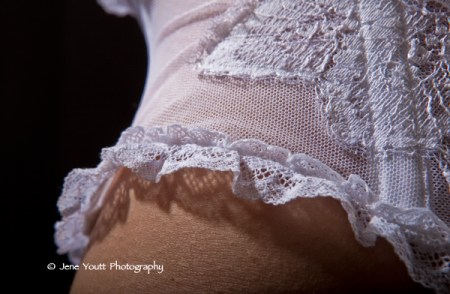
white corset

then CB we move in for our close up

young girl in white corset

white corset back

closer

close-up

corset laces

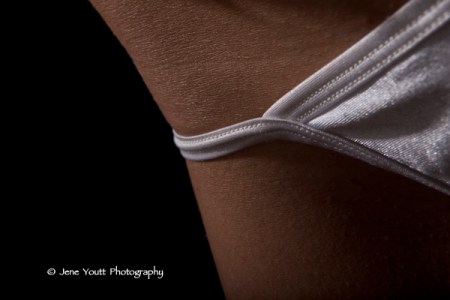
and i became fascinated with how close i could get with my lens, it not being a micro, and still get an erotic feeling to this session. so i moved the model around looking for interesting compositions. as i said we were both exploring, it’s not brain surgery.

white thong

but i would suggest if you’re photographing nudes it might be wise to do it in a warm studio. yes the lights do help somewhat and i wasn’t cold wearing a t-shirt but it might effect the pictures if it’s a bit chilly.

woman's boob with shadow

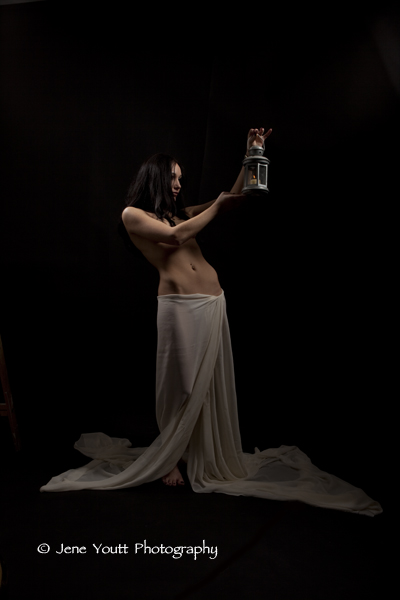
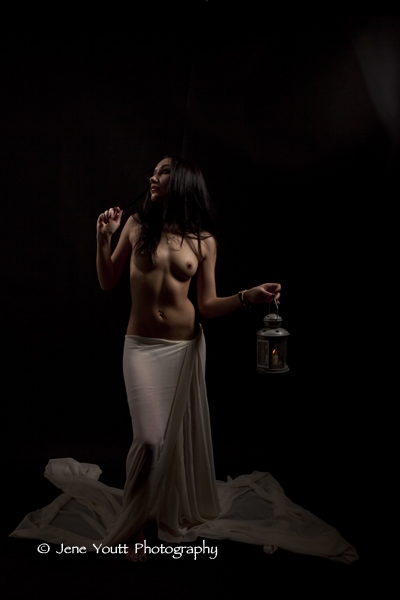
notice a lovely picture of goose bumps. we both like this picture but it’s not going to get this model any work without an explanation. oh well. then she asked if we could do something with a lantern she had seen on a shelf. ‘sure why not?’

Diogenes daughter

she didn’t know who Diogenes was but i am sure people won’t even ask seeing this picture. she loved this when she saw it. i am not sure if i like this one or the one below better.  she loved this picture as one she could send home to mom. that’s nice, i like helping young girls sending wholesome pictures back home from new york, ‘look mom what i’ve been up to?’

i did think she could show this picture to her grand children as to how she looked as a young woman, maybe not something you share with your children but grand children seem safely removed. they might never imagine what you looked like as a youngster.

Diogenes daughter listens

but what the heck we both had fun and no animals were hurt in the process.

jene

me and my shadow, a companion missed, not peter pan

February 5, 2011

my companion for over 13 years shadow had to be put to sleep this past monday and just remembering that makes tears start to form. she was a classy dog and fine companion right up to the end. at some point i may be able to write about her but not right now.

Shadow

mary wrote a wonderful entry on her blog at NY Mero ‘Quality of Life’ about the three of us. there is a big hole where shadow use to be, but she suffered way too much from getting old. it was time we all knew it and it came pretty suddenly she was ready for a rest. she struggled so much following us, moving from room to room, but she never complained not even a whimper.  i remember how soft her hair was.

now if only human doctors would let us go that peacefully laying on the floor or anywhere. she died with dignity surrounded by her loved ones. but even some vets wanted to try and fix her kidneys which were failing, for what? didn’t they and doctors realize death become us? so does grief for those who risk love.

friday we decided to get out of the house/apt respectively and start visiting the world again. it’s been a tough two weeks what with all the snow storms, shoveling for hours although we’ve got it down pretty well.

Mary sent me some announcements of openings around town and we said ‘why not?’ it’s alway interesting to see what other artist are doing in the world so she came by and picked me up.

first we went to Art Bazaar,  artist reception 6-9pm  Group exhibition of @ 14 emerging artists. at
175 Seventh Ave.  (20th Street)  NYC. a small gallery crowded with friends of friends and a few interesting artist. one i found interesting but didn’t have time to talk with her, she seemed too busy talking with others. oh well

then we moved on to jen bekman gallery, 6 spring st, NYC, NY, for the opening of hey hot shot. i though art bazaar was small well jen bekman is tiny but filled to the brim of friends of friends overflowing onto the street. we tried to go in but couldn’t see anything too crowded so we left.

walking the street at dinner time the subject comes of where to eat? we came upon lombardi’s at 32 spring st. i told mary about the competition between them and john’s pizza both claiming to be the best in nyc, so why not give them a try. they had a  zagat quote on their awning but maybe they got that for something other than pizza.

well it was friday nite but the place had tables right away. we were lead to one of the rooms through the kitchen. i didn’t see one italian in there but we sat down and ordered a small pizza, cesar salad and a glass of wine. the salad was fine, the wine was in one of the smallest glasses i’ve ever seem and when the pizza came it was burnt. i looked at all three pizzas that were around us which looked the same to me. mary likes the crust which i also do but not with a burnt taste. oh well they just won’t get our money any more. should i have said something? maybe it just didn’t seem that important what with all that had happened this past week.