Archive for the ‘computers’ Category

Steve Jobs, Focus and Simplicity, Mantra rooted in Buddhist

October 6, 2011

Long before Steve Jobs became the CEO of Apple and one of the most recognizable figures on the planet, he took a unconventional route to find himself — a spiritual journey that influenced every step of an unconventional career.

Jobs, who died Wednesday at the age of 56 of pancreatic cancer, was the biological child of two unmarried academics who only consented to signing the papers if the adoptive parents sent him to college.

His adoptive parents sent a young Jobs off to Reed College, an expensive liberal arts school in Oregon, but he dropped out and went to India in the 1973 in search of enlightenment.

Jobs and his college friend Daniel Kottke, who later worked for him at Apple, visited Neem Karoli Baba at his Kainchi Ashram. He returned home to California a Buddhist, complete with a shaved head and traditional Indian clothing and a philosophy that may have shaped much of his corporate values.

Later, he was often seen walking barefoot in his trademark blue jeans around the office and reportedly often said that those around him didn’t fully understand his way of thinking.

“I wouldn’t say Steve Jobs was a practicing Buddhist,” said Robert Thurman, a professor of Buddhist studies at Columbia University, who met Jobs and his “Tibetan buddies” in the 1980s in San Francisco.

“But he was just as creative and generous and went outside the box in the way that he looked to Eastern mental discipline and the Zen vision, which is a compelling one.”

“He was a real explorer and very much to be mourned and too young at 56,” said Thurman. “We will remember the design simplicity of his products. That simplicity is a Zen idea.”

Thurman met Jobs in San Francisco in the 1980s with Grateful Dead drummer Mickey Hart and actor Richard Gere. The discussion was about Tibet.

“It was before the Dalai Lama, and he was very sympathetic and had advice for the Tibetans,” he said. “But he was into his own thing and didn’t become a major player.”

Jobs used Dalai Lama in one of Apple’s most famous ad campaigns: “Think Different.”

“He put them up all over Hong Kong,” Thurman said of the computer ads. “But then the Chinese communists squawked very violently and as my son says, ‘He had to think again.'”

Zen Buddhist monk Kobun Chino Otogawa married Jobs and his now widow, Laurene Powell, in 1991.

Jobs could have just as easily taken his philosophy from the hippie movement of the 1960s. The Whole Earth Catalogue was his bible, with founder Stewart Brand’s cry, “We are as gods.”

The catalogue offered an integrated and complex world view with a leftist political calling. Jobs later adopted the catalogue’s mantra: “Stay hungry. Stay foolish.”

Buddhism a Wake-Up Call for Steve Jobs?

The catalogue also delved into spirituality. In one 1974 article, author Rick Fields wrote that Buddhism is “a tool, like an alarm-clock for waking up.”

That may have been the case for Jobs. He said in his now-famous 2005 Commencement speech at Stanford that he lived each day as if it were his last, admonishing graduates not to “live someone else’s life.”

“Don’t be trapped by dogma — which is living with the results of other people’s thinking,” Jobs said. “Don’t let the noise of other’s opinions drown out your own inner voice.”

In that speech he told students to relish the time to follow their passions, recounting the time after he dropped out, but continued to audit non-credit classes like calligraphy. The elegant typefaces — serif and sans serif — were later introduced for the first time in the Macintosh.

“I didn’t have a dorm room, so I slept on the floor in friends’ rooms, I returned coke bottles for the 5 cent deposits to buy food with, and I would walk the seven miles across town every Sunday night to get one good meal a week at the Hare Krishna temple,” he said. “I loved it.”

Jobs was also influenced by Richard Baker, who was head of the Zen Center in San Francisco from 1971 until 1984, when Baker resigned after a scandalous affair with a wife of one of the center’s benefactors. But Baker helped the center grow to one of the most successful in the United States.

Jobs was receptive to Baker’s message of change, “helping the environment and empowering the individual.”

Jobs admitted to experimenting with the hallucinogenic drug LSD, which he has said was “one of the two or three most important things” in his life.

In an unauthorized biography by Alan Deutschman, a college friend said that Jobs had even been a lover of folk singer Joan Baez, who was 41 at the time, and the attraction was largely because she had also been intimate with another ’60s icon, Bob Dylan.

He was a fan of the Beatles, who also embraced spirituality and made a similar pilgrimage to India. Jobs told television’s “60 Minutes” he modeled his own business after the rock group.

“They were four guys that kept each other’s negative tendencies in check; they balanced each other,” he said. “And the total was greater than the sum of the parts. Great things in business are not done by one person, they are done by a team of people.”

Jobs said that “focus and simplicity” were the foundation of Apple’s ethic.

“Simple can be harder than complex: You have to work hard to get your thinking clean to make it simple,” he told Businessweek in 1998. “But it’s worth it in the end because once you get there, you can move mountains.”

Even the minimalist design of his products — from the first Macintosh to the sleek iPad have a “aesthetic simplicity and keenness of line” that smacks of Japanese Zen, according to Columbia’s Thurman.

Former Pepsico President John Sculley, who eventually fired Jobs, said walking into Jobs’ apartment had the same design feel.

“I remember going into Steve’s house, and he had almost no furniture in it,” Sculley said in a 2010 interview with Businessweek.”He just had a picture of Einstein, whom he admired greatly, and he had a Tiffany lamp and a chair and a bed. He just didn’t believe in having lots of things around, but he was incredibly careful in what he selected.”

Jobs reportedly convinced Sculley to work for Apple when he asked, “Do you want to spend the rest of your life selling sugared water, or do you want a chance to change the world?”

Jobs Gave People Computer Power

Thurman contends Jobs’ greatest success was not necessarily financial.

“It was his initial role in making the PC available to individuals to give them computer power,” said Thurman. “He was democratizing computer power. It was his own inspiration of things and not accepting the status quo and breaking through the power of the people.”

Though Jobs may not have been a devout practitioner of Buddhism, his personal and corporate vision certainly struck the same tone — “wisdom and compassion,” he said.

“Zen vision is that human beings can understand reality if they focus their mind on it and develop wisdom,” said Thurman. “When you do, you have the greater capacity to arrange the nature of things and to help people.”

But the irony of Jobs’ spirituality was that as much as it reflected the most beautiful aspects of the products he made, those very “machines” have in some ways enslaved a generation of users, according to John Lardas Modern, a professor of religious studies at Franklin and Marshall College in Pennsylvania.

Jobs made computers and hand held devices that have allowed people to become “disembodied” on a certain level — “to escape and transcend the mundane reality of bodily existence,” according to Modern.

Such spirituality begs for freedom from the trappings of tradition, he said, but they have a down side.

“These machines are amazing,” said Modern. “For the last 12 hours, I have been seeing people on Facebook and Twitter in praise of how the devices he made allow ease and convenience and empowerment.”

“I love my iPad, precisely because it feels like an extension of my mind and I can’t live without it,” said Modern. “The irony is, these products ground us in a chair behind a desk, behind a computer and in a sense they have pushed us inward?and you don’t have physical connections with others.”

“It cuts both ways,” he said.

originally posted ABC News & Yahoo News

SEE Los Angeles Times story on “Steve Jobs’ virtual DNA to be fostered in Apple University

Jene Youtt

the history of digital cameras & other mind wanderings

January 4, 2011

The history of digital cameras

Thirty-five years ago—in December 1975—an engineer named Steven Sasson snapped a photo with the world’s first fully digital camera at a Kodak lab. It took 23 seconds to record a 100-by-100-pixel image to cassette tape. Not until the early 1990s, however, did digital photo technology take off, launching an attack that would conquer the consumer camera industry in less than a decade. In the slides ahead, let’s examine some highlights of digital camera history.

1st digital camera

if this interests you then you might want to go to Wikipedia’s ‘history of the camera’ web page for some pretty cool cameras and history. the article shows my first camera, the Kodak No 2 Brownie, actually it was my families camera that i decided to use on my own, always an interesting experience seeing grown ups reaction to what kids do.

but the article misses my first real camera purchase during my stay in Munich with the US Army. i couldn’t afford a Lieca so i got an Exakta made in the USSR Germany. it had a 1.8 zena lens on it, whoooo.

exackta IIa

i loved that camera and kept it for years. when i lived in Greenwich village i found a sign in Cambridge camera that said ‘We fix Exakta’s.’ that’s where i first met Norm who took care of my baby for years until it couldn’t be repaired anymore because of the film advance gears being stripped beyond repair.

he swapped it for a Canon AE1 and lenses. i went on to purchase an F1 and an AE1 programmable but now i had to get use to a right hand film advance. this was a turning point in my photography but i didn’t know enough then to realize what was going on, sometimes i wake up in the morning wondering what i know now as i stumble to the MR Coffee pot.

this morning, writing in my journal, about what to do this year i looked up at 8 shoe boxes of film i could begin scanning into computer and a shutter goes through my body. oh how i dread scanning film and slides into computer. but i know i’ve some lovely stuff in the boxes and in the chrome archive books. but the though crosses my mind maybe i’ll call the dentist and see about some root canal work instead.

i look on my book shelf and pull out my Exakta camera 1933-1978  book by Clement Aguila & Michel Rouah from years ago and flip through the pages looking for my IIa and Zena lenses. i love German lenses. that’s why i’ve a Contax Nx and a Hasselblad 503 but i have kept my Canon F1 just to shoot infrared film as the Nx is an film auto loader which won’t allow infrared film to be used it confuses the auto reader in the camera. it was a shame that Kyocera discontinued their Contax N Digital so soon after developing it. i was heart broken.

i guess i could buy on of those N mount adapters and put my Zeiss lenses on my 5D MII and see what happens. would it improve my photos? well since no one is buying them right now why bother?

some roman church statue

this is taken with a Canon 20D, so it’s not so much the camera that makes the picture more about time & place and vision.

the chore on hand right now for me is to gather my Diablo rojos notes, which i did yesterday and separate them in to categories. i also found on amazon a dvd video about them which i ordered. today i’ll do more research, which is right next to film scanning on the list, but discovery can be exciting. after all we need to put down a date for our next Panama trip, find housing and schedule interviews.

as always, i am waiting to hear back from people today. things could be worst with the boiler not working or no hot water, all the comforts of new york city living.

← Back

Thank you for your response. ✨


Warning

Warning

Warning

Warning

Warning.

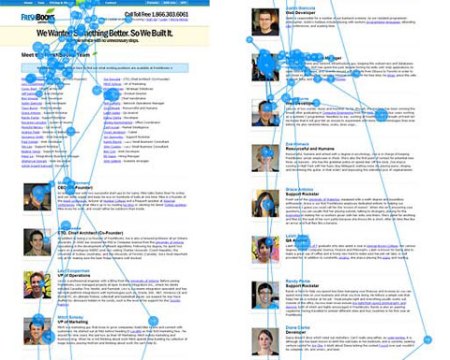
study shows people ignore generic photos

November 19, 2010

Most people can agree that run-of-the-mill stock photos can be boring and not generate any communications nor add interest. a new study by Jakob Nielsen, a web consultant and author finds that not only do they not elicit a responce or add anything but people actually ignore them. with eye-tracking software researchers can see where people are looking or not looking.

see the New York Times for the full article.

i am dancing as fast as i can

May 13, 2010

but don’t seem to be catching up. computer problems along with operator error, me. for some reason i decided to change cs4 photoshop to run using Rosetta on my 2.93 mac pro tower. bad mistake as rosetta is buggy and crashes a lot.

i had to search abobe forums for this answer the only way to fix it is to delete the file in user>libary> preferences folder >called com.adobe.photoshop.plist then clear all caches & reboot. i used onyx for that but agin check off something i should have so i only caused more problems.

after reboot then go to photoshop not the folder but the application, my first mistake,and click on >file info. then one can uncheck run using Rosetta and solve all you cs4 photoshop problems.

sometimes well most of the times i have a little bit of knowledge i get into big trouble. it took me day to fix this problem, staying up until 3:30 am last night working on it. did the last step this morning by running disk warrior to rebuild my directories. i used apple disk utility to reset permissions before running disk warrior.

i also use defrag to clean  unused space on my hard drives.

so i think i am up and running now. all of these programs are a part of my arsenal to keep my computer running. i am no propeller head but over the years had to learn how to keep things running.  i hope some of this information is helpful.

jene

educational web site: The Russell Brown Show

February 11, 2010

here is a link to a wonderful web site with lots of great tips & techniques

RUSSELL BROWN’S ADOBE PHOTOSHOP TIPS & TECHNIQUES

Welcome to the official, Russell Brown tips & techniques page. This is your one-stop shopping location for the latest in hot new tips from the one, and only, Dr. Brown. Beware, these QuickTime movies are large and will take time to download with a slow connection. Also, if you are viewing them using Internet Explorer, the movies may take several minutes to appear. For best results, Dr. Brown recommends that you use the Safari, or Firefox browser. These tutorials have been provided to you as a free service from Adobe Systems and Russell Brown.

i have always  followed the photographers link or name on these quicktime tutorials to see some pretty fantastic images. all part of my learning skills.

enjoy

jene youtt, nyc

http://www.jeneyoutt.com

All i want to do is make art or color management gone wild again.

November 3, 2009

i never wanted to learn how to type on a typewriter because of my phonetic poor spelling.i wanted to draw.

i wasn’t sure i wanted to learn how to use a computer but it did help my spelling. so i bought an Apple CI computer.  but now i am being held hostage along with a few other thousand of people by code writers. i am not talking about the Navaho  peoples who helped this country during WW ll but the whizz kids writing computer code.

at photo expo 2009 i talked with the HP printer people trying to learn how to not have their printers color manage my pictures.it seems turning ‘off ‘color management on their printers isn’t easy. the salesman showing the HP 9100 products had a hard time finding the right places to look, so it’s really not intuitive because they hide it in the print dialog box- copies & pages> paper type> color>  application managed color. now why couldn’t they just say ‘no color management?’ well Epson says that.

i did have a nice exchange with another photographer wanting to learn exactly the same thing as i as we waited for the salesperson to learn how to educate us. he showed me some of his B&W prints to which i asked if he’d ever had them printed on Kodak’s metallic paper, i suggested Adorama prints whom i’ve always found quality work from. i also suggested he try the silver edition B&W prints they carry.one of my  shameless plugs for a friends company PTS who carries Fuji Frontier printers and off topic.

Ok but this is the least of the printing problems i have now under  Tiger OS. now we move onto the big cat Snow Leopard and that gets really strange. i come from using Epson printers since they were the only company that was producing fine art printers, well the only one i could afford, Roland was way out of my league.i learned how to make my own color profiles, well after i huddled in the corner for years at the mention of color management, i found print fix pro from Datacolor way cool and made my prints better.did i mention a free upgrade to my software, now how many companies do that?

so i go out and buy a new Apple quad core 2.93  with  Snow Leopard but thinking i am gonna keep my old G4 as a print server just in case there are printing issues. i am getting smarter in my old age. seems everyone is having printing issues with  Snow Leopard. my yahoo Epson printing group are all a buzz with issues and few soultions.

there is one web site i know of, remember my knowledge is limited, the Luminous Landscape has a work around posted at http://luminous-landscape.com/tutorials/solving.shtml. but why? how to print a no color managed print or you select the color management and not have it turn out some other color. this is the first they’ve heard of it? what planet do they live on?

don’t these people from Apple, Canon, Epson, Hewlett-Packard, Samsung ever talk to each other? why can’t we have some standard to go by in printer drivers. is it such a dog eat dog world out there that we the user can’t have a dependable work tool.

has greed and fear taken over the entire world? i thought it might have subsided a bit, with our newly elected president, so we could believe in creation again, and building a better world.

but old habits are slow to die off. one of the reasons i keep old computers around, remembering when i was young i’d get into all kinds of troubles loading some new software on my computer and being asked by customer support ‘why’d you do that?’ and not having a good answer for them.

oh well


wasting time is my pastime

October 21, 2009

i just spent hours changing the password on my wireless dlink network, first logging in, configuring the software, then after not doing this for a number of years, i suggest if one is security consensus to do this more often as one forgets how to or take concise notes. need to really learn to listen more closely as tech support isn’t located in this country so the accents are sometimes hard to understand, i am sure they feel the same way.

getting the wireless router configured  i lost my computer ip address. thank goodness for assistants and apple software. i don’t know how windows people survive especially the ones on high floors.so now onto the business at hand.

i bought a hp 9180 printer which so far has reminded me of a sherman tank running into a wall. i’ve never had a printer shake the table so violently as this one does as it moves the carriage side to side. whoo nelly. but they say this is a good printer so i’ve got a learning curve for sure, especially after all these years using epson printers.

hey what’s life without some sort of challenge. did i think i could just sit down at my desk and create. where did the simplicity of pencil and paper in hand go? tonight i go look see at all the wonderful changes snow leopard has even though my new computer is still in the box with nowhere to go,  because i’ve been wasting my time with security issues. but this is tekserve’s schedule and what the heck it’s only an hour presentation.

meat loaf for dinner is all i can think of right now, guess i must be hungry.