Archive for the ‘art’ Category

hawaii: computer trouble in paradise

February 14, 2012

we’ve traveled a lot in our eight years together sometimes to very strange and remote places but this has been a very frustrating trip. the captain of our plane on landing in Kona Hawaii said ‘welcome to paradise’ and i am all for that. but it has been a different story for me. not that this island is lovely, we’ve been running around seeing the sights; white sands beach, green turtles, black sands beach, volcano, VOG a form of smog created by volcano, sunsets, sea urchins, little fishies, big fishies of the humpback whale family,  mountains green and brown, sharp lava rock, sunset above the clouds etc. it’s all here.

but we travel with a Macbook computer and on arrival the wireless network went down where we are staying, no big deal just took a day or so to change router and get back up to speed. but the computer on startup gave me the dreaded  folder with a question mark. oh, zap the pram, which took me a hour or so to remember the keys to press, not something i need to do everyday.

but that was just the start of computer problems, i can’t burn disks, toast is toasted gives me error messages downloading from cards. mary has the same problems from her cards. we’ve tried all kinds of work around’s, drag and drop to folders on desktop but the same problem. i’ve repaired permissions, thrown away preferences, run Onyx to clear caches but still can’t fix the problem. when we get back i can run disk warrior or just do a clean system install. this has caused me to loose sleep laying in bed think of a solution.

the only thing that has changed on computer is adding fuji software for mary’s underwater point and shoot called ‘Finepix viewer’ now in this day and age i can’t imagine software conflicts like i had under system 7. but maybe. mary’s been having a good time playing with the camera see Flights of Fancy  finding nemo. but we haven’t been posting pictures anywhere. gees

my G12 has developed a black spot on my pictures,tried to clean the front of lens not sure if it’s on the back lens so it’s off to canon again after they replaced my led screen because of burned pixel for free. but the camera is too small for my clumsy hands. i’ll sell it somewhere.

well today we go to a Luau, the last thing on our list and it’s Valentines Day so that should be cool. speaking of cool, it’s cold and rainy back home winter will welcome us getting off the plane. it doesn’t seem real as the weather here is so nice but weather changes. at least we have our love to keep us warm.

but all & all this has been a wonderful trip well worth the 18 hours getting here. life is what you make it, don’t let it get you down bunky, just grin and enjoy every moment for that is all we have.

jene

Lower Manhattan Cultural Council workshop, work samples do’s & don’t’s

February 14, 2012

If you have difficulty reading this email, please click here for the web version.

TNT: Training, Networking, and Talks

Work Sample Dos and Don’ts

Led by LMCC’s Grants and Services team

In order to access funding, residencies and other professional opportunities, artists are often required to submit work samples for consideration. Who reviews work samples? How are they reviewed? How important is formatting? Context? Our interactive workshop will cover these issues and provide a series of examples from a range of artistic disciplines that will allow participants to consider what makes a work sample compelling and why.

Date and Time:

Wednesday, February 29, 6:30 – 8:30PM

Location:

Lower Manhattan Cultural Council
125 Maiden Lane, 2nd Floor
Between Pearl and Water Streets [ map]

The workshop is free, but space is limited and registration is required.
Registration will be available tomorrow, Wednesday, February 15th, at 12PM.
To access the registration link and for more information, please visit our website.


TNT: Training, Networking, and Talks is supported, in part, by public funds from the New York City Department of Cultural Affairs in partnership with the City Council; the New York State Council on the Arts; and the Joan Mitchell Foundation.

nyculturenyculture

things i am looking forward to do when i get back from hawaii….. woohoo

January 30, 2012

we are off to Hawaii [the big island]  tomorrow, apartment is secure from the neighborhood burglar, as secure as i can make it now, so don’t worry it never does any good anyways. have most of camera gear with me and i’ll try to be more careful this trip. i am sure i’ve over packed too much clothing but don’t know what we’ll run into. humpbacked whales breaching woohoo, redhot lava flows, volcanos active and not, lots of stars, sandy beaches, hawaiian shirts. plenty of sunscreen and cf cards.

this is our 1st year anversary after having put our dog to sleep ending her suffering. of course i have to dream about her last night. part of growing older being seperated from the ones we love. something to look forward to. oh well i’ve nothing but fond memories of her.

now if i could only figure out how to relieve my sons suffering but he’s not an honest person with anybody and without honesty there’s not going to be much progress. i think he’s on his way to living in a cardboard box and hollering curse words at passing people, talk about pain there it is. theres noting i can do about it.

yesterday we went to see ‘Crazy Horse’ at film forum, Celebrated documentary director Frederick Wiseman spent ten weeks with his camera exploring one of the most mythic places dedicated to women: ‘The Crazy Horse.’

Over the years this legendary Parisian cabaret club, founded in 1951 by Alain Bernardin, has become the Parisian nightlife ‘must’ for any visitors, ranking alongside the Eiffel Tower and The Louvre. which i thought was beautifully lit but it’s the crazy horse. what’s not to like except the length of the movie, but wonderful anyways.

these are some of the things i am looking forward to do when we get back. well these and getting ready for a joint exhibit with mary in Lancaster PA beginning in April. i will post more on the exhibit closer to the date when we figure out what’s going to be shown.

it’s so wonderful living in a cultural center, we get an opportunity to see so much as it comes through. walking down the street today i saw shoots coming up to meet the sun, they think it’s spring already. now if only i could get my wireless system to work. oh well.

heres the partial list:

Weegee at icp

Weegee: Murder Is My Business

January 20–September 2, 2012

For an intense decade between 1935 and 1946, Weegee (1899–1968) was one of the most relentlessly inventive figures in American photography. His graphically dramatic and often lurid photographs of New York crimes and news events set the standard for what has become known as tabloid journalism. Freelancing for a variety of New York newspapers and photo agencies, and later working as a stringer for the short-lived liberal daily PM (1940–48), Weegee established a way of combining photographs and texts that was distinctly different from that promoted by other picture magazines, such as LIFE. Utilizing other distribution venues, Weegee also wrote extensively (including his autobiographical Naked City, published in 1945) and organized his own exhibitions at the Photo League. This exhibition draws upon the extensive Weegee Archive at ICP and includes environmental recreations of Weegee’s apartment and exhibitions. The exhibition is organized by ICP Chief Curator Brian Wallis.

cindy sherman at moma:

Cindy Sherman. Untitled #466. 2008. Chromogenic color print, 8' 1 1/8 x 63 15/16" (246.7 x 162.4 cm). The Museum of Modern Art, New York. Acquired through the generosity of Robert B. Menschel in honor of Jerry I. Speyer. © 2011 Cindy Sherman

Cindy Sherman

February 26–June 11, 2012

The Joan and Preston Robert Tisch Exhibition Gallery, sixth floor

Cindy Sherman (American, b. 1954) is widely recognized as one of the most important and influential artists in contemporary art. Throughout her career, she has presented a sustained, eloquent, and provocative exploration of the construction of contemporary identity and the nature of representation, drawn from the unlimited supply of images from movies, TV, magazines, the Internet, and art history. Working as her own model for more than 30 years, Sherman has captured herself in a range of guises and personas which are at turns amusing and disturbing, distasteful and affecting. To create her photographs, she assumes multiple roles of photographer, model, makeup artist, hairdresser, stylist, and wardrobe mistress. With an arsenal of wigs, costumes, makeup, prosthetics, and props, Sherman has deftly altered her physique and surroundings to create a myriad of intriguing tableaus and characters, from screen siren to clown to aging socialite.

Bringing together more than 180 photographs, this retrospective survey traces the artist’s career from the mid 1970s to the present. Highlighted in the exhibition are in-depth presentations of her key series, including the groundbreaking series “Untitled Film Stills” (1977–80), the black-and-white pictures that feature the artist in stereotypical female roles inspired by 1950s and 1960s Hollywood, film noir, and European art-house films; her ornate history portraits (1989–90), in which the artist poses as aristocrats, clergymen, and milkmaids in the manner of old master paintings; and her larger-than-life society portraits (2008) that address the experience and representation of aging in the context of contemporary obsessions with youth and status. The exhibition will explore dominant themes throughout Sherman’s career, including artifice and fiction; cinema and performance; horror and the grotesque; myth, carnival, and fairy tale; and gender and class identity. Also included are Sherman’s recent photographic murals (2010), which will have their American premiere at MoMA.

In conjunction with the exhibition, Sherman has selected films from MoMA’s collection, which will be screened in MoMA’s theaters during the course of the exhibition. A major publication will accompany the exhibition.


The exhibition is organized by Eva Respini, Associate Curator, with Lucy Gallun, Curatorial Assistant, Department of Photography.

Major support for the exhibition is provided by Jerry I. Speyer and Katherine G. Farley, The Modern Women’s Fund, and The William Randolph Hearst Endowment Fund.

Additional funding is provided by The Broad Art Foundation, David Dechman and Michel Mercure, Robert B. Menschel, Allison and Neil Rubler, Richard and Laura Salomon, The Robert Mapplethorpe Foundation, Glenstone, Michèle Gerber Klein, Richard and Heidi Rieger, Ann and Mel Schaffer, and The Junior Associates of The Museum of Modern Art.

Things highly productive people do, well not me i am special, i am an artist

January 27, 2012

Here are some tips for staying productive:
1.    Work backwards from goals to milestones to tasks. Writing “launch company website” at the top of your to-do list is a sure way to make sure you never get it done. Break down the work into smaller and smaller chunks until you have specific tasks that can be accomplished in a few hours or less: Sketch a wireframe, outline an introduction for the homepage video, etc. That’s how you set goals and actually succeed in crossing them off your list.
2.    Stop multi-tasking. No, seriously—stop. Switching from task to task quickly does not work. In fact, changing tasks more than 10 times in a day makes you dumber than being stoned. When you’re stoned, your IQ drops by five points. When you multitask, it drops by an average of 10 points, 15 for men, five for women (yes, men are three times as bad at multitasking than women).
3.    Be militant about eliminating distractions. Lock your door, put a sign up, turn off your phone, texts, email, and instant messaging. In fact, if you know you may sneak a peek at your email, set it to offline mode, or even turn off your Internet connection. Go to a quiet area and focus on completing one task.
4.    Schedule your email. Pick two or three times during the day when you’re going to use your email. Checking your email constantly throughout the day creates a ton of noise and kills your productivity.
5.    Use the phone. Email isn’t meant for conversations. Don’t reply more than twice to an email. Pick up the phone instead.
6.    Work on your own agenda. Don’t let something else set your day. Most people go right to their emails and start freaking out. You will end up at inbox-zero, but accomplish nothing. After you wake up, drink water so you rehydrate, eat a good breakfast to replenish your glucose, then set prioritized goals for the rest of your day.
7.    Work in 60 to 90 minute intervals. Your brain uses up more glucose than any other bodily activity. Typically you will have spent most of it after 60-90 minutes. (That’s why you feel so burned out after super long meetings.) So take a break: Get up, go for a walk, have a snack, do something completely different to recharge. And yes, that means you need an extra hour for breaks, not including lunch, so if you’re required to get eight hours of work done each day, plan to be there for 9.5-10 hours.

From Tony Wong, a project management blackbelt.

all worth while ways of keeping on track and getting things done. i must admit i am pretty good a getting things done maybe not as organized as this list. no i don’t text people, why do they text me when i say call? i might be living in the wrong world or time frame. oh well

i do keep on track with to do list the only way that  keeps me focused and deadlines have worked pretty good for me.  am preparing to go off to Hawaii for a couple of weeks with my honey. the house is a mess clothes thrown in piles almost read to get rolled into suitcase but first i had to make fast the apartment  from the ‘Hell’s Kitchen burglar.’

that took most of the day although is seemed a simple task but……. you know how it is.  clearing calendar so i can come back clear nothing on my mind except pleasure, woohoo

yesterday i finished up giving a model whom i posted here before some selects, he gets to chose the ones he wants. i’ll never figure out what they are looking for, yes he’s seen my quick picks but they always go for ones i never though of, as is this image he picked. ugh

UGH

this was my stupid photographic choice of the day, this background, oh that’s mary’s hand down in the corner. ‘Why this one,’ i said. ‘i like the way my body is’ he replied.

i couldn’t let this pic leave the house, not looking like this and having my name on it. so through the magic of photoshop i added a few things the camera hadn’t caught. i know everyone says capture it in camera but sometimes i am too dumb.

added levels

warm photo filter

color corrected left shoulder

burned in edges

is it perfect, not really but better than the one he wanted. i turned towards him a said ‘what about this one?’ his reaction was  ‘ i can’t believe the difference.’ so there’s no truth in what i do, but as i say on my model mayhem page, ‘ I use a camera as I would a pencil or brush, photography is just a tool.’

i didn’t spend all those hours at ICP daydreaming in Photoshop II class. so here you have some of my secrets, how i am special and make others special to. it may not be productive but i’ve learned early in life to just keep at it. perseverance is one of the keys to life that makes up the song.

jene

Here’s what David Pogue & the NY Times don’t what you to know about SOPA/PIPA

January 22, 2012

well getting ready for playoff sunday and running out of home improvement projects i turn to the internet, namely TED talks for entertainment/knowledge because of the way my mind works they are one and the same. i wrote about SOPA/PIPA here and blacked out this site in protest but what i didn’t know was the whole story. this TED talks video blew me away in it’s detailed explanation of what’s really going on from Clay Shirky blog

sopa/pipa

then i found this TED talk with more outstanding control information. way back in the 60’s my friends and i discussed the controlling aspects of television where if one could keep people watching images flash in front of their faces they stopped talking about well just about anything. no one said how difficult their lives where and how to maybe change it. no one discussed the world affairs. you just sat there doing nothing, well maybe consuming things. all across America and the world people sat in front of their televisions and said nothing.

but thank goodness we live in a free country and can turn off our televisions or can we? groucho marx said television was educational in that every time someone turned the set on he went to read a book. now we have the internet to control our time and the forces of control at our faces once again both criminal and corporate from Mikko Hypponen.

internet security

well i hope everyone is enjoying them selves today. snow removal done and plaster drying, so are my hands.

jene

this weeks work or how do you stay warm naked?

January 21, 2012

i invited mary over to help out for this shoot i had earlier this week when a  model contacted as he was looking for some edgy shots to add to his portfolio. EDGY a word i’ve come to associate with chalk on a blackboard, but i thought what the hell, i do need to check my camera after coming back from repair and this would be a good exercise for all of us.

james, we will call him, had some ideas he’d like to try out and i’ve always come up with something to try myself and mary was a willing helper, it may look easy but when ever i create something it’s from hard work and maybe a bit of luck.

we started with some normal head shots which aren’t going to be included today because i came out to the house anticipating a snow storm to hit at midnight  and i only looked at the proofs this afternoon and pulled off the ones that interested me.

in the cave

james wanted to start off  clothed until i guess he felt comfortable which i can understand  but very quickly shed his clothing. i pulled out this background which i haven’t used in years but it gave me nothing but problems. the main problem was i was shooting with my white lightning strobes and mary was shooting tungsten. i pulled out a couple of omnis and put them up as cross lights and had a couple modeling lights on my strobes. she had to push her iso but never said anything. she posted a couple of her images on her blog NY Metro Art Scene which i though looked pretty good.

sitting

but i just wasn’t too happy with my choice of backgrounds. the only way this one works is if i can keep all the light off it.

male nude

but at least we could change it without too much trouble and we when with a plain black no seam with a cane back chair.

chair

i am not sure i’ll ever get a fashion booking from this type of lighting but i find it interesting and dramatic. but as i said earlier we are skipping a lot of pictures because i see different things that interest me like the next picture shows. oh and i did have to catch a bus home tonight.

shadows

as much as i like shadows there are the hands, i tried to get more tension or capture the tension there  but i think i might have missed it, oh well

hands

or this one. i did have a nickname when i lit a soap opera as the prince of darkness

another angle

 oh well no animals were harmed in the making of these images which is always a good thing.

Jene

NYTimes David Pogue’s excellent article on Sopa/Pipa

January 20, 2012

Put Down the Pitchforks on SOPA

By now, you’ve probably heard of the Stop Online Piracy Act (SOPA) and the Protect I.P. Act (PIPA). These are anti-piracy bills that had been making their way through the House and Senate, respectively.

You might have been made aware of these proposed bills Wednesday, when Wikipedia and other Web sites “went dark” in protest. (Google covered up its logo with a big black rectangle, as though censored.)

Protestors in San Francisco.Robert Galbraith/ReutersProtestors in San Francisco.
FDDP
The Times’s technology columnist, David Pogue, keeps you on top of the industry in his free, weekly e-mail newsletter.
Sign up | See Sample

I’ve been watching these doings with fascination. One reason: it’s the first time so many big Web sites have banded together for a political action. (Jenna Wortham in The New York Times offers a great analysis of this sea change here.)

But I’ve also been a little alarmed. Of the millions joining in outraged protests, I’ll bet that only a few have actually read the proposed bills. Everyone else is, no doubt, swept away by the Web sites’ shock language. These bills, say the opponents, will allow Hollywood to censor free speech, kill innovation, and “fatally damage the free and open Internet,” as Wikipedia put it. Light the torches! Grab the pitchforks!

In a perverse stroke of curiosity, I thought maybe I’d actually study these bills.

Nobody’s disputing that these bills have been put together by the entertainment industries — movies, TV, music. The bills are intended to address their chronic frustration: that most of the piracy sites, which make movies, TV, music and book files available free, are overseas. Even though they get more visits than Google or Wikipedia, American laws can’t touch them.

The SOPA and PIPA bills would try to shut down these overseas piracy sites by exerting leverage on companies here in the United States, where they do have jurisdiction.

For example, they’d force American service providers to block the domain names (for example, “piracy.com”) of overseas piracy sites. They’d allow the government to sue American sites like Google and Facebook, and even blogs, to remove links to the piracy sites. And they’d give the government the right to cut off the piracy sites’ funding; they could force forcing American payment companies (like PayPal) and advertisers to cut off the foreign accounts.

The outrage reminds me of the controversy over global warming. Yes, there are climate-change deniers. But nobody seems to notice that they’re in two totally different camps, making totally different arguments. Some people deny that there’s been any climate change at all. Others acknowledge the climate change, but deny that people have anything to do with it. These two categories of people actually aren’t on the same side at all.

In SOPA’s case, too, there are two groups. Some people are O.K. with the goals of the bills, acknowledging that software piracy is out of control; they object only to the bills’ approaches. If the entertainment industry’s legal arm gets out of control, they say, they could deem almost anything to be a piracy site. YouTube could be one, because lots of videos include bits of TV shows and copyrighted music. Facebook could be one, because people often link to copyrighted videos and songs. Google and Bing would be responsible for removing every link to a questionable Web site. Just a gigantic headache.

But there’s another group of people with a different agenda: They don’t even agree with the bills’ purpose. They don’t want their free movies taken away. A good number of them believe that free music and movies are their natural-born rights. They don’t want the big evil government taking away their free fun.

For the record, I think the movie companies have approached the digital age with almost slack-jawed idiocy. The rules for watching online movies from authorized sites are absurd (24 hours to finish the movie? Have they never heard of bedtime?). And there are plenty of movies, even big ones, that you can’t rent or stream online at all. (The original “Star Wars” trilogy, the first three “Indiana Jones” movies, and hundreds of others.)

It should occur to these movie studios that if you don’t give people a legal way to buy what they want, they’ll find another way to get it.

At the same time, what the piracy sites are doing doesn’t seem quite fair, either. Yes, it’s a quirk of the Internet that you can duplicate something infinitely and distribute it at no cost. But that doesn’t make it O.K. to shoplift, especially when the stolen goods are for sale at a reasonable price from legitimate sources. Yes, even if the company you’re robbing is huge, profitable and led by idiots.

In this case, the solution is to work on the language of the bills to rule out the sorts of abuses that the big Web sites fear. (And to fix the other minor point, which is that the bills won’t work. For example, they’d make American Internet companies block your access to domain names like “piracy.com,” but you’d still be able to get to them by typing their underlying numerical Internet addresses, like 197.12.34.56. In other words, anybody with any modicum of technical skills would easily sidestep the barriers.)

As it turns out, that’s exactly what’s happening. Dozens of members of Congress, and the White House itself, have dropped support of the bills; their sponsors are considering big changes to the proposals. (They might look, for starters, at the suggestions in Wednesday’s Times editorial: “The legislation could be further amended to narrow the definition of criminality and clarify that it is only aimed at foreign sites. And it could tighten guarantees of due process. Private parties must first get a court order to block business with a Web site they deem infringing on their copyrights.”)

In other words, the protests were effective. There’s no chance that the bills will become law in their current forms.

But it was a sloppy success; the scare language used by some of the Web sites was just as flawed as the Congressional language that they opposed. (I actually have sympathy — just a tiny bit — for the music business’s frustration. It was put nicely by Cary Sherman, chief executive of the Recording Industry Association of America: “It’s very difficult to counter the misinformation when the disseminators also own the platform.”)

Finally, not enough people have acknowledged that the opposition was arguing two totally different different points — the “you’re going about it the wrong way” group and the “we want our illegal movies!” group.

In the new world of Internet versus government, the system worked; the people spoke, government listened, and that’s good. But let’s do it responsibly, people. Both sides have an obligation to do the right thing.

legal information from JPG News? “War on Photography”

January 19, 2012

PHOTOGRAPHY & THE LAW – War on Photography

Posted by Mickey H. Osterreicher — 18 Jan 2012

I have been asked to write a blog about legal issues facing photographers. I thought that the best way to begin was to provide a little bit of background about myself and a brief overview of some of the things that are happening on an almost daily basis throughout the country.

As Of Counsel to Hiscock & Barclay, LLP my practice area is Media & First Amendment Law. Most importantly I also serve as General Counsel to the National Press Photographers Association. Before becoming an attorney I was a photojournalist with almost forty years experience in print and television. Rather than bore everyone – for those who want to know more about me they can read my Bio or go to my profile page.

There has always been tension between the press and government regarding news coverage of matters of public interest.

Unfortunately since 9/11 the “War on Terrorism” has somehow morphed into the “War on Photography.” Visual journalists and citizens taking photographs or recording video in public places have been experiencing extraordinary interference nationwide from security personnel and law enforcement officials at all levels of government. This infringement upon protected First Amendment activities is often based on erroneous beliefs by those in authority that photography of certain public areas, buildings, landmarks or police officers may be prohibited because of anti-terrorism concerns.

In recent months the Occupy Wall Street protests have only exacerbated the situation – where photographers have been detained, interfered with and in many cases arrested for doing nothing more than taking pictures or recording video of matters of public concern in traditional public forums such as parks and city streets.

As one of two NPPA attorneys I get calls and emails everyday concerning incidents involving photographers. In many cases just publicizing what happened helps. Other cases are worthy of writing about in the NPPA blog, which in recent days has been full of such stories.

Recently, Donald R. Winlsow, the editor of News Photographer Magazine, published a nightmare tale about what happened to one photojournalist when he was arrested by police in Montgomery County, MD for doing nothing more than recording their activities. Another recent case involved a student photojournalist at R.I.T. covering an Occupy Rochester protest who was arrested. Because he was an NPPA student member I represented him in court and was able to have the charges dismissed.

But these horror stories about blatant violations of First Amendment rights don’t just happen to news photographers. In the next installment of Photography & the Law I will tell you about some of the citizens who have had the unfortunate experience of being stopped, interfered with and all too often arrested for doing nothing more than taking a picture or recording video.

For those interested the NPPA is a non-profit organization dedicated to the advancement of visual journalism in its creation, editing and distribution. NPPA’s almost 7,000 members include photographers, editors, students and all those interested in photography willing to abide by a code of ethics. Since its founding in 1946, the NPPA has vigorously promoted the constitutional rights of journalists as well as freedom of the press in all its forms.

Feel to follow me on Twitter @nppalawyer or Facebook and please don’t forget to take a look at the NPPA websitewhere you can find out more information about membership in an organization that advocates for and helps protect all photographers’ rights. I look forward to discussing these issues with you, the JPG community, and writing about the many different facets of photography and the law such as copyright, licensing and user-generated content.

This is JPG News Daily photography related news and goings-on at the JPG blog

old work new views

January 17, 2012

what else is there to do on this rainy grey day. my honey is out at the house and i am here. so i’ll just try and catch up on stuff i’ve been meaning to do but other things got in the way. a few days ago, maybe it was weeks as time and to do list come and go. i do get a good snuggly feeling when i get things done in  my life and then there is always more. i guess never rest for a creative i am not one to sit and relax. altho sitting in front of the warm fireplace today would be nice, but here i am staring at a white screen trying to fill it with black marks.

i decided to expand my Model Mayhem portfolio from a free site to one i pay for. not that i get any work from the site nor do man would be models line up for me to shoot them. i guess i am like a scotch an acquired taste.but i decided to put up some fashion images i had shot maybe years ago just to expand my client base, ha ha. so far it hasn’t worked.

but to those who follow this blog i often go through old shoots looking for new stuff which i did to add to my portfolio.

wedding dress

black & white

btw way she hated these images maybe not these one but for most of the shoot she had her eyes looking down as asians are taught, when i mentioned it she said her dance teacher told he the same thing. i thought the clothes lovely and tried my best but she wasn’t a happy camper.

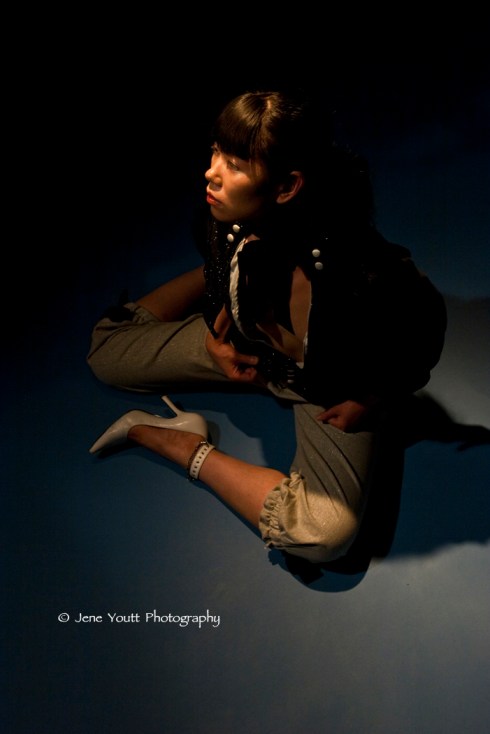
low keyed fashion

coyly

so these are just a couple of fashion images i loaded on to Model Mayhem but going thru my hard drives, of which i have a few, i looked at rachels folder. she is a nude new york model/student making her way through school, where i found these lovely images which also fill out my new quest to do fitness images.

nubian princess

on ever shoot i find something about the model that i find interesting, there isn’t that many things about a nude body that’s special yet i find them and that’s what keeps me doing them. here is one i really love

Hands

i love those hands

semi yoga pose

this one i put as my avatar on Mayhem thinking it was safe but lovely with good definition on her back. i don’t mind shadows.

forward bend

another skinny dancer model that i love the definition in her body.

nude dancer

dancer in red

but some images and this is the only image from this shoot i like, working with amateurs doesn’t always work out. but this one i enjoy maybe because to me it tells a story.

waiting

i get click throughs on this blog to a lot of these nude images so i have to wonder if only males do google nude female searches or does that matter. what do they do with them?  i know of other togs who actually get work from their facebook pages, not too many but some. me i avoid facebook when ever possible. these images would never make it on facebook. i’ve already been restricted on Flicker and i’ve no idea why even through they sent me an email explaining what to do. it was a long explaination.

oh well

another ghost in the machine

so that’s it for today, the ravings of a artist photographer. thanks for stopping by.

jene

Hey folks we need some help here stop SOPA, PIPA contact your congress person

January 17, 2012
SOPA, PIPA opponents prepare for Capitol Hill piracy showdown

by Kenneth Corbin, CIO   Jan 17, 2012 10:00 am

Opponents of controversial anti-piracy legislation are gearing up for a major fight in both the House and the Senate as they press for support for an alternative bill they say would avoid draconian measures that, if enacted, could create major security vulnerabilities in the architecture of the Internet.

The two lawmakers leading the charge, Sen. Ron Wyden (D-Ore.) and Rep. Darrell Issa (R-Calif.), took to the Consumer Electronics Show in Las Vegas last week to press their case – a fitting setting, as the mammoth trade show gives an annual coming out party for tech firms’ latest innovations. The trade group that puts on the show, the Consumer Electronics Association, has been a vocal member of the lobbying efforts to oppose the Stop Online Piracy Act (SOPA) in the House and the Senate version, the Protect IP Act (PIPA), both of which the organization argues would impose dramatic limits on online innovation by exposing Web firms to excessive legal liability in the name of curbing piracy.

“We have been teaming up on this and have been working on this for some time,” Wyden said of his partnership with Issa, who in turn added that the two “in many ways are not predictable partners.”

Wyden and Issa are backing an alternative anti-piracy bill, the Online Protection and Enforcement of Digital Trade (OPEN) Act, a measure they say would create a more effective path for copyright holders to protect their intellectual property from foreign websites that profit from piracy, while avoiding the disastrous consequences they anticipate resulting from the enactment of SOPA or PIPA.

Although they vary slightly in their language, both SOPA and PIPA would empower the Department of Justice to seek an injunction from a federal judge against a foreign website that it considers to be primarily dedicated to piracy. If the judge agreed, Justice could then prevail on all manner of Internet players, including service providers, search engines, payment processors and ad networks, to cut off services to the offending site.

Critics of the bill, which include major Web companies such as Google and Facebook, have warned that in its efforts to crack down on overseas piracy, the legislation would inevitably ensnare legitimate websites in a form of censorship that would threaten to banish innovative and lawful companies from the Internet.

Additionally, a host of Internet luminaries and security experts have warned of the impact the legislation could have on the core naming and routing system of the Internet, creating the sort of network errors and insecurity that are common to the Internet landscape in authoritarian countries where state censorship is the norm.

“The biggest problem is the damage done to the domain name system [DNS] in these two bills,” Wyden said. Wyden, who serves on the Senate Intelligence Committee, said that the provisions that could jeopardize the DNS are at odds with the work that members of the national security community are doing to shore up the critical infrastructure of the Internet from cyberattacks. “Everything they’re trying to do in terms of cybersecurity is premised on the domain name system,” he said.

Wyden and Issa both stressed that they agree with the backers of SOPA and PIPA up to the point that online piracy and the trafficking of knock-off pharmaceuticals and other goods are real problems that deal a major economic blow to U.S. firms. But the consensus breaks down there.

The OPEN Act takes a far more limited approach, and places jurisdiction for complaints against foreign websites with the International Trade Commission, rather than the Justice Department and the federal courts. And instead of going after a wide range of Internet players in a bid to isolate the infringing site, the OPEN Act would limit the response to payment providers such as Visa and PayPal, choking off the sites’ influx of revenue.

While Wyden stressed the security concerns the members have with SOPA and PIPA, Issa called the bills’ language on jurisdiction their “fatal flaw.” He argued that the ITC is a far better venue for handling overseas infringement claims for a variety of reasons, including language in the OPEN Act that would ensure a continuity among the judges who handle such cases, compared to the merry-go-round of judges on the federal bench that could be involved.

Additionally, he suggested that the ITC is a more favorable venue for small content owners to assert their IP rights both because its process is faster than U.S. courts and litigation is less expensive, claims that SOPA supporters dispute.

“You can, in fact, get justice at a very reduced cost. Theoretically you could get justice without an attorney,” Issa said. “We’re not claiming that the ITC is perfectly prepared. What we’re saying is there’s a better solution and it ought to be considered.”

In broad strokes, the battle lines over online piracy legislation have pitted content-oriented industries such as film and music against Web firms and open Internet advocates, though each side has marshaled a long and diverse list of stakeholders to support its position.

Some of the most outspoken critics have thrown their lot in with the OPEN Act. Google, Facebook, Twitter and other members of the Net Coalition advocacy group have delivered a letter ( PDF) to Wyden and Issa endorsing their legislation.

“This approach targets foreign rogue websites without inflicting collateral damage on legitimate, law-abiding U.S. Internet companies by bringing well-established international trade remedies to bear on this problem,” the companies wrote.

The debate over the competing anti-piracy measures is on track to flare up in short order after Congress comes back in session later this month. Issa has scheduled a committee hearing Jan. 18 to focus on the national security ramifications of the IP legislation under consideration. He said that he plans formally to introduce the OPEN Act, the drafting of which has been the subject of a crowdsourced debate on the Web, the day before the hearing.

Issa said that House Judiciary Committee Chairman Lamar Smith (R-Texas), the lead sponsor of SOPA, has signaled that he intends to introduce a manager’s amendment that will amount to a “major” overhaul of the bill in its current form, but that he had not shared a draft with other committee members.

A spokeswoman for Smith did not respond to a request for comment on the status of the bill or the criticisms of its provisions, but had previously confirmed that the committee will renew its work marking up the legislation shortly after the holiday recess.

In the Senate, PIPA is scheduled to receive consideration on the floor Jan. 23 and 24, a debate that Wyden hopes to derail with a filibuster.

Both Wyden and Issa cast their campaign as something of a David vs. Goliath struggle, as opposition to SOPA and PIPA has been largely at the grass-roots level, stoked by Web firms that are outgunned in Washington by the deep-pocketed lobbies supporting the measure. Nevertheless, they noted modest success in peeling off some lawmakers who had initially signed on as cosponsors of the legislation, and hope that more will follow suit as they continue to sound the alarm about the bills’ provisions.

“I think it would be fair to say that our side has been fighting above our weight, and we are now moving into the last rounds and we’re still on our feet and there is tremendous support growing for our side,” Wyden said. “We’re up against the savviest, toughest, smartest lobbying folks around.”

macworld news

jene