Archive for the ‘art’ Category

Rembrandt self-portrait from Kenwood House now on view in NYC at The MET

April 13, 2012

NEW YORK, NY.- Kenwood House, the London museum that holds the art collection known as the Iveagh Bequest, is closed for renovations until fall 2013. By special arrangement, Rembrandt’s Portrait of the Artist (ca. 1665), which has never before traveled outside Europe, is on loan to The Metropolitan Museum of Art through May 20, 2012. This great canvas now hangs next to the Metropolitan Museum’s own Self-Portrait by Rembrandt of 1660, providing a rare opportunity to compare the two works which, although close in date, are utterly different in scale, format, and expression. Both were painted during a period of economic difficulties for the artist. The loan is also an occasion for the Museum to bring together in one gallery the late Rembrandts from the collection, including Aristotle with a Bust of Homer (1653), Hendricke Stoffels (mid-1650s), The Standard Bearer (1654), and Woman with a Pink (ca. 1660-64).

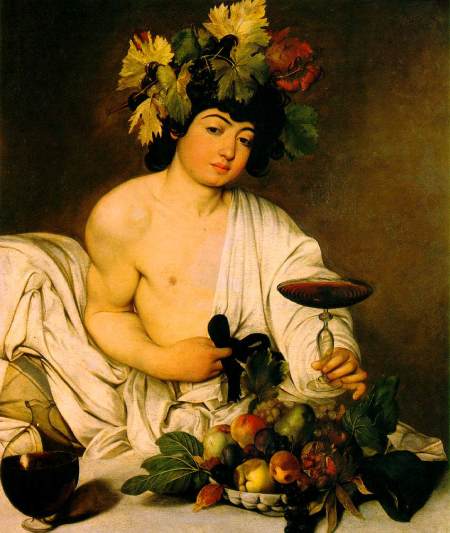
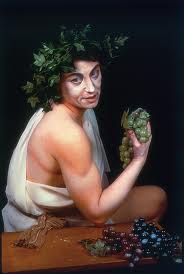
as some of you know i am a big fan of Rembrandt along with Caravaggio whom cindy sherman parodied his painting of Bacchus whom he parodied a number of times

caravaggio-sick-bacchus, self portrait

then again with

caravaggio bacchas, young italian boy

i do love painting which inspires my photography, well off to the met to see naked before the camera and Rembrandt, not a bad days plan. maybe we can go to the opening of Lillian Bassmans exhibit tonight at Stanley Wise Gallery.

About Lillian Bassman

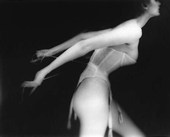
Lillian Bassman was born in 1917 into an immigrant family of free-thinking intellectuals, and was brought up with a mindset that allowed her to live as an independent and unconventional woman.She worked as a textile designer and fashion illustrator before working at Harper’s Bazaar with Alexey Brodovitch, and ultimately becoming a photographer. Bassman’s fashion images are unique, and acheieve their effect through manipulation in the dark room. Appearing in Harper’s Bazaar from the 1940’s to the 1960’s, her work was categorized by their elegance and grace.Bassman had transformed these photographs into original works of art through her darkroom techniques in which she blurs and bleaches the images, investing them with poetry, mystery, and glamour.
take care: jene


Cindy Sherman @ MOMA, my reflections

April 12, 2012

seeing  the spectacular exhibit at moma of Cindy Sherman’s work is impressive on many levels, first on the amount of prints and their physical size. it made me think about how it is when one starts off  working on a project we begin with smaller pieces because of affordability and i guess we don’t have the chops to tackle life size images much less larger than life.

what bothered me most were all the reflections in the glass  protecting the beautiful chromogenic prints. there wasn’t a place one could view the individual pieces were someone or something wasn’t reflected in the pictures glass. that was distracting enough but add to that were people crossing in front of you as you tried to read the descriptions written on the wall. does it take that much of an effort to walk around someone or a group in this instantgram world we are now confronted with? have people lost or not learned manners?

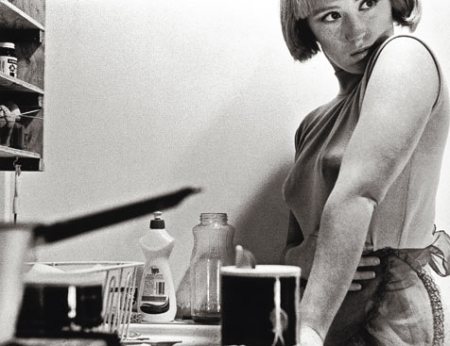
at home in the kitchen

but seeing such a massive show from one artist inspires me to keep on making what i do for myself. i keep telling mary to pursue her ‘self projects’ because i see them as exciting, well i see her as exciting but i won’t go into that now. it’s so hard for me as an artist to be working in the dark, but i think that’s where the most exciting of my work lays, when i don’t know where i am going but act as if i am following an inner voice. just do it.

after all aren’t we just energy converters.

as is sherman herself following in the footsteps of Claude Cahun ( 1894-1954) who was a forerunner of sherman and lady gaga. cahun was a french surrealist photographer,artist, writer, feminist, and radical activist who worked with ‘autoportraits’

claude cahun autoportrait with painted on nipples

‘All By Her Selves” is a comprensive retrospective curated by Francios Leperlier and Juan Vicente Aliaga originating at the Jeu de Paume in Paris now on view at the Art Institute of Chicago through June 3, 2012.

claude cahun

Cahun was born into a wealthy family of Jewish intellectuals from Nantes, France, but left in 1921 drawn to the frenetic, artistically and socially audacoius milieu of paris between wars. she considered herself  a born surrealist but was never accepted as part of the inner circle. nonetheless she did participate in several surrealist exhibits and was part of  the anit-fascist group ‘Contre-Attague.’

sherman as bacchus

but back to the sherman show. the amount of people who pass through moma’s door is amazing especially at $25.00 a head. the sherman show doesn’t have a special admission price as some shows do making even more money to do what with, buy art? one would think that the highpriest of moma art world would be able to solve the problem of the distracting reflections. is it a money problem? raise the price of the cafe’s latte’s or maybe just tilt the pictures downward, do something.

a personal story: i was lighting a CBS network news show overlooking a new york harbor celebration. the studio was enclosed in 1″ plexiglass with a panaroma view of the harbor. we did two shows that night one at sunset, or normal evening news show with the sun setting behind the anchor, a killer angle and the other one after dark same angle but different subject and fireworks. we used two different lighting systems one for each setup.

when the big muckymucks came down to test both looks we had nothing but reflections for the evening show from the lights reflecting in the plexiglass. horror on horror as everyone looked at each other. i hadn’t set this system up as someone eles had, but i was there and needed to fix it, i asked if i could have a moment to solve the problem. i got the stagehands to wrap some ‘blackwrap’ around the barndoors to eliminate the spill causing the ambient reflections.

when everyone came back and looked on camera a sigh of relief was uttered with jokes and laughter. problem solved everyone could go home and get a good nights sleep.

i can’t believe that not one at moma saw these reflections as a problem before the sherman exhibit opened. well maybe they didn’t care after all you’re inside and have paid your money.

i wonder how cindy feels? oh well. she’s probably in her studio creating another series based on reflections. one can only guess.

jene

Herb Ritt’s career examined Getty Museum, Los Angeles

April 5, 2012

so here’s something for you west coast people looks to me to be a super duper exhibit. i remember a story about James Dean when he was starting out he was asked if he had any publicity pictures. he replied ‘ yea just some B&W images shot by a friend.’ who of course turned out to be Herb Ritts. not to mention one has to have talent to advance in this world, except a couple of my ex-bosses but they are long gone now. i think in order to survive one must be quick on their feet, lucky,  have a vision, and the tenacity to stick it out.

seems everyone is getting naked these days must be pans pipes floating on the air.

Jene

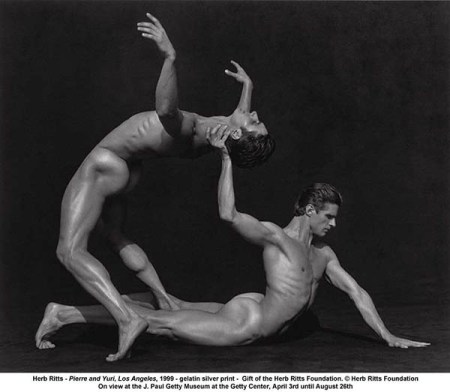
Herb-Ritts-Pierre-YuriLOS ANGELES, CA.- Herb Ritts (American, 1952–2002) was a Los Angeles based photographer who earned an international reputation for his unique images of fashion models, nudes, and celebrities. From the late 1970s until his untimely death from AIDS in 2002, Ritts's ability to create photographs that successfully bridged the gap between art and commerce was not only a testament to the power of his imagination and technical skill but also marked the synergy between art, popular culture, and business that followed in the wake of the Pop Art movement of the 1960s and 1970s. On view at the J. Paul Getty Museum at the Getty Center, April 3rd through August 26th, Herb Ritts: L.A. Style explores Ritts’s extensive photographic career, including a selection of renowned and previously unpublished photographs, as well as his directorial projects. A major portion of the works in the exhibition was newly acquired by the Getty Museum through purchase and in the form of a generous gift from the Herb Ritts Foundation.


“Through hard work and an imaginative vision, Herb Ritts fashioned himself into one of the top photographers to emerge from the 1980s,” says Paul Martineau, curator of the exhibition and associate curator of photographs at the J. Paul Getty Museum. “This exhibition will reconsider and broaden our understanding of Ritts’s career, particularly in the areas of fashion and figure studies.”

By the mid-1980s, Ritts’s aesthetic had coalesced into a distinctive style. His creative output was enormous, and he appeared to be able to switch gears effortlessly between his jobs in fashion and portraiture and his personal work with the nude. After shooting a commercial job, Ritts often took advantage of the location, props, and models to make his own pictures. To accommodate his growing business, Ritts established a studio in Hollywood and assembled a creative team of assistants, stylists, and printers who strove to exceed his high expectations. Like his contemporaries, Ritts rarely printed his own work. Through a pain staking selection process, he editioned his best pictures and had them printed in gelatin silver or platinum, varying the papers, levels of contrast, and tone to realize his artistic vision.

Ritts’s portraits of celebrities such as Richard Gere, Britney Spears, Mel Gibson, and Madonna introduce the exhibition. His anti-glamour style of portraiture made celebrities look more natural and allowed them to reveal inner qualities, making them more accessible to fans. By the late 1980s, Ritts’s reputation as a shaper of fame made him a celebrity in his own right, and the iconic status of such photographs as Richard Gere, San Bernardino (1977) and Madonna, Hollywood (1986) made a photograph by Ritts a rite of passage among Hollywood insiders.

The exhibition continues with Ritts’s fashion photographs, many of which drew inspiration from painting, sculpture, film, and the work of such leading fashion and portrait photographers as Richard Avedon, Horst P. Horst, George Hurrell, Irving Penn, and Louise Dahl Wolfe. Ritts had an extraordinary ability to synthesize and incorporate these influences into a new and easily recognizable style. As hundreds of magazine spreads demonstrate, Ritts kept top fashion editors happy by providing dazzling pictures designed to sell clothes along with others that simply celebrated beauty. Ritts also made use of locations around Los Angeles and especially loved Southern California’s natural light. For instance, Ritts harnessed the forces of nature, strong sunlight and gale-force wind in Versace, Veiled Dress, El Mirage (1990) to create an unforgettable image that communicates feminine strength and beauty.

artwork: Herb Ritts - Versace Dress, Back View, El Mirage, 1990 Gelatin silver print. - Gift of the Herb Ritts Foundation. © Herb Ritts Foundation - At the J. Paul Getty Museum

artwork: Herb Ritts -"Tatjana", Veiled Head, Joshua Tree, 1988. - © Herb Ritts Foundation - On view at the J. Paul Getty MuseumTurning to Ritts’s work with the nude, the exhibition examines how Ritts—along with his contemporaries Robert Mapplethorpe and Bruce Weber—provoked a radical change in how the nude was depicted. His forte was an ability to analyze the body from a variety of angles and create compositions that abstracted it in ways that communicate strength and poise. Working mostly outdoors, Ritts enjoyed relating the body to the natural world and rendered his nudes with a verve and elegance that became the dominant hallmarks of his pictures. In Man with Chain, Los Angeles (1985), model Tony Ward is seen bending at the waist, as if struggling under the chain’s massive weight. The extraordinary sense of movement is not only forward but also upward in a tortuous S-curve that has been long associated with the dramatic, writhing bodies of seventeenth-century Baroque painting and sculpture.
Ritts’s work also includes portraits of well-known athletes and dancers. In the exhibition are a series of photographs of the critically acclaimed American dancer and choreographer Bill T. Jones. In these photographs, Ritts captured Jones while he danced, framing him against a pure white background, making his muscled body look like a piece of sculpture. He also photographed famous athletes including Michael Jordan, Magic Johnson, and Olympic gold-medalist Greg Louganis. For Louganis’s portrait Ritts positioned the diver on a makeshift pedestal and placed a low spotlight on him. The carefully arranged pose and lighting show off Louganis’s muscled torso and back, while the prominent shadows recall the mysterious aura of film noirs of the 1940s.

Although Ritts had no prior experience with film, Madonna convinced him to direct his first music video for her song “Cherish” (1989), which is included in the exhibition along with other music videos and commercials. Ritts enjoyed the creative challenge that film presented, allowing him to extend the sense of movement so important to his still photography to the moving image. From 1989 until 2002, Ritts directed thirteen music videos and more than fifty commercials. Some of his music industry clients included Michael Jackson, Janet Jackson, Mariah Carey, Britney Spears, and Shakira, while his commercial clients were mainly fashion and cosmetic companies such as Chanel, Lancôme, Estée Lauder, and Calvin Klein.

Ritts’s intimate portraiture, his modern yet classical treatment of the nude, and his innovative approach to fashion brought him international acclaim and placed him securely within an American tradition of portrait and magazine photography that was begun by Richard Avedon and Irving Penn.

Visit the J. Paul Getty Museum and the Getty Center at : http://www.getty.edu/

Art knowledge news

Naked before the camera in New York

April 5, 2012

Well one of the true signs that spring has arrived in the city are  bulbs and bosoms busting out all over. i must say this is one of my favorite times of year. the other being fall with it’s colors and smells of dried leaves. so i guess it’s only fitting that so many wonderful naked photography shows are in town in some of the swanky neighborhoods and some not so naked.

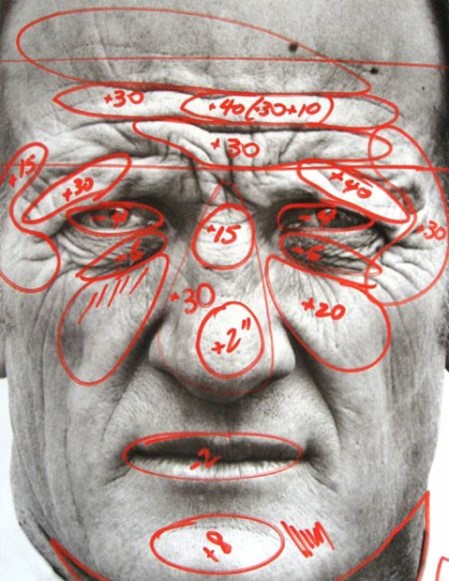
the Gagosian Gallery has Avedon, murals & portraits opening May 4 through July 6 2012 always a show to see of course, here i s a sample of avedons notes to his printers of adjustments on prints. who needs photoshop?

printers notes

as is this one below at Metropolitan Museum of Art which is naked. they even have naked penis at the museum. why does america have such a taboo on penises. is it because the law makers are male and they hate to be compared to one another, but have no problem looking and comparing woman’s breasts?

tomorrow we are going to MOMA to see Cindy Sherman exhibit and dinner out courtesy of a friends invitation.

By Peggy Roalf  Thursday, April 5, 2012

The nude body, one of the subjects photographers have celebrated since the camera was invented, is presented in its many guises at an exhibition that opened last week at the Metropolitan Museum of Art.

While the body has been a central feature in art through the ages, the realism of photography could not help but capitalize on its erotic possibilities—and the show gracefully presents this theme along with some surprising examples from anthropological, medical, and forensic documentations of the mid- and-late 19th century, including an 1860 photograph of a hermaphrodite by the great French photographer, Nadar.

A photograph of a reclining nude female by Julien Vallou de Villeneuve from 1853, which defines the notion of an “hourglass figure,” was made expressly to sell to artists who painted the female form. The use of photography by artists at the time is well known, and many took up the camera for this purpose themselves. One beautiful image of this genre is a photograph by the painter Thomas Eakins of male bathers from around 1883. But male nudity was rather strictly controlled and due to its scarcity, photographs that became available were avidly collected including an 1890s example of what could be considered soft-core porn, by the Italian photographer Guglielmo Plushow.

Man Ray’s 1930 Male Torso introduces Modernism in the middle section of the show, which also includes two classic nude studies by Edward Weston of Charis Wilson, on the sand, both from 1936. Other standouts from this period are Distortion #6, 1932 by Andre Kertesz, which prefigures the distorted nude figures that British photographer Bill Brandt became known for at the end of the 1940s (three of which are included), and a photograph by Irving Penn from 1949 that rivals the prehistoric Venus of Willendorf for its stately corpulence.

The exhibition takes some surprising turns in presenting scenes from the “Age of Aquarius,” including a 1971 photograph by Garry Winogrand of a Central Park be-in; an early 1970s shot by Larry Clark from “Teenage Lust;” and a pair of transgressive performance documents by Hanna Wilke, done at PS 1 in 1978 while the building was still in shambles. But the show is at its best in presenting the earliest uses of photography in capturing images of the naked human body for consumption by artists, scientists, collectors, and voyeurs.

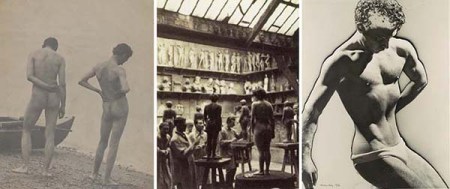
Images above: Row 1, left to right: Thomas Eakins, Thomas Eakins and John Laurie Wallace on a Beach, ca. 1883; Brassai, L’academie Julian, 1932; Man Ray, Male Torso, 1930.
Row 2, left to right: Andre Kertesz, 
Distortion #6, 1932; Irving Penn, Nude No. 1, 1949; Robert Mapplethorpe, Patti Smith, 1976. All courtesy the Metropolitan Museum of Art.

Naked Before the Camera continues through September 6th at the Metropolitan Museum of Art, 1000 Fifth Avenue, at 82nd Street, NY, NY.

i’ll have my clothes on for the shows and dinner, nothing like a hot piece of pasta falling in ones lap.

jene

Yesterdays work, more like my daily blunders

April 3, 2012

like calvin, of calvin and hobbs who thinks about sledding down hill that his brain is trying to…….. well that is the way i think at times. maybe if i do this then that will happen or that. i just never really know, well do we ever? someday all this will be over or it will continue without me.

i remember my first time as a photographer. our family had a classic Kodak Brownie 2a box camera, i don’t remember my age but i was younger than today i took the camera out into the backyard along with Ginger our golden cocker spaniel for a photo session. Ginger ran around opposite me and i pushed the shutter. we had a great time, i must have been copying something i’d seem somewhere. ‘thomas’ the character from blow up would have been proud of me.

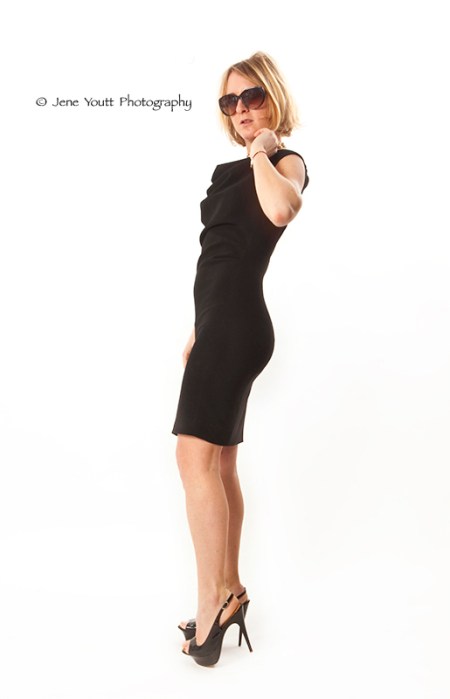
except for one thing i overlooked, advance the film. thank goodness for digital photography, but like all technical things it does have it’s rules and while some think everything can be fixed in photoshop i am here to say not really. the idea i started out wanting to do was photograph a woman in a tight black dress against a white background. that i did

Diletta Carutti in a little black dress

so here is a beginning, a  nice italian dress draped on Diletta Carutti the model, an acquaintance of ours who’s working for Art Strong bags and emmanuel fremin galley.

mary when out and bought some cute cheap hats at tjmax for the shoot, i’ve yet to edit them yet way too many images and it’s overwhelming, like editing wedding images.

i am beta testing photoshop 6 which has some very powerful upgrades but my ‘puter switches back and forth between PS4 & 6 so it keeps me on my toes and i was tired last night. i don’t usually edit images right after a shoot, i let them develop on their own.

the dress is great like most of italian things, never had a bad meal in italy maybe they exist but food, wine and coffee seem to be a religion over there.

people live differently in europe. europeans dress up to go out for a cappuccino at the local cafe. not like here in new york where sweat pants and t- shirts are the norm.

and the shoes, i’ve two pair of italian shoes that make me feel like a king.

but today i’ll dwell on my mistakes which i’ve fixed somewhat with style and photoshop. i read a query last night from someone wanting terry richardson type of images. he’s a very trendy type of paparazzi photographer being in more of his pictures than not. reminds me of wee gee i’ve written about here. my question is why? the snapshots are just that, snapshots.ugh

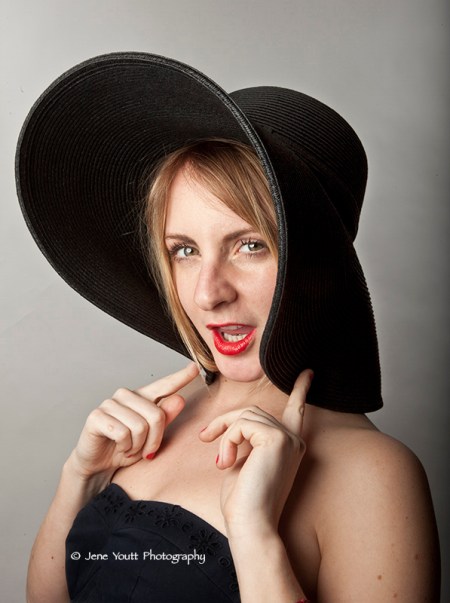
black hat blond hair

great hat although we didn’t get a chance to use the other one as this worked out fine. for not being a model Diletta worked out pretty cool very playful.

seems she’s had years of dance training soooo you’ll see more of her in my dance portfolio.

a few adjustments were needed here on the back of the hat needed brightning while the dress needed to come down, it waas a dark blue and i wanted black.

maybe a little flesh tone tweaks and cropping.

but the day wore on and i was getting stupid, well more than usual. so i moved her around closer to the beauty dish and not even thinking snapped away just like my first session wit ginger.

at least this camera was smarter than i a moved forward every time but didn’t adjust for the lighting changes as that was my job. duh

oh well thank goodness it’s not a wedding so a do over is possible until i learn my lesson.

coy

but she’s wearing a bracelet………… where is the stylist when you need one, oh we don’t have…… one that’s my job also

now it gets interesting and the painter in me comes out.

the look

don’t worry it gets worst, that is unless you like this type of image

what was i thinking, it couldn’t be about what’s for lunch

so this is todays work. i remember a fellow down south having a conversation with one of our actors that they both seemed to enjoy until the fellow ask what the actor did for a living?’ i am an actor’ was the reply.  the fellow paused and took a good long look at the actor and said ‘that don’t seem something a grown man would do for a living’.

well that could be said about me i guess. WORK is that what they call it?

jene youtt

Humans think we are so special, that seems to be the first step for trouble

April 1, 2012

A universe without purpose

New revelations in science have shown what a strange and remarkable universe we live in.
The illusion of purpose and design is perhaps the most pervasive illusion about nature that science has to confront on a daily basis. Everywhere we look, it appears that the world was designed so that we could flourish.

The position of the Earth around the sun, the presence of organic materials and water and a warm climate — all make life on our planet possible. Yet, with perhaps 100 billion solar systems in our galaxy alone, with ubiquitous water, carbon and hydrogen, it isn’t surprising that these conditions would arise somewhere. And as to the diversity of life on Earth — as Darwin described more than 150 years ago and experiments ever since have validated — natural selection in evolving life forms can establish both diversity and order without any governing plan.

As a cosmologist, a scientist who studies the origin and evolution of the universe, I am painfully aware that our illusions nonetheless reflect a deep human need to assume that the existence of the Earth, of life and of the universe and the laws that govern it require something more profound. For many, to live in a universe that may have no purpose, and no creator, is unthinkable.

But science has taught us to think the unthinkable. Because when nature is the guide — rather than a priori prejudices, hopes, fears or desires — we are forced out of our comfort zone. One by one, pillars of classical logic have fallen by the wayside as science progressed in the 20th century, from Einstein’s realization that measurements of space and time were not absolute but observer-dependent, to quantum mechanics, which not only put fundamental limits on what we can empirically know but also demonstrated that elementary particles and the atoms they form are doing a million seemingly impossible things at once.

And so it is that the 21st century has brought new revolutions and new revelations on a cosmic scale. Our picture of the universe has probably changed more in the lifetime of an octogenarian today than in all of human history. Eighty-seven years ago, as far as we knew, the universe consisted of a single galaxy, our Milky Way, surrounded by an eternal, static, empty void. Now we know that there are more than 100 billion galaxies in the observable universe, which began with the Big Bang 13.7 billion years ago. In its earliest moments, everything we now see as our universe — and much more — was contained in a volume smaller than the size of a single atom.

And so we continue to be surprised.We are like the early mapmakers redrawing the picture of the globe even as new continents were discovered. And just as those mapmakers confronted the realization that the Earth was not flat, we must confront facts that change what have seemed to be basic and fundamental concepts. Even our idea of nothingness has been altered.

We now know that most of the energy in the observable universe can be found not within galaxies but outside them, in otherwise empty space, which, for reasons we still cannot fathom, “weighs” something. But the use of the word “weight” is perhaps misleading because the energy of empty space is gravitationally repulsive. It pushes distant galaxies away from us at an ever-faster rate. Eventually they will recede faster than light and will be unobservable.

This has changed our vision of the future, which is now far bleaker. The longer we wait, the less of the universe we will be able to see. In hundreds of billions of years astronomers on some distant planet circling a distant star (Earth and our sun will be long gone) will observe the cosmos and find it much like our flawed vision at the turn of the last century: a single galaxy immersed in a seemingly endless dark, empty, static universe.

Out of this radically new image of the universe at large scale have also come new ideas about physics at a small scale. The Large Hadron Collider has given tantalizing hints that the origin of mass, and therefore of all that we can see, is a kind of cosmic accident. Experiments in the collider bolster evidence of the existence of the “Higgs field,” which apparently just happened to form throughout space in our universe; it is only because all elementary particles interact with this field that they have the mass we observe today.

Most surprising of all, combining the ideas of general relativity and quantum mechanics, we can understand how it is possible that the entire universe, matter, radiation and even space itself could arise spontaneously out of nothing, without explicit divine intervention. Quantum mechanics’ Heisenberg uncertainty principle expands what can possibly occur undetected in otherwise empty space. If gravity too is governed by quantum mechanics, then even whole new universes can spontaneously appear and disappear, which means our own universe may not be unique but instead part of a “multiverse.”

As particle physics revolutionizes the concepts of “something” (elementary particles and the forces that bind them) and “nothing” (the dynamics of empty space or even the absence of space), the famous question, “Why is there something rather than nothing?” is also revolutionized. Even the very laws of physics we depend on may be a cosmic accident, with different laws in different universes, which further alters how we might connect something with nothing. Asking why we live in a universe of something rather than nothing may be no more meaningful than asking why some flowers are red and others blue.

Perhaps most remarkable of all, not only is it now plausible, in a scientific sense, that our universe came from nothing, if we ask what properties a universe created from nothing would have, it appears that these properties resemble precisely the universe we live in.

Does all of this prove that our universe and the laws that govern it arose spontaneously without divine guidance or purpose? No, but it means it is possible.

And that possibility need not imply that our own lives are devoid of meaning. Instead of divine purpose, the meaning in our lives can arise from what we make of ourselves, from our relationships and our institutions, from the achievements of the human mind.

Imagining living in a universe without purpose may prepare us to better face reality head on. I cannot see that this is such a bad thing. Living in a strange and remarkable universe that is the way it is, independent of our desires and hopes, is far more satisfying for me than living in a fairy-tale universe invented to justify our existence.

Lawrence M. Krauss is director of the Origins Project at Arizona State University. His newest book is “A Universe From Nothing.”

http://www.latimes.com/news/opinion/commentary

A creepy app along with facebook privacy can stalk women, are you one?

March 30, 2012

This Creepy App Isn’t Just Stalking Women Without Their Knowledge, It’s A Wake-Up Call About Facebook Privacy

from John Brownlee at Cult of mac

“Boy, you sure have a lot of apps on your phone.”

“Well, it’s my job.”

“What’s your favorite?”

“Oh, I couldn’t choose. But hey, want to see one to set your skin crawling?”

It was the flush end of a pleasurably hot day — 85 degrees in March — and we were all sipping bitter cocktails out in my friend’s backyard, which was both his smoking room, beer garden, viticetum, opossum parlor and barbecue pit. I was enjoying the warm dusk with a group of six of my best friends, all of whom seemed interested, except for my girlfriend… who immediately grimaced.

“Girls Around Me? Again?” she scolded. “Don’t show them that.”

She turned to our friends, apologetically.

“He’s become obsessed with this app. It’s creepy.”

I sputtered, I nevered, and I denied it, but it was true. I had become obsessed with Girls Around Me, an app that perfectly distills many of the most worrying issues related to social networking, privacy and the rise of the smartphone into a perfect case study that anyone can understand.

It’s an app that can be interpreted many ways. It is as innocent as it is insidious; it is just as likely to be reacted to with laughter as it is with tears; it is as much of a novelty as it has the potential to be used a tool for rapists and stalkers.

And more than anything, it’s a wake-up call about privacy.

The only way to really explain Girls Around Me to people is to load it up and show them how it works, so I did. I placed my iPhone on the table in front of everyone, and opened the app.

The splash screen elicited laughter all around. It’s such a bitmap paean to the tackiest and most self-parodying of baller “culture”; it might as well be an app Tom Haverford slapped together in Parks And Recreation. But it does, at a glance, sum up what Girls Around Me is all about: a radar overlaid on top of a Google Map, out of which throbs numerous holographic women posing like pole dancers in a perpetual state of undress.

“Okay, so here’s the way the app works,” I explained to my friends.

Girls Around Me is a standard geolocation based maps app, similar to any other app that attempts to alert you to things of interest in your immediate vicinity: whether it be parties, clubs, deals, or what have you. When you load it up, the first thing Girls Around Me does is figure out where you are and load up a Google Map centered around your location. The rest of the interface is very simple: in the top left corner, there’s a button that looks like a radar display, at the right corner, there’s a fuel meter (used to fund the app’s freemium model), and on the bottom left is a button that allows you to specify between whether you’re interested in women, men or both.

read the rest of article here

Color Comparison: Canon 5D Mark ll and Mark lll

March 30, 2012

cdtobie's avatarCDTobie's Photo Blog

As the next generation of Nikon and Canon cameras hit the street, one of the questions that always occurs to me is how these new bodies interpret color, in relation to the tried and true models they are replacing. I will be testing  more than one such pair, but lets begin with the newly released Canon 5D Mark lll, and its predecessor the Mark ll.

There are superficial changes between the cameras which remind you that they are not the same body, such as the on/off switch being moved to a new location, the “on but not adjustable” notch on the on/off switch being removed, grippy material being added where the heel of the hand rests on the body, and the larger LCD display. The change I will most appreciate, from a mechanical point of view, is that the mode dial can no longer be turned by accident…

View original post 1,255 more words

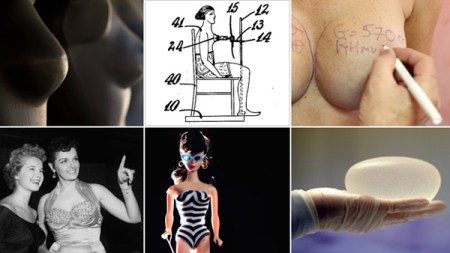
50 years since first breast implants

March 29, 2012

my first hand experience of breast implants was weird, she was a friend of a friend is how we met and we both shared working in the theater. she had large silicone implants, being a stage performer everything is exaggerated, her breasts were the same laying down as standing. they didn’t move they looked nice but i am sure she didn’t feel much sensation in them. she made lots of noise but somehow it rang false. i’ve never been attracted to large breast per se and i see women, models who conform to some weird playboy mag idea of booming basooms. don’t get me wrong i do love to play with breasts and that fine tuning knob on the end is neat. i am just opposed to implants. i’ve had partners who had small breasts and our sex life was fine, so size doesn’t impede that good sex. as people are so should breast be, all different. but this isn’t about me it’s about boobies and history.

It is 50 years since the first breast enlargement using silicone implants. Today it rates as the second-most popular form of cosmetic surgery worldwide, undergone by 1.5 million women in 2010.

It was spring 1962 when Timmie Jean Lindsey, a mother-of-six lay down on the operating table at Jefferson Davis hospital in Houston, Texas.

Over the next two hours, she went from a B to a C cup, in an operation that made history.

“I thought they came out just perfect… They felt soft and just like real breasts,” says Lindsey now aged 80.

“I don’t think I got the full results of them until I went out in public and men on the street would whistle at me.”

Though the operation boosted her self-confidence – and she enjoyed the extra attention – she had never planned to have a breast augmentation.

Timmie Jean Lindsey in 1962 before her operation (left), just after (centre) and today Timmie Jean before and just after her op, and today

Lindsey had been to hospital to get a tattoo removed from her breasts, and it was then that doctors asked if she would consider volunteering for this first-of-its-kind operation.

“I was more concerned about getting my ears pinned back… My ears stood out like Dumbo! And they said ‘Oh we’ll do that too.'” So a deal was struck.

read the rest of story here

just one mans opinion. i know breast are pretty important in this world, i personal like them natural. TASTY


Hands on article of the Lytro camera

March 29, 2012

There’s been a lot of buzz about the Lytro digital camera that promises you can shoot an image and focus it afterward. But how does it work? What are the images like? And can you really focus after the fact? Here’s a hands-on look at the Lytro.

A new camera has been in the news recently: the Lytro, a $399 camera that allows you to take a photo now, and focus — or refocus — later. Sounds provocative. But does it work? Is this something you should add to your camera bag? I’ve had the opportunity to use one for several weeks now, and I’m pretty gung-ho. Here’s why.

The Lytro uses a technique that is called plenoptic — or light field — photography. The camera captures all the light coming through the lens from all angles, striking an array of microlenses on its sensor. The camera’s inventor, Ren Ng, says that the Lytro captures 11 million “light rays” in every photo.

Here’s one thing to get out of the way: the “focus later” aspect of the Lytro happens in special software after the shoot. The 11 million pieces of data the camera captures are written to a proprietary file that you download to your computer. Once the photo is on your computer screen, you click on any part of the image to bring that point into focus. Click on another part of the same image, and that point comes into focus. Lytro calls these images “Living Pictures.” The first time you see one, and experiment with focus, you will be impressed by how unusual these photos are. Living Picture photos are perfect for viewing live on a Web site, blog post, Facebook page, or other online entity.

here’s the link at creative pro com.

jene