Archive for January, 2013

Trisha Brown @ BAM this week opening 1/30/13

January 30, 2013

trisha brown announced last december she is quiting dancing or actually making new dances but considering she’s created dances for 30 years that’s a pretty

good run i’d say. i was lucky to get tickets to see the company this wednesday, 1/30/13 not sure where the seats are but at least i won’t have to do any cues.

see BAM web site for more ticket information and a wonderful article in this past sunday Times by here at the Times lesure & arts sectio .

we last saw trisha’s work Astral Converted at the Park Ave Armory last fall. this was mary’s first introduction to the company and trisha’s work. we both enjoyed it and a question and answer session afterwards.

dance is such a lovely art form along with painting and sometimes photography. i think that photography is very hard for people to wrap their heads around as an art because we’ve all been so indatated with pictures, they are everywhere and of everything how can they be so special one asks.

yet how can we, each individual be unique when we are all made out of the same general material of DNA information and yet we humans are so different. trisha’s dances very physical and fluid yet playfully fun.

If one can get tickets I’d suggest taking a trip into Brooklyn and see what her work is all about. Be forewarned BAM has some off the most uncomfortable seats I’ve ever come  across. sitting for more than two hours can be painful.

Reactions from Dancing around the Bride at Philadelphia Museum of Art

January 29, 2013

you may remember i wrote about going down to philadelphia to see this performance of the cunningham dance company performance and exhibit of cage, johns, rauschenberg and duchamp.

the philadelphia museum of art is one of my favorite museums which i have gone to a few times, lots of space to see and feel everything. phila museum

Ben Franklin Pky & downtown Philadelphia

Ben Franklin Pky & downtown Philadelphia

during the weekday it’s not really crowded except for school children on an education outing.

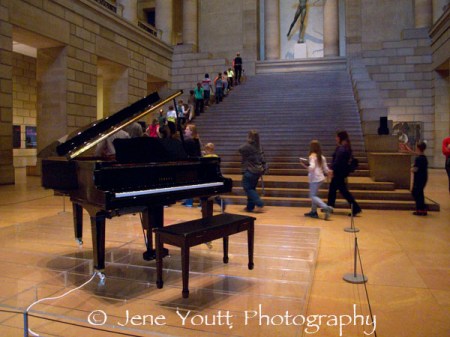
school children on grand staircase with cage piano

school children on grand staircase with cage piano

Aguscus Gaudgns

Augustus Saint-Gaudens Diana a top of the Great staircase

but on to the show, as i said it wasn’t that crowded but a nice crowd that filled the bleachers we sat on

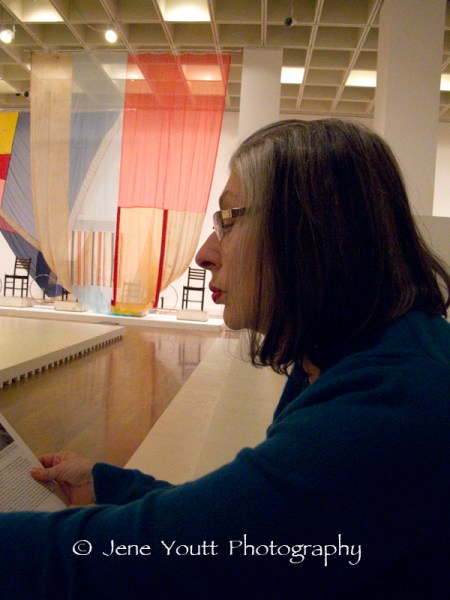
Mary reading program

Mary reading program

Rauschenberg set

Rauschenberg set

Company dancers

Company dancers

Dancers

Dancers

but here is one of my favorite dancers of all, tucked away in a gallery waiting your discovery.

Degas Dancer

Degas Dancer

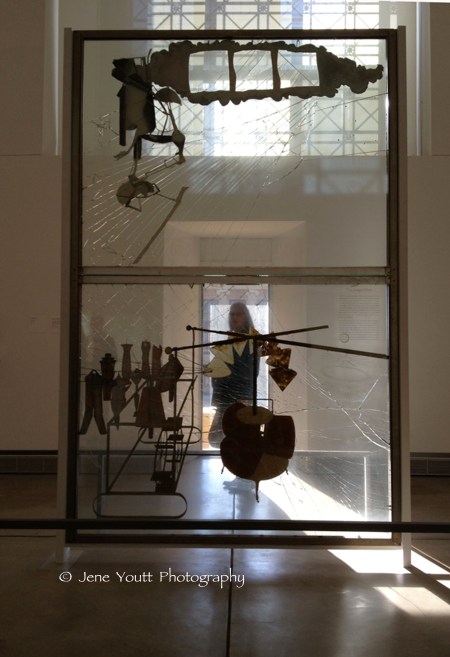
which we discovered on our way to see the Duchamp’s Large Glass in gallery 182.

Large glass w the bride stripped bare by her bachelors

Large glass w the bride stripped bare by her bachelors

oh that’s a passing patron. one of my favorite things to do when i visit this gallery is to capture people in this piece. to get to this gallery one passes so many wonderful things and delights to the eye. i hope you visit this museum it’s really worth the trip to Philadelphia.

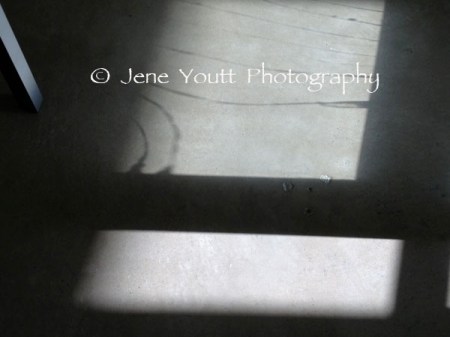
Shadows of Large Glass

Shadows of Large Glass on floor

oh and don’t forget to see the west entrance wall painting, A wheatfield on a summer afternoon by Marc Chagall  or the photography galleries on the ground floor. a lovely day of wandering around the place as if it was your own. or visit their web site at http://www.philamuseum.org/

we had a late lunch early dinner at the Good dog bar in downtown philadelphia, the food was ok but nothing to rave about.

jene

dance around town Caravan Project & NYC Ballet Les Ballets de Faile

January 26, 2013

A must see exhibit at MoMa thru Monday 1/21   reposted from nyc metro

Yesterday Jene & I spent nearly an hour watching the slow, dramatic movements of Eiko and Koma’s Caravan Project at MoMa.   The strength and endurance of these performers are amazing.  The performance runs all day (see museum hours) in the Agnes Gund Garden Lobby, first floor.

Picture 26

Eiko and Koma have been performing together since 1972 and Jene happened upon them a number of years ago I think at City Center.  So when he spotted the advertisement in the NY Times for MoMa, we jumped at the chance.  Their choreography is similar to Japanese butoh and Kazuo Ohno was where they drew some of their inspiration from.

————————————————30—————————————–

when i first saw Eiko and Koma i did an internet search and found a very small web presents, but their web site now has an extensive documentation of their work. truly inspiring, do visit it to see this amazing art form.

but now we have another dance work, this time by another new york institution NYC Ballet

INTRODUCING NYCB ART SERIES

An Unexpected Way to Experience a Night at the Ballet.

NYCB Art Series commissions contemporary artists to create original works of art inspired by our unique energy, spectacular dancers, and one-of-a-kind repertory of ballets. New York City Ballet has worked with leading and emerging artists throughout the Company’s history — luminaries like Andy Warhol, Keith Haring, and Julian Schnabel. We are proud to continue this tradition by partnering with Brooklyn-based artists FAILE for the inaugural year of Art Series.

FAILE’s installation, Les Ballets De Faile, was created for the Art Series performances on Friday, February 1, and Wednesday, May 29. On these dates, every seat in the house is available for just $29, and each audience member will receive a limited-edition work made specifically for this event.

FAILE’s installation will also be on view to ticketed patrons at all performances during the Winter season and during special gallery viewing hours that are free and open to the public, February 10-17.

Sunday 10 AM–1 PM
Tuesday–Friday 12–5 PM
Saturday 10 AM–12 PM
Closed Monday

FAILE is a Brooklyn-based artistic collaboration between Patrick McNeil and Patrick Miller.  Since its inception in 1999, FAILE has become recognized as one of the leading artists in the contemporary Urban Art movement and distinguished themselves in the contemporary art world.  Their work explores duality through a fragmented style of appropriation and collage.  Working in a range of media from canvas, prints, and stencils to multimedia installation and sculptures, FAILE’s work is constructed from resampled visual imagery and blurs the line between “high” and “low” culture.

Friday, February 1, 2013* 

  • Polyphonia
  • Herman Schmerman (Pas de Deux)
  • Variations pour une Porte et un Soupir
  • The Waltz Project

Wednesday, May 29, 2013* 

  • Red Angels
  • Sonatas and Interludes
  • In Creases
  • A Fool For You

* Tickets are no longer available for sale online and have limited availability; please visit the Box Office or

One Light Portraits: Simple Elegance from Digital Photography School

January 12, 2013

One Light Portraits: Simple Elegance

by Rick Berk

Update: this post now has a Part 2 with lighting diagrams.

In this case, a reflector was used at camera left, but a neutral colored wall would work just as well. The flash bounces off the reflector, the rear wall picks up some light, and the ceiling picks up some more, illuminating the top of the hair.

Everyone who ever picks up a camera at one point or another finds themselves pointing it at another person.  But unless you walk around with a lighting kit in your back pocket, you have to make do with what you have.  If you’re lucky that means you have a speedlite in your bag.  If not, there are other ways to light your subjects and get a pleasing portrait.

Let’s start with the best case scenario- you have a speedlite on your camera with a swivel head. This gives you the flexibility of TTL exposure, as well as the ability to bounce the flash and avoid the ugliness of direct flash.  Bouncing flash simply means that the flash head is aimed at a surface and the light is reflected back onto your subject.  This softens the light coming from the flash head, and makes it a much more pleasing light source.  The ability to bounce the flash is huge, because a variety of looks can be achieved simply by repositioning the flash head and the surface the light is bouncing off of.  Walls and ceilings are generally pretty easy to bounce off of, but something smaller, such as a reflector, or a piece of white oak tag will work equally well.  The important thing about the surface being used for bouncing is that the color be neutral, such as white or gray.

Positioning the subject in a corner of the room will allow you to use one light to create multiple light sources.  The flash can be aimed at the wall to the side, and angled up to the ceiling to provide a hair light. In addition, the wall being used as the background will provide some back lighting. This will create soft shadows on the unlit side of your subject. It’s important to be sure your subject’s face is turned towards the bouncing surface so they are properly illuminated by the light.

Placing a reflector at waist level and bouncing the flash into the ceiling creates a soft glamor lighting effect. It’s actually a double bounce: once off the ceiling, and then off the reflector.

Another variation on this setup that works well for women and creates a glamor lighting look, is to place a reflector at your subject’s waist.  Bounce the flash directly off the ceiling and have the reflector kick light back up into the subject’s face.

Postioning the softbox to camera left created a soft light that flattered Mary’s facial structure. I positioned her in the shade of a tree, so the flash was sure to be the main light on her, while the background was lit by sunlight.

The next step with a flash is to get it off camera.  All of the major SLR makers offer some sort of wireless flash control. Again, a bare flash tends to not be the best light source. Flash in general is a harsh, unflattering light source.  To soften the light, a modifier is needed.

There are all kinds of modifiers available on the market.  Softboxes are great for portraits because the light is softened, directional, and there is no spill. Umbrellas are great for softening and directing the light, but you get more spill, meaning it’s harder to control what the light does and does not hit.  The basic rule of thumb is, the larger the light source, the softer the light.  So a larger soft box will nicely soften the light and wrap it around your subject, creating soft shadows as well.

The important thing when lighting with a softbox is that the light must hit the mask of the face, either from the softbox or via a reflector. If the face is in shadow, or if features of the face cast unflattering shadows, the portrait is going to be unsuccessful. Generally, positioning the light slightly above and off to the side of the subject will produce the best light.

A softbox positioned behind and to the side of the subject, while a reflector is positioned directly opposite to create a two-light effect.

If you happen to be outdoors, the available daylight works wonders for filling the background as you mix available light with flash.  Position your subject in shade, and light them with a flash and modifier of choice, such as a softbox.  Allow the available light to fill the background, and even create a hairlight.  Indoors, you can create dramatic low-key lighting using one light in a softbox.  Add a reflector, and now you have a two light setup.  The softbox as the main light can be used as a rim light or hair light, and position the reflector so that it bounces light back into your subject’s face.  You’re simply playing angles here, so watch where the light hits and bounce it back to your subject’s face.

This portrait was made using a household lamp with a 75 watt bulb, with a sheer curtain to soften the light. It’s important when using a household lamp to adjust your white balance properly, as the bulbs can range in color from more greenish to yellow.

Now, what if you’re caught without a flash? Simple. Any light source will do.  With today’s DSLRs, higher ISO’s mean greater flexibility in terms of light.  A simple household lamp with a shade can even be a good portrait light.  The important thing again is to watch how the light is falling on your subject.  You may need to manipulate the lamp’s position, or the subject’s position in relation to the lamp.  If the shade dims the light too much, remove the shade, and find another way to modify the light.  It could be as simple as rigging a sheer curtain in front of the lamp to create a scrim.

A single softbox will create more dramatic lighting. In this case, a large, 50 inch softbox was used creating a soft, dramatic light.

The bottom line is, no matter what, as long as you have light, you have the ability to make a great photo.  The key is simply being able to see the light, play the angles, and think outside the box when necessary.

See Part 2 of this post at One Light Portraits: The Diagrams where Rick illustrates how each of the images above was lit with diagrams.
Rick Berk is a photographer based in New York, shooting a variety of subjects including landscapes, sports, weddings, and portraits. Rick’s work can be seen at RickBerk.com and you can follow him on his Facebook page.

Read more: http://digital-photography-school.com/one-light-portraits-simple-elegance#ixzz2EwuByCVP

a new year opportunity, maybe learn something

January 6, 2013

this has been some new year, very traumatic but we have survived probably stronger cleaner yes, having had the opportunity to dump a lot of the old stuff hanging around collecting dust due to a fire at our apt studio.

it happened using and learning a new control system, my White Lightning LG4X controler and me being lost in the pictures i was getting. maybe had i read and understood the instructions in the book on page one this wouldn’t have happened but sometimes it just doesn’t register in my brain.

the fire started from the modeling light which i don’t usually use but was turned on that day. it caught fire to some show card i had placed to flag the strobe off the background. it got pretty scary looking at a wall of noseam paper on fire after the show card fell in the middle of the paper and me with no shoes on.

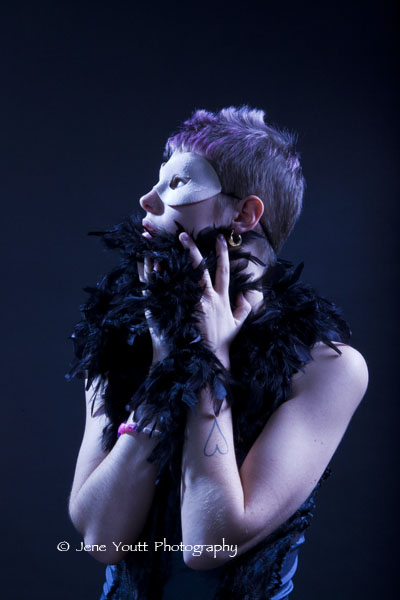
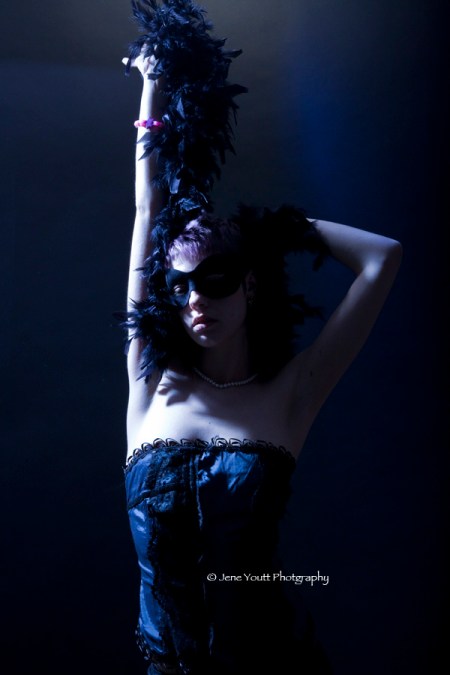
the ‘happy hippy’ as a friend of mine calls the model was someone new whom i’d never worked with but seemed ok. we started working with this costume of hers. it wasn’t until i saw the comps that i realized she was wearing a silly bracelet.i guess i need to check them more closely, strip them nude of everything.

_MG_5518

i never understand why models, someone who rents or sells their bodies get tattoos? yes it’s a cultural thing we all decorate our bodies in some way, but WTF  permanent markings? see the little hippy heart? and to even think i can photoshop something out is absurd. but there is more

_MG_5528 copy

how can i get rid of this, while a nice tat not what i am looking for in a model. i want  a blank file not something some one   wants.

_MG_5557

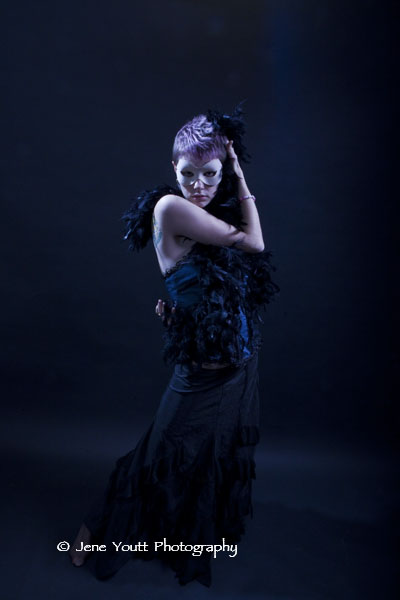
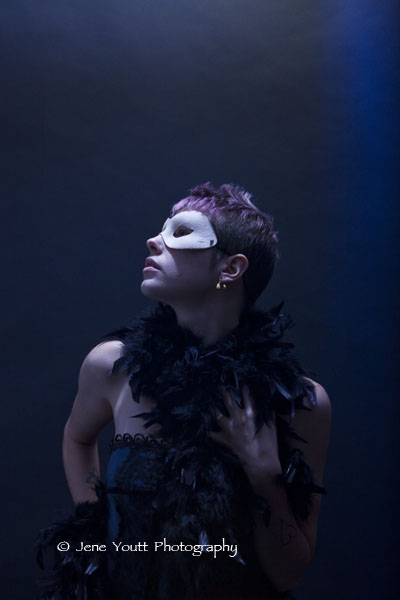
the color and costume along with the mask are a nice combination and pretty cool i think. but our shoot was cut short so who knows what might have been.

_MG_5563

i show this images because this is the first indication of trouble with the blue highlight on the background. i thought it was a cool effect but in retrospect it was a sigh of trouble in the black wrap was coming loose. but i didn’t notice the problem.

_MG_5613

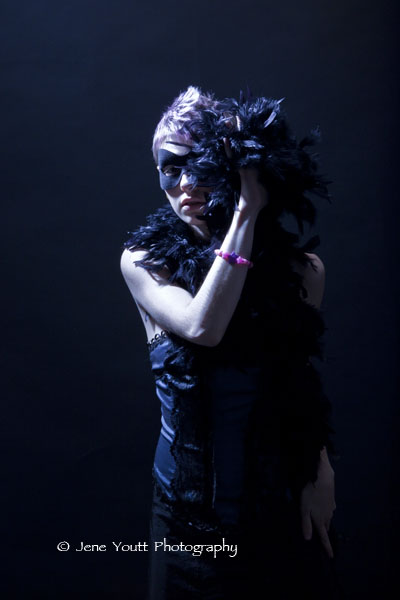
the boa was my addition as were the masks, people react strange under the masks as it frees them a bit. playing with boa a gives the hands something to do. but there is the pink hippy bracelet, ugh

_MG_5609 copy

odd she doesn’t look like a ‘hippy’ but then again probably an apt description of the woman. too bad we don’t have more to share. so far we will never know what her body looks like because that’s all i got before the fire.

oh well

jene