Archive for November, 2012

Friends Without A Border Photography Auction…. to benefit the Angkor hospital for Children

November 28, 2012

14th Annual Friends of Friends Photography Auction12/04/2012

About the Auction

During a series of photography trips to Cambodia’s Angkor Wat monuments, internationally acclaimed photographer Kenro Izu was deeply affected by his encounters with often ill, malnourished, and disfigured children. As a symbol of his gratitude for the profound artistic inspiration he received from Cambodia’s historical treasures, Izu committed himself to building a pediatric hospital to provide desperately needed healthcare for its children…its future.

Friends Without A Border (Friends), a non-profit organization, was founded by Izu in 1996 to manage the project. With the help of an international board of healthcare professionals, the art community, and over 5,000 supporters worldwide, Friends opened Angkor Hospital for Children (AHC) in 1999.

Since its inception the art community has been a vital source of support for Friends and AHC. An integral part of this relationship has been the Friends of Friends Photography Auction, first held in 1997. In the years since, hundreds of artists and their representatives have generously donated their work to the auction, the proceeds from which directly support AHC and its many programs.

During the past fourteen years the auction has raised nearly $2 million, including $175,000 in 2010. In Cambodia, where almost half of the population lives on a little more than $1 a day, every dollar goes a very long way. We hope that this year’s event will be even more successful.

When and Where

Tuesday, December 4, 2012
6:00 – 7:00 pm: Cocktail Reception, Silent Auction, and Preview of Live Auction Lots
7:00 – 8:30 pm: Live Auction (The Silent Auction runs through the entire evening and
ends 10 minutes after the conclusion of the Live Auction.)

Metropolitan Pavilion
123 West 18th Street (between 6th Avenue and 7th Avenue)
5th Floor, The Level
New York, NY 10011
Map/directions

Auctioneer: Nicholas Dawes, VP, Special Collections, Heritage Auctions, New York

Décor: Megumi/sono.ei, Brooklyn, NY

Hors d’oeuvres provided by: Saffron 59

All proceeds benefit Angkor Hospital for Children in Siem Reap, Cambodia, Friends Without
A Border’s new health initiative in Luang Prabang, Laos, and other Friends programs that support high-quality healthcare for children in Southeast Asia.

Here is a link to the Live auction Prints [lot 1 to lot 31] and the silent auction ones here [ lots S33 to S 160] where Mary Durante Youtt  print

and my Phantom print shown here.

Special Print: Created for Friends Without A Border

It is our pleasure to present this limited-edition print, generously donated by Wendy Sacks on the occasion of the 15th Annual Friends of Friends Photography Auction.

The print is now available prior to the auction.

Seeing Things

Seeing Things
From the series Monsters in the Closet
by Wendy Sacks
Price $500 (tax-deductible portion $480)
Edition of 15
Pigment print
Year of work: 2012
Image size 12 x 7 7/8″ on 14 x 11″ paper,
presented in 17 x 14″ 4-ply mats
Signed and editioned by the artist in pencil on the recto
Embossed with Friends Without A Border stamp
Prints courtesy of www.LumierePhoto.com.

Artist’s Statement on the Series

A child’s ordinary bedtime routine is often times incomplete without the parent’s feigned search for the scary monsters that lurk under the bed and in the closet, accompanied by the comforting reassurance that every dark crevice is vacant of evil. All too often however, such a reassurance is not entirely true. Real monsters don’t hide in the closet. They hide at the bedside under the guise of a guardian and blur their violence or anger under the pretense of love, discipline, or trust. Monsters in the Closet depicts how child abuse is veiled from society by the fog of lies abusive parents tell to their children, themselves, and to the world.

Purchase of a special limited-edition print also includes admission to the auction, a paddle number, and a copy of the auction catalog.

For further information about the work of the photographer please visit: www.wendysacksphotography.com

Special Portfolio [Lot 32] by James Whitlow Delano
Imagining Asia: Two Decades On

A collection of ten pigment prints. Foreword by Syunichi Nishiyama, Founder and President
of Mado-sha Publishing, Tokyo, Japan. All of the prints are matted and presented in a hand-crafted double wall drop spine box, covered in elegant bookbinding cloth and foil-stamping on the cover. See link here.

Various image sizes printed on 11 5/8 x 16 1/2″ paper, matted with 16 x 20″ boards
Printed in 2012
Signed, titled, dated and editioned by the artist in pencil on the verso
Embossed with Friends Without A Border stamp on each print
Edition no. of portfolio 1/2 with artist proof prints from edition of 10, prints are edition of 25
Estimate $8,000
Donated by the artist
Portfolio courtesy of Cloverleaf Studio

Foreword to the Portfolio

Every time I see photographs, I always ponder about the neutral relationship between the artwork and its artist. I realize that, in a search for the true value, I should separate the artist from the artwork and evaluate the art purely on its own merit.

James Whitlow Delano is a photojournalist. Yet, as far as viewing the images from his portfolio and his book titled “I viaggi di Tiziano Terzani,” I cannot help thinking that he is a poet of gentle spirit who loves travel and respects people and nature deeply, more than simply a photojournalist. The photographs are certainly documents; however, his images appear to me more than simple documents. The reason why I am attracted to his photographs is because of this mysterious experience of the senses.

Scenes from remote villages and towns in Asia, monasteries and fields in confined mountains, or portraits of ordinary citizens living in harsh environments, people with hopes and innocent children, and grandiose sceneries of steep mountains; every image appears to me as if a microcosm beyond the reality or a piece of poem. From his photographs, I can even hear the sound of time, smell the scent of landscape, and see the color of people’s hearts. The agony, sadness, anger, happiness or joy of people, who spend their whole life where they were born, echoes as a quiet song. Before I know it, I am invited to a place he must have once been and drawn into another world beyond that spot.

His images make me aware that there must have been different realities than the moment the photographer captured and fixed them within a frame using his five senses. I can imagine a different setting just a few feet away to the left or right, or an entirely different atmosphere five seconds before or ten minutes after. Such imagination and association are rarely induced by documentary photographs. His images must possess a magical power to be remembered, and that is why his images are difficult to forget once you have seen them.

Upon every gaze, I get the sensation of traveling to unknown places and of experiencing something new. Jorge Luis Borges once said, “Thus, it might be said that poetry is a new experience every time. Every time I read a poem, the experience happens to occur. And that is poetry.” I experience what Borges experiences from poems through looking at James’ photographs. That is the very reason that I can’t help but think that his photographs are poems and that he is a poet.

Syunichi Nishiyama
Founder and President, Mado-sha Publishing
Tokyo, October 2012

About the Artist

Based in Tokyo, Japan, since 1993, James Whitlow Delano has photographed throughout Asia, Latin America and Africa. He balances his time between magazine assignments, projects on social issues, and creating fine-art images.

Delano is drawn to Asia because it does not turn away a stranger, who moves on instinct with a Leica camera. “I have lived several lifetimes in two decades without beginning to quench my curiosity.”

His finely-crafted black and white images have been extensively exhibited throughout Europe, North America, Asia and Australia, and is in the collections of Museum of Fine Arts Houston, Museum of Photographic Arts, La Triennale di Milano Fine Arts Museum, and Museo Fotografia Contemporanea. His work regularly appears in publications such as the New York Times Magazine, Newsweek, GEO, and Time, among many others. Delano has been cited with the Alfred Eisenstadt Award from the Columbia University Graduate School of Journalism/Life Magazine, NPPA’s Best of Photojournalism, Leica’s Oskar Barnack, and Picture of the Year International, among others.
Protein Folding, Nova Science now………. a redeeming television presentation

November 24, 2012

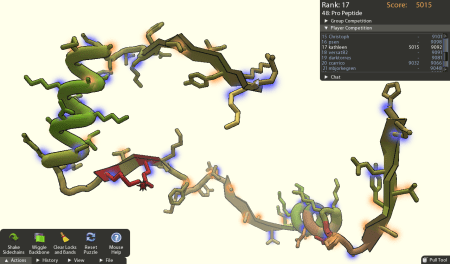
the other week i was watching Nova Science now when this segment came on which i found fascinating so i’d though i’d share it with you guys. i realize this isn’t about art or photography but i though it’s so cool, and there is a game attached.  so heres the main Science Daily article below then the link to Fold It web page here. think you can beat a ninth grader doing this?

ScienceDaily (Nov. 22, 2012) — Fifty years after scientists first posed a question about protein folding, the search for answers has led to the creation of a full-fledged field of research that led to major advances in supercomputers, new materials and drug discovery, and shaped our understanding of the basic processes of life, including so-called “protein-folding diseases” such as Alzheimer’s, Parkinson’s and type II diabetes.

In an article in Science, Stony Brook University researchers reviewed the progress on a 50-year-old puzzle called the Protein Folding Problem. Ken Dill and Justin MacCallum of Stony Brook’s Louis and Beatrice Laufer Center for Physical and Quantitative Biology show how a community of scientific researchers rose to tackle a grand-challenge problem of very basic science that had no obvious payoff at the time.

“Protein folding is a quintessential basic science. There has been no specific commercial target, yet the collateral payoffs have been broad and deep,” the researchers said in their paper, The Protein Folding Problem, 50 Years On.

whole protein

“We have learned that proteins fold rapidly because random thermal motions cause conformational changes leading energetically downhill toward the native structure, a principle that is captured in funnel-shaped energy landscapes. And thanks in part to the large Protein Data Bank of known structures, predicting protein structures is now far more successful than was thought possible in the early days. What began as three questions of basic science one half-century ago has now grown into the full-fledged research field of protein physical science.”

folded up puzzle

This year marks the 50th anniversary of the 1962 Nobel Prize in Chemistry awarded to Max Perutz and John Kendrew for their pioneering work in determining the structure of globular proteins. That work laid the foundation for structural biology, which interprets molecular level biological mechanisms in terms of the structures of proteins and other biomolecules. Their work also raised the question of how protein structures are explained by physical principles.

Since Perutz and Kendrew discovered the structures of two proteins, nearly 80,000 protein structures have been discovered. The protein folding “problem” arose when Perutz and Kendrew were unable to make sense of how the folded structure of the protein molecule was related to its sequence of bead types. Ever since then, there has been great interest in understanding the protein-folding “code”: how does a given string of amino acids lead to a particular balled-up (“native”) structure of a protein?

Proteins are molecules that perform the basic functions in biological cells — converting food to growth, to repairing DNA molecules and damaged cell parts, to motion in muscles, to transduction of signals in the brain and light in the eye, for example. Humans have about 20,000 different types of protein molecules. Each performs a different function. The abilities of proteins to perform such a broad array of powerful chemical functions arise from a peculiar principle of chemical structure and function, namely the folding of each protein. A protein is miniature string of beads, like a pearl necklace, where the bead-like component pieces are called amino acids. Amino acids come in 20 different types. The folding principle is that different sequences of amino acids strung together cause different protein molecules to ball-up in very specific, but different, ways, giving rise to their very different functionalities.

The protein folding problem became a set of three inter-related puzzles: What is the folding code? How does the protein find its one native structure in fractions of a second inside the cell (the needle-in-a-haystack problem)? And: Can we make a computer method that can discover new structures of proteins from the large number of amino acid sequences that are now known?

Dill, Director of the Laufer Center and Distinguished Professor of Physics and Chemistry, and MacCallum, a junior fellow at the Laufer Center, describe how huge advances have been made on all three fronts. They detail some very important collateral payoffs of this work that was completely unanticipated at the time, including the development of the IBM Blue Gene computer and distributed-grid computing, computer-based methods for discovering new pharmaceuticals, a deeper understanding of molecular mechanisms in biology, a deeper understanding of the inter-atomic interactions inside proteins (that has also involved Stony Brook Laufer Center researchers Carlos Simmerling, David Green, and Rob Rizzo), and a new class of very promising polymer materials called “foldamers.”

Dill and MacCallum argue that what started out as one compelling question of basic science has now become an entire field of theoretical and experimental approaches in which many questions are now leading to a few answers and many more questions.

other links:

New Insights To the Function of Molecular Chaperones

Understanding the Dance of the Chaperones

New Invention Unravels Mystery of Protein Folding

tucker a failed photo shoot, well that’s what i though then, or turkey’s dressed?

November 21, 2012

‘where does the time go’ i think as i look around my work space as if i am going to find it watching me from a dark corner. all i wanted to do was clean up my computer desktop an go through the alaskan dvds looking for selects to give to mary, we do want to make small books of our trips just to have, maybe something the grand children can see and toss aside. what’s a book they will ask? where do you turn it on? you have to turn what?

but no…….. can i keep on task of dragging folders onto hard drives, i’ve got to open them to see what’s in there. oh gee i’ve ment to finish these images  and put them in my portfolios. oh well might as do these couple of ones before i save them. i may have posted a few here before but can’t remember or didn’t put in fuzzy folder, i can’t rely on my memory any more, too many holes in there.

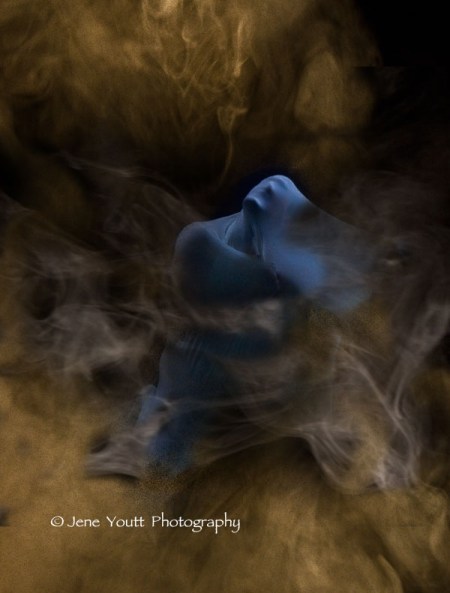
blue man raising

this was todays work or finishing up work from months ago, i think todays work sounds better, but who’s listening?

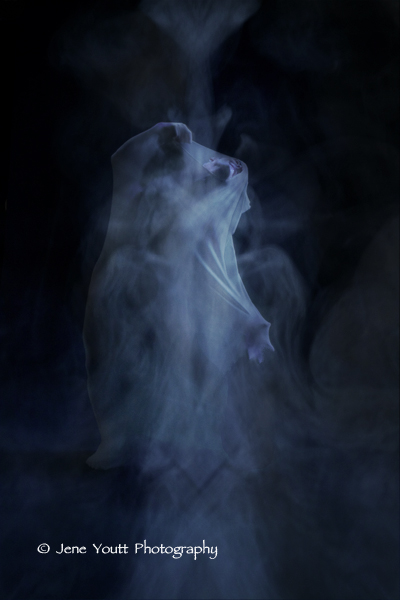
birth

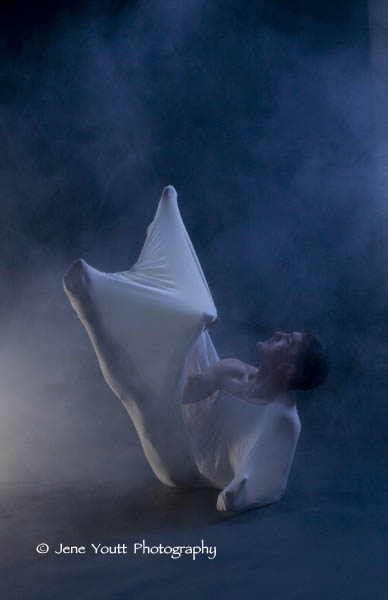
i had mary sew some spandex in sort of a large bag with a draw string on top to close it. i am sure tucker, the dancer,  thought i was strange but who doesn’t but since i was paying him for his time he humored me. i think i sent him some images which he never responded to and i’ve lost touch with him now so he won’t see them now. tucker if you’re out there drop me a line.

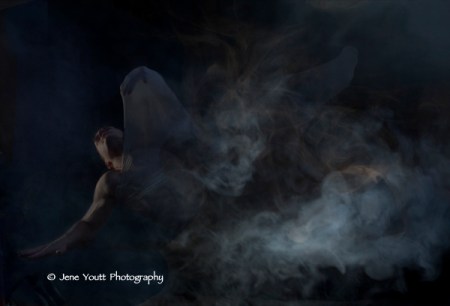
the things i hatch up

male dancer emerging from smoke is how i’ve described this but another birth image. seems a thread in m work birth, restriction and death.  oh course there can be a lot of stuff in the middle some fun some not. just need to keep a sense of humor, if you don’t like something it’s like the weather, wait and it will change. seems quite a few don’t know this.

the suit

so only a few images for thanksgiving to remind me how lucky i am to be alive and have loving people around me to share life with. i hope all of my readers can find the time to be thankful for what ever they have. life is a gift.

i feel i  need to thank paul lammers of as the world turns who taught me how to work with smoke. thank you paul.

jene


what’s a foley artist?…………. for those who want to know

November 15, 2012

ok here goes an answer i’ve been asked a million times and couldn’t answer. What is Foley Artist? well thanks to no film school web page Gary Hecker takes us on a tour of what he does.

What is Foley? What does it take to be a Foley Artist? Many of you might be very familiar with the craft, or maybe you have only heard the word in passing, but Foley is one of the many sound elements that helps bring a film together. It’s arguably one of the more important parts of sound design, because many of the important sounds that really add to the character of the film are all created in post on a Foley stage. SoundWorks Collection, who has given us quite a few tremendous videos, takes a look at the art of Foley with Gary Hecker, who has worked on films like The Empire Strikes Back and Robin Hood.

Gary Hecker for SoundWorks Collection (thanks to FilmmakerIQ for the link):

From “The Empire Strikes Back” to “Robin Hood”, award-winning Foley artist Gary Hecker of Todd-AO says it takes “timing and a huge creative mind” to be the man behind the sound. Here, he shares tips and tricks he’s learned during a career that has spanned more than 200 films.

Hecker also recently joined CSS Studios’ Todd-AO in late 2009. One of the most accomplished Foley artists in Hollywood. Among his recent credits are 2012, The Taking of Pelham 1 2 3, Angel & Demons, Watchmen and the Spiderman trilogy.

I’m often talking about the importance of sound design in my posts about short films, and to me, that’s usually one of the factors that separates a good film from a great film (though I don’t think sound design can make a bad film into a good film). Getting those small sound details really helps to complete the film, and put you in the moment with the characters. If you’re on set, you’re usually focused on recording dialogue, since that’s one of the hardest things to recreate in post with the same type of energy and performance — and also make it sound natural.

As Gary shows above, Foley is really an art, and the people that do it are artists just as anyone else involved with a film would be. It’s clear that it takes a lot of creative thinking to do this work, as you must be able to problem-solve and think way outside of the box when it comes to creating certain sounds.

What do you guys think? Have you done any Foley work on your own films? How was that process for you?

Link: SoundWorks Collection: Gary Hecker – Veteran Foley Artist — Vimeo

[via FilmmakerIQ]

Related Posts

  1. Behind the Scenes with the Sound Design Team for Ben Affleck’s ‘Argo’
  2. Behind the Scenes with the Sound Team for the Rolling Stones Documentary ‘Crossfire Hurricane’
  3. Learn Sound Design Tips from the Experts with This SoundWorks Collection Video for ‘Prometheus’

no naked pictures here in hoboken, just shopkeepers

November 14, 2012

speaking of hoboken nj here is a photographer doing a local hoboken study of shop owners. something i’ve always considered to be a big part of a neighborhood. for 15 years i lived in greenwhich village  where it really was a village and i felt as if i knew all of my neighbors by name. my kid grew up playing on the street along with the other seven kids his age and if anything should happen i’d hear about it on my way home. that was all before the yippies moved in  parking their cars with auto alarms on the street that would go off at the drop of a hat while they safely sat in their air conditioned apartments watching large screen tvs. nobody knew their names.

so this is nice that someone shows an interest in documenting the people who are there day to day, before they are replaced with nameless clerks in large chain stores.

John Delaney on Hoboken NJ shopkeepers

delaney-giorgio

Image © John Delaney.

Author: Oliver Laurent

This project by John Delaney was first published in BJP‘s print edition in November 2012. In light of what happened in Hoboken when the city was hit by Hurricane Sandy, we asked Delaney to discuss the aftermath.

For the past year I’ve been documenting the few remaining family businesses left in my working class city of Hoboken, New Jersey. Hoboken sits in the shadow of NYC across the Hudson river.

In the early morning hours Monday 29 October, Hurricane Sandy swept through Hoboken, flooding most of the struggling city. Over 20,000 of its residents and small businesses were left stranded under water for days without heat or electricity.

Sandy dealt a devastating blow to Hoboken and its economy. Many of the businesses that I’ve photographed have been directly affected and it’s still too early to know the long term results. This has always been meant as a portrait series in progress and I will continue to document this city of Hoboken as it struggles to return to normal.”

Original article published in BJP this month:

John Delaney auspiciously began his career in photography in 1989 as an assistant to Richard Avedon, doing everything from studio work to assisting on camera and delivering groceries to Avedon’s mum. He was soon promoted to become Avedon’s printer and eventually started his own printing business, working with other photographic icons such as Irving Penn, Bruce Davidson and Annie Leibovitz. As traditional printing methods began to lose favour, Delaney returned to studying and completed a masters in digital photography at the School of Visual Arts in New York last year.

Hoboken, New Jersey – just over the Hudson River from Manhattan – has been Delaney’s home for the past seven years. Inspired by the old-world feel the area has retained, Delaney began to shoot its residents and what he observed as the gentrification of the area. “Hoboken was full of multi-generational, Ma-and-Pa businesses, but they began closing at a really quick rate history is being replaced by cell phone and yogurt shops. I wanted to reflect the roots of this city before it was too late.”

delaney-giovanni

Image © John Delaney

The project began with Delaney wandering the streets of Hoboken, speaking to shop owners and trying to get a feel for their environments. “People would tell me, ‘Go and check out the butcher over on that street, he’s been there 70 years.’ But it quickly became evident how few of these establishments were left and I couldn’t help but feel I should have started five or 10 years ago.”

The resulting body of work is a series of almost timeless portraits depicting shop owners and workers in their bakeries, workshops and diners. Delaney found that the majority of people were willing to be photographed but soon realised that the more enthusiastic the sitters, the less interesting the portraits, and eventually these were excluded from the final selection. One thing that really emerges from the images is the dense texture and detail in the backgrounds, which are just as captivating as the characters. “I enjoy this type of environmental portraiture in which the background is as much of a portrait as they are. I love the feel of the textures and colours, and how the people fit into that. I was careful not to direct people too much. And what I like to do when taking pictures is to let them present themselves, whether with confidence or awkwardly.”

One of the most important aspects of this story for Delaney is making sure the community is involved and is part of the debate. The series of portraits is going to be exhibited at Hoboken Historical Museum next year for six months. “It will be good for the general community to celebrate their history,” says Delaney. “Especially in getting people to come who generally wouldn’t go to a photo opening.”

Delaney plans to continue working in his local area, expanding the project to examine the character and rich history of Hoboken, of which sadly only a little bit is left.

Visit www.johndelaneyphoto.com.

delaney-ivan

Image © John Delaney

delaney-john

Image © John Delaney

originally published in British Journal of Photography

hoboken art walk and studio tour 2012,

November 12, 2012

you can flood the city, fill the path tunnels with water, ruin almost everyones weekend without power but art walks go on.  mary and i will be showing our work at the hoboken nj art walk and studio tour at the Monroe Center, 720 Monroe Street, Hoboken NJ on Sunday November 18, 2012 from noon to 6pm.

if you’re in the neighborhood do stop by and say hello.

be there or be square

jene