Archive for July, 2012

these pictures taken, maybe they changed the world or made sense of senseless acts?

July 30, 2012

‘I was gutted that I’d been such a coward’: photographers who didn’t step in to help

What’s it like to witness a mob attack, a starving child or the aftermath of a bomb, and take a photograph instead of stopping to help? As two journalists are under fire for recording rather than intervening in a sex attack in India, we ask people who know

In pictures: the photographers who stood by (contains some graphic images)

Bystanders: mob attack

Photograph: Greg Marinovich

Mob attack, by Greg Marinovich
‘I was gutted that I’d been such a coward’

It was my first time in a conflict situation, and I was quite unprepared. I was on my own inside a migrant worker’s hostel in South Africa. Suddenly all the men started picking up spears and sticks and clubs, and racing off. So I followed them. They were trying to get into one of the dormitory rooms, and there was someone inside pressing against the door. Eventually, the door was flung open and this guy with a scarf tied like a turban around his head came dashing out. He looked me straight in the eyes, and then took off.

All these other men started chasing him, and he hadn’t gone far when he was brought down. About 15 or 20 men were all around him, hitting and stabbing and clubbing. And I was right there, photographing it. On the one hand, I was horrified, and at the same time I was thinking: what should the exposure be?

It was the old days: analogue, manual focus, crappy cameras. I felt torn between the horror of what I was seeing and trying to capture it. I was also thinking, how am I going to survive this? Because sooner or later these people are going to say, “There’s this guy taking pictures of us committing murder.” I was 1km from my car and the nearest outsider.

They killed him. And then one of them turned and said, “The white guy’s photographing.” Everyone leapt away, and I said, “No, it’s fine, it’s fine. Why did you kill him? Who is he?”

I was thinking, “I’ll spit on his body, I’ll kick this corpse, I don’t care – I’m going to survive this.” Thankfully, I didn’t have to do that. They pulled his ID out of his pocket: he was from another tribe. Then two of the killers posed and said, “Take a picture of us.” So I took a picture and walked away. All the time I was expecting somebody to say, “Wait, that guy musn’t leave.” But I walked off, got into my car and got the hell out of there.

It was my first exposure to such a thing. And although, as a journalist, my reaction was fine, as a human being I felt I’d really let myself down. It wasn’t how I’d expected I’d react – I thought I’d try to intervene, or do something more noble. Yet I hadn’t. I was really quite torn up about that. I was gutted that I’d been such a coward. From that moment, I was determined that, no matter what, I’d try to intervene and save someone if I could.

Domestic violence, by By Donna Ferrato
‘I saw that he was getting ready to hit her and I took the picture’

Bystanders: domestic violencePhotograph: Donna FerratoI try to get into real people’s lives and tell their stories. I’d been photographing this couple for a while. I was in their home, sleeping down the hall with my baby daughter, when I heard the woman screaming. It was about 2am and I could hear things crashing and breaking in the master bedroom. I put my little girl in her basket and put her in the closet, because I knew the husband had a gun. And then I grabbed my gun – which is a little Leica M4 – and went running down the hall. As soon as I walked into the bathroom off the bedroom, I saw that he was getting ready to hit her and I took the picture. I thought, if I don’t take this picture, no one will believe this ever happened. That’s the first picture I took that night. His hand was in the air and I was shocked out of my wits. I had never seen him do that. I saw him being a little rough with her, shaking her up earlier in the day, but he wasn’t beating her. That was the first time I saw him commit an act of violence, and my instinct was to get the picture first.

But after I got that one picture – because I knew I had it – I didn’t just keep shooting. I wasn’t like those war photographers who just stand there: bang, bang, bang. When I saw his hand go back to hit her a second time, I grabbed his arm and said, “What the hell are you doing? You’re going to hurt her!” He threw me off and said, “She’s my wife and I know my own strength, but I have to teach her a lesson that she can’t lie to me”, but from that point on he didn’t hit her again.

When I was taking other photographs for I Am Unbeatable, my book on domestic violence, I was there first as a photographer, not as a social worker. Yes, I would always be divided about whether to take a picture or defend the victim, but if I chose to put down my camera and stop one man from hitting one woman, I’d be helping just one woman. However, if I got the picture, I could help countless more.

For more information on Donna Ferrato’s project on domestic violence, visit iamunbeatable.com.

Pro-hunting protests, by Graeme Robertson
‘He said, “Help me, please help me”, and I didn’t do anything’

Bystanders: pro-hunting protestsPhotograph: Graeme Robertson/Getty ImagesThis picture was a taken on quite a violent day. The police were really up for it. The demonstrators were really up for it. Everybody was getting hit hard. I was flung to the floor by a policeman. I was lying there, dusting myself, ready to give the policeman a bit of my Scottish abuse, when I saw a man being wrestled to the ground for not doing what he was told. He hadn’t done anything wrong, but as he was lying on the ground, the policemen were abusing him and being really aggressive with him, hands round his neck, that kind of thing. I picked up my camera and he said, “Help me, help me. Please help me.” And I didn’t do anything. I took a picture – and he got dragged off.

When I got home that night, I felt a bit uneasy. I thought, “I didn’t really do anything there. I didn’t really help.” But is it the job of a photographer to get involved in this sort of thing? For five years, I covered an awful lot of conflict – Baghdad, Afghanistan, all across Africa, the Middle East. The stuff that I saw there… On my first assignments in Iraq, I really struggled with it. It caused me so much stress, I got alopecia and lost all my hair all over my body. Just from thinking about all these things. The first time I experienced it, it actually stopped me taking images I really wanted to take or should have taken, because I was so mixed up and thinking, “Should I be doing this or not? I found it very difficult. But through experience, it’s sad to say, you get immune to it. And then you can concentrate on your photography, and you feel that is your power.

If you manage to get a picture that shows the scenario, that is you helping them. I’m not in this situation to help them physically, but that is what I’m on this planet to do.

I know of photographers who have thought, “I can’t not help this kid” and taken the kid away. And they’ve got themselves into so much trouble. Because they don’t know the situation or how things work. They have a different culture, different views, different medication, and often in a situation like that you end up being more of a hindrance than a help.

Stoning, by Ian Berry
‘It never occurred to me to do anything’

Bystanders: StoningIan Berry/Magnum PhotosI was travelling around Congo with Tom Hopkinson, the editor of Picture Post, and a couple of other photographers. I was in the front of the car and I spotted a crowd coming down the street, chasing one man.

We discovered later that the only sin this man had committed was being in the wrong tribe and in the wrong area. The crowd chased him and threw rocks at him; children and adults beat him with sticks. Finally, he was totally exhausted and fell to the ground quite near where I was standing. And I went on photographing.

To my shame, it never occurred to me to do anything. To start with, we were white. On our own. The other two photographers didn’t get out of the car. Suddenly I realised that Tom had walked into the crowd and stood over the guy. People were so amazed, they just stood back. The man was able to stagger up, around a corner and escape. It was an amazing thing to do. Tom undoubtedly saved the man’s life. And, frankly, it had not for a moment occurred to me to intervene.

When you’re working with a camera, you tend to disassociate yourself from what’s going on. You’re just an observer. We were there to record the facts. But there are moments when the facts are less important than somebody’s life.

Stabbing, by Oli Scarff
‘I don’t know if I would have had the bottle to put myself in mortal danger’

Bystanders: stabbingPhotograph: Oli Scarff/Getty ImagesI’d been assigned to cover the Notting Hill carnival, so I’d been down there early, capturing the colours and the floats and the jerk chicken. The carnival was winding down, there were a lot more police on the streets, and I noticed a group of about three or four start running. There was nothing else to do, so I ran after them to see what was going on.

It was a chaotic scene, and my first instinct was to take a couple of photos immediately, to record what was happening. It’s something I’ve conditioned myself to do: to get a shot in the bag before you can fully assess the situation. After that, my attention was drawn to a man who had been stabbed, and who was bleeding profusely. I photographed the police and paramedics treating his wounds and trying to keep him conscious, which thankfully they did. It was only after that when I noticed that the two pictures I shot at the beginning included this scene of the man with the knife and a guy attempting to trip him up. I’d manage to capture that in a split second. From the trajectory of the two images I have, it looked like he was just about to run past my left shoulder. He would have passed me in an instant.

To be honest, even if I had been aware of what was going on, I don’t know if I would have had the bottle to put myself in mortal danger. It’s hard to know, though: those decisions come down to a spur-of-the-moment instinct. But, fundamentally, my role on that day was to document what was happening. In the corner of the picture is someone else taking a photograph. I think, perhaps, there is an innate human desire to record these kind of things. And the facility to do so has now been put in everyone’s pockets.

Bomb aftermath, by Hampus Lundgren
‘I became a photographer and not a person’

Bystanders: bomb aftermathPhotograph: Hampus LundgrenI’m a freelance photographer and I had my first summer job working at a newspaper a block away from the government offices in Oslo. Up until then I’d been doing feel-good stories, following a group of male synchronised swimmers, that kind of thing. When the bomb went off, I saw a fireball in the air, then a shockwave came towards our office, knocked people to the ground and shattered all the windows. We had to evacuate, so I grabbed the camera on my desk and started running towards where the bomb had gone off. I knew there was the possibility of a second explosion and I was afraid the buildings would collapse, so I gave myself 10-15 minutes to take pictures and then get out.

This was one of the first things I saw. My mind shut down a bit, I think, because I don’t remember taking this picture. I just felt adrenaline. I became a photographer and not a person. It didn’t cross my mind to talk to them. The man was being held up by his wife. He was badly injured, and getting help from other people nearby, including an off-duty policeman. The others I could see were already dead. I don’t know first aid, so I thought the thing I can do, and what I do best, is to document this, show people what happened.

I met the couple a few months later to see how they were doing. He was severely injured by shrapnel, and had had his right leg amputated. They told me they were really angry at the time, because the first thing they noticed when he was lying on the ground was a photographer taking a picture of him. That made me feel guilty, but later, when I showed them the image and spoke to them, they said they were pleased these pictures were taken because it helped them to remember. That helped me a lot, to feel I hadn’t used them.

London riots, by Kerim Okten
‘I wanted to shout “Stop!”… but I was frightened’

Bystanders: London riotsPhotograph: Kerim Okten/EPAIt was 8 August, day three of the London riots. I was in Hackney, and I watched this group approach a line of shops behind shutters. They obviously knew which shop was the newsagent because they went straight for it, breaking the locks on the shutters, then smashing the door, breaking in and looting anything valuable: money, alcohol, food, cigarettes. Dozens of people began queuing up outside, chatting and waiting for their turn to loot. It was darkly funny: they almost looked like a normal line of people waiting at the checkout.

Suddenly one of them turned to me. “Why are you taking pictures? Did you ask my permission to take a photo of my premises? This is my shop and this is my street now, so fuck off.” They became aggressive, and so I backed away with the other photographers.

Of course I wanted to stop them. This was somebody’s shop, and what was really sad and silly was that these kids probably lived on this street. This was probably the newsagent where they bought their bread and milk. I wanted to shout, “Stop! How can you do this to your neighbours? Have you lost your minds?” But I didn’t say anything. I just took photographs, and talked to the other photographers and onlookers. We were all saying, “Somebody should tell them to stop.” But nobody did. We were all waiting for the police to come, and they didn’t come for a very long time.

I feel bad about it. I was frightened, so I just stuck to my professional duty. But life as a photojournalist teaches you that during this kind of violence, getting involved won’t end it; it will just lead to more people getting hurt. With the lootings, you’re dealing with group psychology. A looter won’t act like a person, they’ll just go with the wave of action. You feel powerless, but the power you hold is in your job: to tell the story.

Famine, by Radhika Chalasani
‘To this day, I think I didn’t necessarily do the right thing’

Bystanders: faminePhotograph: Radhika ChalasaniSome photographers and journalists have a very absolute point of view that you never interfere, because your job is as an observer and you can do the most good by remaining one. I decided a long time ago that I had to do what I could live with in terms of my own conscience, so when it felt appropriate to try to do something, I would. There are certain situations you struggle with. We’re interfering with a situation by our very presence, and that automatically changes the dynamic. At one point, I was photographing a woman carrying her son into a feeding centre. He was extremely malnourished, and I was photographing her as she walked along. All of a sudden, these Sudanese people started directing her for the photos. They had her sit down and were indicating how she should hold her child. I ran to get a translator, and said, “Tell her to take her child to the feeding centre. She should not be stopping because I’m taking a photograph.”

Another time, there was a family sitting under a tree just outside the feeding centre, about 10 feet away. But they couldn’t walk, they were so emaciated. And there was a group of photographers all around them. I took a few pictures, but then I walked into the feeding centre and asked a nurse, “Is there anything you can do for this family?”

I’ve been in situations where it’s been a hard call, though. On one occasion, a group of photographers went into an abandoned refugee camp and found a massacre site. There were some children who had survived. There were two baby twins in a hut: I tried to get one child to take my hand and realised it had been chopped off. We didn’t know how long they had been there. And it’s in the middle of a civil war, so you’re not sure how safe things are.

Myself and another photographer wanted to take the kids out of there in the car. Several of the other people didn’t think it was safe, in case we got stopped at a checkpoint, and they wanted to get back for their deadlines. In the end, we didn’t take the children. We found the Red Cross and reported the situation to them, but I found that another photographer went there the next day and found another child who was a survivor. To this day I think that I didn’t necessarily do the right thing.

I do believe that our main contribution is trying to get the story understood. And sometimes, when you think you’re helping, you’re actually making a situation worse. But, for me, you try to do what you can live with.
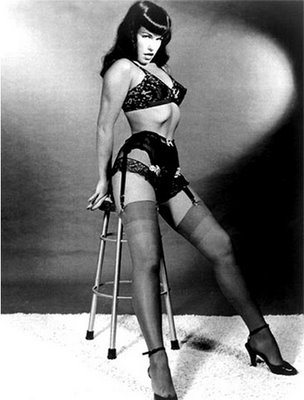
Another New York picture business bites the popcorn, Movie Star News

July 30, 2012

 i remember this store from when it was on 13th street almost next to the quad movie theater. then i think it moved to 18th street where i would pass it on my way to cambridge camera which is long gone also. sometimes i would go in drawn by the poster in the window, i like posters and pictures.

the world changes so fast and yet my mind still remembers the places that were and when i come upon a store, a building or a vacant lot, i remember what was there. i am sure there will come a time when i forget things and walk around with my shoe laces undone. heck i am not sure what day of the week it is. so it has already started, i loose words in conversations which baffles me. until it happens to you it’s hard to understand.

bettie page

greenstreet & bogart

i  must confess that i don’t remember the absents of this store. i didn’t go in there much but when i first came to nyc i was enthralled with everything entertainment wise. there is something about the smell of old paper that turns me on, the gotham book store sent shivers up my spine in anticipation of what treasures that awaited me on it’s shelves. so did this place, i loved flipping through the files of forgotten or unknown names that then resided there. now it’s time to move along no pictures there.

marilyn

Massive NYC movie star collection, images of pin-up queen Bettie Page slated for auction

By Associated Press, Updated: Monday, July 30, 2:52 AM AP

NEW YORK — Movie Star News amassed a staggering amount of film stills, posters and negatives over the past 73 years — nearly 3 million, including 1,500 prints of Bettie Page, known as the queen of pin-ups. But last week, the once-lively store in lower Manhattan was lifeless. The classic movie posters that once covered its narrow 2,000-square-foot space were rolled up or covered in cellophane, its bins and racks empty. Everything was packed up in cardboard boxes that lined the floor.

The legendary Manhattan store credited with creating pin-up art had sold its entire inventory to a Las Vegas collectibles company.

The collection, regarded as one of the largest of its kind, is headed for the auction block. It will be sold in a series of sales slated to begin next year. The bulk of the collection covers the years 1939 to 1979; 11,500 movies and 5,000 actors are represented.

“This is the most important photo archive of Hollywood in existence. There are tens of thousands of negatives that have never been reproduced,” said Stuart Scheinman, co-owner of Entertainment Collectibles, which bought the collection. “There are images here that have never been seen by the public.”

There are 2,000 original prints and negatives of Frank Sinatra and Marlon Brando, 1,000 of Gary Cooper, 400 of Bette Davis, hundreds of movie images of “The Godfather” and “Gone With the Wind.”

“This could literally take five to 10 years to go through it all,” Scheinman said. He would only say the company purchased the collection for “seven figures.” Its true value was anyone’s guess, but he believed it easily was worth $150 million.

Movie Star News produced 8-by-10 glossy prints from the negatives, selling each for a few dollars in the store and through the mail. But the Internet has significantly cut down on demand.

“I make references to things when customers come in, and they have no idea what I’m talking about,” said Ira Kramer, who took over the business that his mother, Paula, and uncle Irving Klaw, started in 1939. “Today, if you want a picture of a star you can go on the computer and download it. So what do you need me for?”

“The maintenance of the collection has been fastidious … the way a fine library would maintain material,” said Arlan Ettinger, president of Guernsey’s and in charge of selling the collection.

As far back as the 1940s, Movie Star News had a mailing list of 100,000 names. World War II soldiers were big customers, buying prints for their lockers, Kramer said.

The entrepreneurial Klaw, who died in 1966, hit on the idea of selling pictures of Hollywood stars while operating a movie bookstore.

“He noticed that kids were tearing out the pictures of the movie stars, so he decided to sell their pictures rather than the books,” Kramer said. Klaw started dealing directly with movie studios, RKO, Columbia and others, located in those days along Eleventh Avenue.

“He made arrangements to buy from them whatever they didn’t want … original negatives, original prints of ‘Citizen Kane,’ ‘Three Stooges,’” he said. The studios were more than happy to be rid of the stuff for which they had no room.

Kramer’s mother was the one who took the pin-up shots. But it was Klaw who launched that side of the business after a man approached him about making him a set of photographs of skimpily-clad girls posing with whips and ropes, said Kramer.

Page was Klaw’s favorite model, and a suitcase of the 7-inch heels she wore in the photos, plus other bondage props, will be included in the auction.

The photos were tame by today’s standards. In fact, the models were required to wear two pairs of underwear. But the FBI continuously harassed Klaw and he had to appear before the 1955 Senate Subcommittee on Obscene and Pornographic Materials.

“It was a big headache,” Kramer said. Klaw finally decided to burn all the pin-up material — but Paula Klaw saved a lot of it.

___

Online:

Guernsey’s: http://www.guernseys.com

broken computer? don’t fret help is on the way you can fix it

July 29, 2012

this past month our mac book pro optical drive went south. what to do? do we try and fix it? our options would be to take to local mac repair shop, fine history of repairs, send it to apple, long shipping and wait, or try and fix it ourselves.

my history with the mac line is that they are user fixable from learning from my mac ll ci i could just pop the lid and there i was. motherboards were another affair but maybe not.

installing memory, hard drives, pci cards etc seemed pretty easy if one had the right tools and a bit of knowledge, and in those days it was pretty simple. but apple smarten up as they want to do all the repairs along with selling you the device and software. heck even designing special screws for the ipad and iphones so users can’t replace their own iphone battery. it was so easy to expand a mac tower using pci cards to add additional functionality to your computer. it was only limited to how many slots apple wired into computer. then they cut back on those.

apple has even now cut out their Green products, with the effect being not being about to sell to government agency’s because of dropping the green restrictions. apple thinks it customers don’t really care about being green. i guess it’s more profitable for apple or they wouldn’t do it. remember when people friendly apple wanted government work? oh well i guess the chinese factories can’t comply with making green products in their sweat factories.

apple has developed a wonder screw for their i phone thinking that would stop hackers trying to change the batteries taking profit away from apple.  i wonder how general motors would have fared in the auto industry had they made their own tools able to access only their engines. oh well we know that story. but apple is mega successful doing much the same thing. i am sure in the board room they are smug in thinking “it’s for our own good”. it’s  only a matter of time before someone produces the iphone screwdriver.

but along comes other companies with different ideas, yea team.

one of them i had contact with is called One World Computing whom i bought the cd burner from. they have video tutorials along with printed instructions in the shipping box showing one how to install their products. having the right tools helps, but they sell those also. we replaced our optical cd drive in a half hour.

now i’ve learned of another company called ifixit.org who believes differently. yea team. i’ve had to fix my epson 7600 printer manuals downloaded from the internet. of course that was before epson got wise and made things complicated and secret on their later models.

apple has changed and continues so keeping a tight grip on ios having learned from the debacle of letting other companies produce better and faster clones. while apple internal busses were running at 33mhz,  power computing  doubled that. whoa that was fast, as i owned one.

yes one could gather from this post i am tired of apple telling me what i need, there are rumors that apple is considering dropping optical drives from it’s line altogether. we drag our mac pro along with us on trips in order to back up files off our cameras now since epson dropped making their epson p HD viewer,

so what’s a poor family of togs to do when traveling, i guess we could go back to film although the tsa doesn’t know how to handle film opening infrared  film nor not too many other things like people.

oh well jene

well here it is sex kills……………..but it’s oh such a nice way to go

July 29, 2012

Why prolonged sex is dangerous: It can get you killed

Why prolonged sex is dangerous: It can get you killed

By Thomas H. Maugh II Los Angeles Times

July 23, 2012, 10:39 a.m.

Mating can be dangerous. At least 100 years ago, biologists began to speculate that sex in the animal kingdom could be a very risky business. The noises can attract predators, the male is distracted and he has less energy to fight off an attacker or to run away. Perhaps that is why males almost always attempt to finish so quickly. Surprisingly, however, there has been little evidence to support this hypothesis until recently. Two lab studies and one in the field have shown that mating increases the risk of predation in freshwater amphipods, water striders and locusts.

Now a new study shows very strong evidence of the effect in flies.

Stefan Greif and his colleagues from the Max Planck Institute for Ornithology in Seewiesen, Germany, and his colleagues filmed a colony of Natterer’s bats living in a cowshed near Marburg with a large number of houseflies. The flies rarely fly at night, sitting or running on the ceiling where the background echoes hide them from the bats. Finding the flies is nearly impossible for the bats.

But when the flies copulate, the researchers reported Monday in the journal Current Biology, they make a distinctive noise that the bats can home in on. Of the 1,105 acts of copulation observed by the researchers, bats attacked 59 times, consuming both flies almost all the time — thereby obtaining a two-for-one dinner.

To show that it was not simply the increased size of the copulating couple that attracted the bats, the researchers pinned flies in a copulating position to the ceiling. The bats ignored them. But when the team played the sounds of copulation through speakers, the bats attacked the speakers.

Said Greif: “Sex kills.”

LATimesScience@gmail.com

‘Robbie’: A Short Film That Proves Sometimes You Don’t Need a Camera to Make a Great Film

July 28, 2012

reblogged from no film school

We write a lot of posts about cameras here on No Film School in order to make our readers aware of what options are out there and what each particular camera is capable of. But as you know, the camera doesn’t make your film. The story is the most crucial part of any narrative film, and you don’t necessarily need a camera or a crew to make that film a reality. Sometimes, all you need is some public domain footage, the right music, and an editing program. This what Australian filmmaker Neil Harvey used to create his beautiful short film Robbie:


The film-making process involved downloading about 10 hours of footage from the NASA archives and compiling a list of shots which resonated with me at some level. I did this over about 2 or 3 months when I had the spare time. From there, I put these selected shots on an editing timeline and watched them back until characters and narratives began developing in my mind. That is when I met Robbie.

Whether you use Harvey’s method of having your story emerge out of compelling images or you write a script and then find the images that fit, with some effort and creativity you can make a great film. If you’d like to dive in and make your own found footage film, there are some good resources for 720p footage at The Internet Archive’s 35MM Stock Footage Collection, and NASA, and if you’re looking for a more extensive collection of footage –albeit SD– check out FedFlix, and the Perlinger Archive.

Link: Short of the Week – Robbie

thanks to nofilmschool

jene

do you need a new skin? well alien skin is looking for beta testers using an IOS device

July 26, 2012

Are you the kind of person who likes getting new software before anyone else? Are you a Photoshop or Lightroom fan? Have an iOS device? Then you might consider being a beta tester of some new apps in development by Alien Skin software.

Alien Skin, makers of Photoshop and Lightroom plug-ins like Image Doctor, Blow Up, Exposure, and Eye Candy, are currently seeking volunteers to beta test two upcoming iOS apps, called Pintograph and Alt Photo. Pintograph mimics the effect of mechanical drawing devices, allowing users to create geometric line art.

Alt Photo enables users to transform pictures with a wide array of filters, many of which are from the Exposure plug-ins.

Beta testing for Pintograph is going on now and runs through August 20th. Testing of Alt Photo will take place in the fall.

If you’re interested in being a beta tester for either product, you can apply by filling out a brief survey. Alien Skin is accepting a limited number of beta testers, so if you’re interested, fill out the survey soon.

For more information on the beta testing program, visit the Alien Skin blog.

July 24, 2012

everything old is new again and thanks for reminding us.

annalinehan's avatarFans in a Flashbulb

Florence Henri, Self-portrait, 1938

Florence Henri’s manipulation of mirrors, prisms, and reflective objects to frame, isolate, double, and otherwise interact with her subjects–one of the most distinctive and adventurous features of her photographic work–often confounds viewers’ ability to distinguish between reality and reflection. In this 1938 self-portrait, the mirror’s frame, running down the center of the picture, disturbs what appears at first glance to be a simple view of the artist seated at a table, signaling the discontinuity between the two sides of the picture and the impossibility of understanding or visualizing the physical space occupied, seen, and abstracted by the photographer. Henri also experimented with photomontage, multiple exposures, photograms, and negative printing in her work, consistently constructing images that undermine the camera’s capacity for realism to create multifaceted, artificial, imagined spaces. The spatial and psychological ambiguity produced by Henri’s complex and disorienting compositions accounts not only for their…

View original post 312 more words

video intern opportunity at Howard Schatz studio or how to work for free.

July 19, 2012

here’s a post on craigslist that some young video head would just love to do. but it’s working for free and i never had the opportunity even when jobs were plentiful in the 60’s. i had picked up the habit of eating and sleeping in a bed and had no one in the world to support me but me. i had to do some pretty disgusting things just to survive and it was still hard.

not to say people didn’t help me because they did and for that i’d like to say Thank you, where ever you are.

below howard is asking someone to ‘intern’ in his studio for no pay. yes howard is a wonderful commercial photographer, sometimes noted as a photographer of the year, 20 books printed, covers on time mag, etc. i’ve seen howard’s work amazing stuff. he justifies free internships by saying the people who do these learn a lot. i am sure they do, that is if someone else is footing the food bill.

howard’s not alone in asking people to work for free as this is the new trial period in this day and age. steve mc curry uses interns.

i am sure who ever takes this opportunity will learn a lot and have very good contacts from howard’s studio. but one would think, i do that an accomplished photography studio could pay their workers something even the pages at CBS get paid.  oh well i guess i am way old school [ atlas shrugged ] in thinking people are worth something. in the old days when you apprenticed for someone at least you could sleep on a pile of straw over in the corner on the floor. but no mention of straw in the adv.

times have changed or have they. my understanding of a apprenticeship was a contract between two parties where you came away with a learned trade, here video production. well tell that to all the ny one correspondents who lug cameras around town getting news stories for low pay thinking someone in the major networks see them and offer a decent paying job. what the network executives saw were people willing to work cheap. now the ideal tv network news person should be 24 years old , start at $24,000 a year salary and be available to work 24 hours a day. so much for breaking onto the national scene.
with this logic i am the one out of step here it takes a lot of money to run a photography studio or tv network so why spend the money on salaries when you can offer a person a learning experience. but asking someone to work for free doesn’t sit well with me.

_____________________________________________________________________________

Schatz Ornstein Studio is looking for a full time intern to work in the production department.
Internship starts Monday July 30th. This is an unpaid internship.

You will work hand and hand with the studio’s Producer and Executive Producer assisting on the production end of all projects.
Our work ranges from advertising jobs, to editorial and artistic (personal projects). We are also in the process of printing our
19th and 20th book, so you will have the opportunity to be part of the process.

This is a great opportunity for someone very eager to be a professional photography and TV commercials producer.
You will be immersed 100% into the world of production. This is a very hands-on internship.

Some of the tasks you will be performing:

– Assist producer on shoots
– Pre-production: Assist producer with call-sheets, pre-pro books/ meetings, quotes, vendors, crew.
– Administrative Support
– Research (for new or existing project).
– Handle/ develop projects as assigned
– Set-up/ run Castings
– Since we are a small group, duties will also include studio cleanup, recycling, etc.

We are looking for someone who has/ is:

– Eager to be a producer
– Smart, quick and resourceful
– Good writing skills
– Detail oriented
– Committed to the job/ team
– Capable to take directions from supervisors
– Eager to learn all aspects of production
– Quick learner
– Can take larger projects as assigned, and follow through
– Professional demeanor

For more information on our work, please visit our website
http://www.howardschatz.com

Please send a short cover letter and your resume to Ivana Stolkiner, Producer to the email address above.
No phone calls, please.

The Clock, Christian Marclay @ The Lincoln Festival thru aug 1, 2012

July 13, 2012

are you looking for something to do in this sweltering summer heat here in the city that never sleeps. well this might be right up your alley at the Lincoln Center festival. see link here for line updates. for some reason new yorkers don’t mind standing in line because there are so many of us wanting to go somewhere from buying our groceries or being entertained.

Artwork That Runs Like Clockwork

Christian Marclay/Paula Cooper Gallery

Christian Marclay’s 24-hour film montage, “The Clock,” is coming to the David Rubenstein Atrium in Lincoln Center.

By
Published: June 21, 2012

This summer the city that never sleeps will have another glimpse of an artwork that doesn’t relent much either: “The Clock,” a spellbinding, time-telling 24-hour wonder of film and sound montage by Christian Marclay, the polymath composer, collagist, video artist and pioneer turntablist.

An assemblage of time-related movie moments that had its debut in London in autumn 2010, Mr. Marclay’s “Clock” is already a popular classic. It is also a functioning timepiece; a highly compressed, peripatetic history of film and film styles; an elaborate, rhythmic musical composition; and a relentlessly enthralling meditation on time as an inescapable fact of both cinematic artifice and everyday life. Perhaps the ultimate validation of appropriation art, it thoroughly demonstrates how existing works of art — in this case films — become raw material for new ones.

“The Clock” counts off the minutes of a 24-hour day using tiny segments from thousands of films. Bits of “High Noon,” “Gone With the Wind,” “Laura,” “On the Waterfront,” “The Godfather” and “A Clockwork Orange” speed past, mixed with early silent films and less familiar foreign ones.

As the action, music, sound effects and dialogue of one film bleed into those of another, each segment specifies a time, sometimes through spoken words, but mostly through shots of wristwatches, clocks, time clocks and the like. All are synced to real time. When it is 11:30 a.m. in “The Clock,” it will be 11:30 a.m. in the world outside. Exactly.

The first New York showing of “The Clock,” at the Paula Cooper Gallery in January 2011, had people lining up around the block in a relatively deserted west Chelsea in the dead of winter. Now, for 20 days starting on July 13, Lincoln Center will present the piece in a specially built theater in the David Rubenstein Atrium on Broadway between 62nd and 63rd Streets. Admission will be first come first served in a setting — lined with movie-palace velvet curtains and outfitted with enormous couches that blur boundaries between living room and screening room — that accommodates only about 90 people at a time.

It may be a challenge to get in, even in the wee hours, which is when I want to go, but I intend to make every effort, and recommend that you do too. The piece will run Tuesday through Thursday from 8 a.m. to 10 p.m. and then settle in for three 38-hour weekend marathons beginning at 8 a.m. Fridays and running to 10 p.m. Sundays. It will be closed Mondays and ends on Aug. 1.

more information on the artist Christian Marclay can be found at the New Yorker here

enjoy, but i won’t be standing in line myself they give me the willies.

jene

Just When You Got Digital Technology and smart phones apps down, opps film is back

July 9, 2012

i wonder who reads this blog, who’s the angry bird that winds up in my spam folder, why do i need snow removal in poland, who are these people, are they people at all? the internet is so full of information it’s really hard for anyone to keep on ‘top of it’ as they  say. that’s the fun part, so here is another piece of photography tech info that you really need to know.

Lomography

A panoramic image captured by one of Lomography’s cameras, the Spinner 360.

By
Published: May 30, 2012

When is the last time you took a photo with an old-school camera — the kind that doesn’t have a wireless connection, needs to be loaded with finicky rolls of film and is too bulky to slide into a back pocket?

Film’s Comeback

Lomography

Photos taken with La Sardina, which embrace the imperfections of film, are all taken on 35-millimeter film.

Anne Bowerman

A photo taken with film made by the Impossible Project, which was born of an effort to salvage a film format that seemed doomed to disappear.

Lomography

An image taken with Diana F+ demonstrates the camera’s charm and appeal.

Unless you are a professional photographer or an artist, it has probably been a while. Most people have abandoned film cameras for digital models or, more recently, smartphones outfitted with lens accessories and apps like Instagram that make photo-sharing extremely simple.

But film photography is having another moment in the sun, thanks to some hip, quirky companies like Lomography and the Impossible Project, which are resurrecting this seemingly archaic art for enthusiastic hobbyists. These companies and their customers tend to embrace the imperfections of film, rejecting the cold precision of digital photos.

It is important to bear in mind, of course, that film photography takes a little more effort than tapping a button on a screen. In my experience, the pros outweigh the cons, but both are worth considering before you invest a significant amount of time — and coin — into this hobby, particularly if you are new to the world of film.

Let’s start with the cons. Analog cameras require a little more precision to operate than digital ones. It can take some time to figure out how they work and to learn how to reload them without dropping them on the sidewalk. The film itself is fairly delicate and often needs to be refrigerated and shielded from the sun. The pictures are rarely perfect. Certainly, the artsy streaks and blurring that some of the cameras mentioned below can give to images are part of the charm and overall appeal. But it can be frustrating to have a sprawling white smear blotting out the scenic vista you were hoping to capture.

Cost is another factor; expect to part ways with a few bills at first, for getting set up with equipment, and then for buying the film and having it developed. Even finding a place to develop film can be challenging, although many chain drugstores and professional photography shops still do.

Given all that, the upsides to working an old-school camera into your daily routine are numerous. Perhaps the most interesting benefit is how it shapes the way you interact with your surroundings. The luxury of documenting every meal, sun-soaked afternoon and live concert with a smartphone’s vast memory bank does not exist with film cameras. You have a limited number of frames to shoot with, forcing you to carefully weigh what you want to capture. That sounds like a drawback until you consider the advantages of being more present in the moment, since you aren’t constantly engrossed by the screen of your smartphone.

There is also something refreshing about not immediately knowing what your image will look like. It instills a kind of patience that has all but disappeared as we surround ourselves with real-time technology. And when the prints show up, there can be wild variations in color and the sort of unpredictability that turns a photo into something that seems like a unique piece of art.

As an added bonus, film cameras are the ultimate icebreakers. Spotting a Polaroid camera in the wild is rare, so if you walk into a party with one, you’re guaranteed to be the most popular person in the room.

Here are some options available to those who want to try their hand at wielding an old-fashioned camera.

LOMOGRAPHY This company manufactures and sells a line of quirky cameras online and in a handful of stores around the globe, including locations in New York, San Francisco, Tokyo, Rio de Janeiro and London. Most of their offerings, which start at around $50, use 35-millimeter film. They include the simple Russian LC-A+, which produces whimsical, color-drenched pictures; cameras with a fisheye lens that create a bulging, surrealist perspective; and the Spinner 360, which comes rigged with a manual ripcord that whirls the lens around to capture a panoramic image.

My personal favorites are the cute DianaF+ and La Sardina, stylish and compact machines that fit easily into a handbag and look like something you would see on the set of a chic Italian movie. For the ambitious, the company recently began selling a camera called the LomoKino that captures short movies on 35-millimeter film.

It takes a while to get used to a Lomography camera when you’ve been shooting on an iPhone or digital camera. I never knew if the film was advancing properly, and once I accidentally yanked off the back panel, ruining at least five exposures by baring them to the light. But once you get past the initial awkwardness of the machinery, it’s so much fun to take photos of your friends on a crowded dance floor, flowering trees and lazy dogs lolling in the sun with a funky, old-looking camera. No one minds when you stick it in their faces to get a shot — making it an easier sell than the intrusive glowing screen of an iPhone.

THE IMPOSSIBLE PROJECT When Polaroid announced it would cease production of its film and abandon its signature technology in 2009 amid flagging fortunes, a group of Polaroid fans leapt to attention and started campaigning to save the format. After raising money from backers, they began hiring former Polaroid engineers and buying the company’s equipment, determined to reverse-engineer its chemical formulas and production techniques.

Those efforts were successful: The Impossible Project manufactures and sells a variety of instant film, online and in stores in New York, as well as through various art galleries and dealers around the world.

The company’s film is designed to work in the Polaroid 600 and SX-70 cameras. If you cannot find one in your parents’ attic, you’ll have to scavenge your own from eBay, Etsy or a garage sale. Or you can buy a camera that the Impossible Project has salvaged and refurbished. A starter kit containing one Polaroid camera and a pack of film starts at $129. These neat machines generate gasps of awe when you pull them out.

FUJI INSTAX Another company that still makes instant film, Fuji, recently released a small line of instant cameras that are available from a variety of online retailers, starting at around $100; a pack of 10 shots costs $10. Although I begged my sister for a Fuji Mini for my last birthday, thinking it’d be easier to lug around, I wound up preferring the larger 210 format, which my friend Alan brings along on all of our social outings. The photos that the Mini camera spits out are adorable, but tiny, and harder to hang on a wall or frame and give to a friend.

originally published in NYTimes here