Archive for January 4th, 2011

mixed greens opening jan 13,2011

January 4, 2011

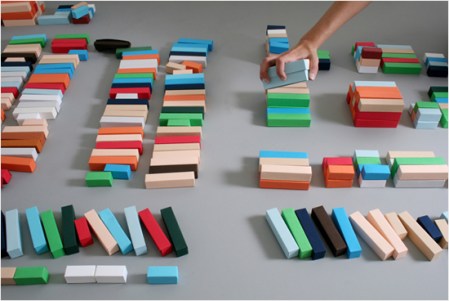
Heather Rasmussen, Pier J, Los Angeles, California. Google Satellite Photograph, 3/39/2004, 1”=1’-0’, (with integration of collapsed stacks). 2010, 53 x 96 inches, cardstock and tape on paper

Tuesday  curated by mr. and mrs. amani olu

On view: January 13 – February 12, 2011
Opening: Thursday, January 13, 2011, 6PM
Curator’s Talk: Saturday, January 15, 2011, 2–3PM

Mixed Greens
531 W. 26th Street, 1st Fl.
New York, NY 10001
mixedgreens.com

Exhibiting artists: Conor Backman, Joy Drury Cox, Jon Feinstein, Van Hanos, Heather Rasmussen, Peter Segerstrom, Breanne Trammell, and Jennifer Marman & Daniel Borins

Mixed Greens is pleased to present Tuesday, our first exhibition organized by an independent curator. We are excited to let amani olu take the reins and unite an incredible mix of emerging artists to explore and deepen our understanding of the everyday in contemporary art.

In 1849, French artist Gustave Courbet painted The Stone Breakers, which captures two men in the act of breaking stones, traditionally the lowest class of work in French society. Courbet presents their menial labor in a straightforward manner, omitting romanticized and idealized gestures. This radical painting is the first historically significant depiction of everyday content in art. Almost fifty years later, Marcel Duchamp enraged the art world with his seminal ready-made sculpture, Fountain. By the 1960s, Andy Warhol was producing paintings of Coke bottles, Campbell Soup cans, and high profile American celebrities. Courbet, Duchamp, and Warhol employed everyday content in their work in part to upset bourgeois sensibility. Courbet’s paintings rejected the historical and fictional subjects found in Neoclassicism and Romanticism, Duchamp’s Fountain posed an epistemological question (What is art?), and Warhol celebrated and criticized Post–War Americana by appropriating its iconic imagery. Warhol’s successful consideration of consumer products and popular culture is what gave rise to the inclusion and critical reception of the quotidian in art since the 1960s.

Akin to Courbet, Duchamp, and Warhol, contemporary artists continue to explore the everyday from a literal perspective, often through representation of content or emphasis on materials. Tuesday, however, aspires to expand the field of everydayness by culling together contemporary works that are less obvious manifestations of the everyday. Embodying various forms of the quotidian from noticing to the commonplace, this exhibition attempts to engage viewer expectations. On the surface, the proposed works are seemingly beholden to one central idea; yet, through a combination of artist dialogue and interpretation, the everyday, once subtlety embedded in the object, becomes apparent. Despite the substantial relationship to the everyday in their work, this subject does not necessarily motivate the exhibiting artists. The aim, then, is to pull their work apart and re-contextualize it with the intention of discovering new meaning and promoting further understanding.

For additional information, please contact Courtney Strimple at courtney@mixedgreens.com or call 212 331 8888.

thanks: humbleartsfoundation.org

the history of digital cameras & other mind wanderings

January 4, 2011

The history of digital cameras

Thirty-five years ago—in December 1975—an engineer named Steven Sasson snapped a photo with the world’s first fully digital camera at a Kodak lab. It took 23 seconds to record a 100-by-100-pixel image to cassette tape. Not until the early 1990s, however, did digital photo technology take off, launching an attack that would conquer the consumer camera industry in less than a decade. In the slides ahead, let’s examine some highlights of digital camera history.

1st digital camera

if this interests you then you might want to go to Wikipedia’s ‘history of the camera’ web page for some pretty cool cameras and history. the article shows my first camera, the Kodak No 2 Brownie, actually it was my families camera that i decided to use on my own, always an interesting experience seeing grown ups reaction to what kids do.

but the article misses my first real camera purchase during my stay in Munich with the US Army. i couldn’t afford a Lieca so i got an Exakta made in the USSR Germany. it had a 1.8 zena lens on it, whoooo.

exackta IIa

i loved that camera and kept it for years. when i lived in Greenwich village i found a sign in Cambridge camera that said ‘We fix Exakta’s.’ that’s where i first met Norm who took care of my baby for years until it couldn’t be repaired anymore because of the film advance gears being stripped beyond repair.

he swapped it for a Canon AE1 and lenses. i went on to purchase an F1 and an AE1 programmable but now i had to get use to a right hand film advance. this was a turning point in my photography but i didn’t know enough then to realize what was going on, sometimes i wake up in the morning wondering what i know now as i stumble to the MR Coffee pot.

this morning, writing in my journal, about what to do this year i looked up at 8 shoe boxes of film i could begin scanning into computer and a shutter goes through my body. oh how i dread scanning film and slides into computer. but i know i’ve some lovely stuff in the boxes and in the chrome archive books. but the though crosses my mind maybe i’ll call the dentist and see about some root canal work instead.

i look on my book shelf and pull out my Exakta camera 1933-1978  book by Clement Aguila & Michel Rouah from years ago and flip through the pages looking for my IIa and Zena lenses. i love German lenses. that’s why i’ve a Contax Nx and a Hasselblad 503 but i have kept my Canon F1 just to shoot infrared film as the Nx is an film auto loader which won’t allow infrared film to be used it confuses the auto reader in the camera. it was a shame that Kyocera discontinued their Contax N Digital so soon after developing it. i was heart broken.

i guess i could buy on of those N mount adapters and put my Zeiss lenses on my 5D MII and see what happens. would it improve my photos? well since no one is buying them right now why bother?

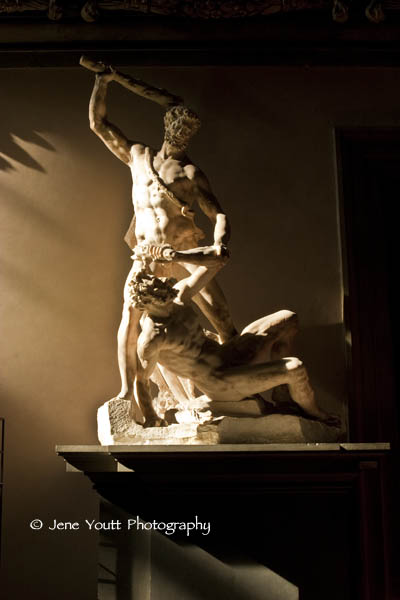
some roman church statue

this is taken with a Canon 20D, so it’s not so much the camera that makes the picture more about time & place and vision.

the chore on hand right now for me is to gather my Diablo rojos notes, which i did yesterday and separate them in to categories. i also found on amazon a dvd video about them which i ordered. today i’ll do more research, which is right next to film scanning on the list, but discovery can be exciting. after all we need to put down a date for our next Panama trip, find housing and schedule interviews.

as always, i am waiting to hear back from people today. things could be worst with the boiler not working or no hot water, all the comforts of new york city living.

← Back

Thank you for your response. ✨